Ano ang difference between CFDs, futures, at options?
Short answer: Lahat ng CFDs, futures, at options ay derivatives, pero magkaiba ang paggana nila. Ang CFD ay sumusunod sa price movement sa pamamagitan ng contract sa broker. Ang futures contract ay isang standardized obligation na may expiry at settlement rules. Ang option naman ay nagbibigay sa buyer ng karapatan, hindi obligasyon, kapalit ng premium.
Ang CFDs, futures, at options ay pwede lahat gamitin para i-trade ang price movements nang hindi direktang nagmamay-ari ng underlying asset. Ang key difference ay ang structure ng contract. Ang CFDs ay usually broker-based contracts para sa price differences, ang futures ay standardized contracts na may expiry, at ang options ay premium-based rights na may nonlinear payoff behavior.
Ano ang Main Difference ng CFDs, Futures, at Options?
Ang main difference ay kung paano nagbibigay ng exposure sa market ang bawat instrument.
Ang CFD ay nagbibigay ng exposure sa price difference sa pagitan ng pag-open at pag-close ng trade. Hindi nagmamay-ari ang trader ng underlying asset.
Ang futures contract ay isang standardized agreement na may fixed expiry. Gumagawa ito ng obligasyon na mag-buy, mag-sell, mag-deliver, o mag-cash-settle base sa contract terms.
Ang option ay nagbibigay sa buyer ng karapatan, pero hindi obligasyon, na mag-buy o mag-sell sa ilalim ng defined terms. Nagbabayad ang buyer ng premium. Nakukuha ng seller ang premium pero siya ang may obligasyon kapag na-exercise o na-assign ang option.
Sa simpleng salita: ang CFDs ay flexible price-difference contracts, ang futures ay standardized obligations, at ang options ay conditional rights.
Ano ang CFD?
Ang CFD, o Contract for Difference, ay isang derivative na nagbibigay-daan sa trader na mag-speculate sa price movement ng isang underlying market nang hindi nagmamay-ari ng underlying asset.
Halimbawa, pwedeng gumamit ang trader ng CFD para i-trade ang price movement ng gold, oil, index, currency pair, o share. Hindi bumibili ang trader ng physical gold, barrels ng oil, index shares, o ng underlying stock mismo.
Ang CFDs ay usually tinetrade sa pamamagitan ng broker. Ibig sabihin, ang final trading result ay depende sa market movement, position size, spread, posibleng commission, overnight financing, margin rules, at execution conditions.
Ang NordFX ay isang multi-asset broker, kaya importante ang distinction na ito: ang CFDs ay nagbibigay ng access sa price movements, hindi direct ownership ng underlying asset.
Ano ang Futures Contract?
Ang futures contract ay isang standardized derivative contract na tinetrade sa exchange. May defined contract terms ito, kasama ang underlying asset, contract size, expiry date, tick size, at settlement method.
Ginagamit ang futures sa mga market gaya ng commodities, stock indices, currencies, interest rates, at energy. Ginagamit ito ng speculators, hedgers, at institutional market participants.
Kaiba sa maraming rolling CFDs, may fixed expiry dates ang futures. Ang trader na hindi gustong hawakan ang futures contract hanggang expiry ay usually nagsasara o nag-roll ng position bago ang final trading date.
Linear instruments ang futures. Kapag gumalaw ang futures price ng ilang amount, proportional ding nagbabago ang position value base sa contract size.
Ano ang Option?
Ang option ay isang derivative na nagbibigay sa buyer ng karapatan, pero hindi obligasyon.
Ang call option ay nagbibigay sa buyer ng karapatang mag-buy, o makinabang sa upward exposure, sa ilalim ng defined terms.
Ang put option ay nagbibigay sa buyer ng karapatang mag-sell, o makinabang sa downward exposure, sa ilalim ng defined terms.
Nagbabayad ng premium ang option buyer. Para sa simpleng long option, ang premium na ito ay normally ang maximum loss, hindi kasama ang transaction costs.
Natatanggap ng option seller ang premium pero tinatanggap niya ang obligation side ng contract. May ilang short option positions na pwedeng magdulot ng napakalaking losses, lalo na kung uncovered.
Nonlinear instruments ang options. Ang value nila ay depende sa underlying price, strike price, time to expiry, implied volatility, interest rates, at market expectations.
Paano Nagkakaiba ang CFDs, Futures, at Options?
Factor | CFDs | Futures | Options |
Basic structure | Contract sa broker para i-exchange ang price difference | Standardized exchange-traded contract | Karapatang mag-buy o mag-sell sa ilalim ng defined terms |
Ownership ng underlying asset | Walang direct ownership | Usually walang ownership maliban kung may delivery | Walang ownership maliban kung na-exercise at physically settled |
Main obligation | I-settle ang price difference kapag nagsara ang trade | Tugunan ang margin, expiry, at settlement obligations | May karapatan ang buyer; may obligasyon ang seller |
Payoff type | Linear | Linear | Nonlinear |
Expiry | Madalas rolling; may ilang CFDs na dated | Fixed expiry | Fixed expiry |
Margin/capital | Kailangan ng margin deposit | Kailangan ng initial at maintenance margin | Nagbabayad ng premium ang buyer; pwedeng mangailangan ng margin ang seller |
Overnight cost | Madalas applicable sa rolling CFDs | Usually naka-reflect na sa futures pricing | Walang hiwalay na overnight financing para sa simpleng long option, pero mahalaga ang time decay |
Counterparty structure | Usually broker/issuer | Exchange at clearing structure | Exchange at clearing structure para sa listed options |
Common use | Short-term flexible market exposure | Directional trading, hedging, spreads | Hedging, volatility views, defined-risk strategies |
Main risk area | Leverage, financing cost, broker/issuer exposure | Leverage, expiry, margin calls, contract size | Premium loss, time decay, complexity, seller risk |
Paano Nagkakaiba ang Payoffs?
Ang CFDs at futures ay usually may linear payoff.
Ibig sabihin, direktang nagbabago ang profit o loss kasabay ng price movement ng underlying market. Kung pabor sa position ang galaw ng market, mas maganda ang resulta. Kung kontra, lumalala ang resulta.
Ang options ay may nonlinear payoff.
Ang long call option ay pwedeng makinabang sa upward movement lampas sa strike price. Ang long put option ay pwedeng makinabang sa downward movement. Sa dalawang kaso, ang loss ng buyer ay normally limitado sa premium na binayaran.
Hindi ibig sabihin nito na automatic na safer ang options. Ang long option ay pwedeng mag-expire na worthless kung hindi nangyari sa tamang oras ang expected move. Ang short option naman ay pwedeng magdulot ng malaking losses kung biglang gumalaw ang market kontra sa seller.
Paano Gumagana ang Margin at Leverage?
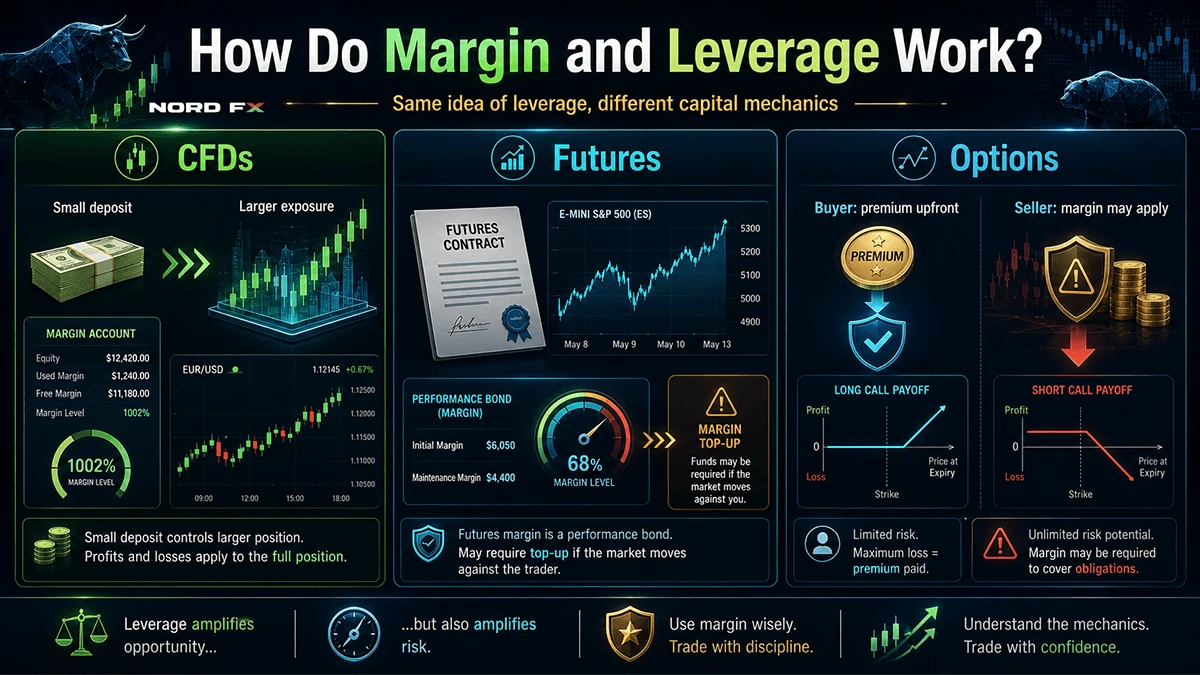
Ang CFDs ay usually nangangailangan ng margin instead ng full payment para sa underlying exposure. Nagbibigay-daan ito sa trader na kontrolin ang mas malaking position gamit ang mas maliit na deposit.
Ang risk ay dahil ang profit at loss ay kinakalkula base sa full position size, hindi lang sa margin deposit. Kaya ang maliit na market move ay pwedeng magkaroon ng malaking effect sa account equity.
Gumagamit din ng margin ang futures, pero iba ang futures margin sa CFD margin deposit. Gumagana ito bilang performance bond para suportahan ang daily price movement ng contract. Kung kontra ang galaw ng market sa position, pwedeng kailanganin ng trader na magdagdag ng funds.
Ang options ay gumagamit ng ibang capital model. Ang long option buyer ay usually nagbabayad ng premium upfront. Ang short option seller ay pwedeng mangailangan ng margin dahil sa kanya ang obligasyon kapag na-exercise o na-assign ang option.
Paano Gumagana ang Expiry at Settlement?
Ang CFDs ay madalas rolling instruments. Maraming CFD positions ang pwedeng manatiling open hanggang isara ito ng trader o isara ng broker sa ilalim ng margin rules. May ilang CFDs na dated, pero maraming retail CFDs ang hindi gumagana gaya ng exchange-traded futures na may fixed delivery months.
Ang futures ay may fixed expiries. Kailangang alam ng trader ang last trading day, settlement method, at kung cash-settled o physically deliverable ang contract.
May fixed expiries din ang options. May options na cash-settled, may nag-settle sa pamamagitan ng delivery ng underlying asset, at may options on futures na pwedeng gumawa ng futures position kapag na-exercise.
Pinaka-importante ang expiry sa options dahil bumababa ang time value habang papalapit ang expiry date. Kahit tama ang market view, pwede pa ring malugi kung masyadong late nangyari ang expected move.
Paano Nagkakaiba ang Costs?
Ang CFD costs ay pwedeng kasama ang spread, commission, overnight financing, currency conversion, at iba pang account-related charges depende sa broker at instrument.
Ang futures costs ay usually mas explicit. Pwedeng kasama ang broker commission, exchange fees, clearing fees, market data fees, at roll costs kung pinapanatili ng trader ang exposure sa iba-ibang contract expiries.
Ang options costs ay kasama ang premium, bid-ask spread, broker commission, exchange fees, at posibleng exercise o assignment-related fees depende sa broker.
Ang importanteng punto ay hindi pareho ang ibig sabihin ng “cost” sa tatlong instruments na ito. Ang CFD ay pwedeng mukhang simple pero may overnight financing. Ang future ay pwedeng may transparent fees pero mas malaki ang contract size. Ang option ay pwedeng mag-define ng risk para sa buyer pero nawawalan ng value dahil sa time decay.
Aling Instrument ang Bagay sa Anong Trading Goal?
Ang CFDs ay pwedeng bagay sa mga trader na kailangan ng flexible position sizing, multi-asset access, at short-term price exposure nang hindi nagmamay-ari ng underlying asset. Kailangan nila ng strict risk control dahil ang leverage, spreads, at overnight financing ay pwedeng makaapekto sa final result.
Ang futures ay pwedeng bagay sa mga trader na gustong may standardized market exposure at kayang i-manage ang contract size, expiry, margin, at roll dates. Malawakang ginagamit ito para sa index, commodity, currency, at hedging strategies.
Ang options ay pwedeng bagay sa mga trader na kailangan ng payoff design. Pwede itong gamitin para sa defined-risk directional trades, hedging, volatility exposure, o income strategies. Kailangan nito ng mas maraming kaalaman dahil ang option pricing ay depende sa maraming variables nang sabay-sabay.
Walang universal na mas magandang choice. Ang bagay na instrument ay depende sa objective ng trader, account size, time horizon, market knowledge, at risk tolerance.
Practical Example: Pag-trade ng Gold Price View
Sabihin nating inaasahan ng trader na biglang gagalaw ang gold prices pagkatapos ng announcement ng central bank. Ayaw naman niyang bumili ng physical gold.
Sa gold CFD, pwedeng mag-long o mag-short ang trader sa price movement ng gold. Pwedeng flexible ang size ng position, pero kailangang isaalang-alang ang spread, margin, overnight financing, at ang risk ng losses kung kontra ang galaw ng market.
Sa gold futures contract, gumagamit ang trader ng standardized contract na may fixed expiry. Exchange-based ang pricing, pero ang contract size, margin requirements, at expiry management ay pwedeng hindi gaanong flexible para sa maliit na trader.
Sa gold option, pwedeng bumili ang trader ng call kung umaasa sa pagtaas o put kung umaasa sa pagbaba. Binabayaran ang premium upfront. Kung hindi nangyari ang expected move bago ang expiry, pwedeng mawala ang bahagi o buo ng value ng option.
Pareho ang market view sa tatlong kaso. Pero hindi pareho ang risk profile. Ang CFD ay gumagawa ng flexible linear exposure, ang future ay standardized linear exposure, at ang option ay time-limited nonlinear exposure.
Anong Common Mistakes ang Nagagawa ng Traders?
Isang common mistake ay ang pag-compare ng margin na parang pareho lang ang ibig sabihin nito sa CFDs, futures, at options. Ang CFD margin, futures margin, at option premium ay magkaibang capital mechanisms.
Isa pang mistake ay ang pagbalewala sa expiry. Pwedeng rolling ang CFDs, pero may fixed dates ang futures at options. Ang magandang trade idea ay pwede pa ring bumagsak kung hindi naiintindihan ng trader ang roll dates, settlement, o time decay.
Pangatlong mistake ay ang pag-assume na safe lagi ang long options. Pwedeng limitado sa premium ang loss ng long option, pero pwede pa ring mawala ang premium kung hindi sapat ang galaw ng market bago ang expiry.
Pang-apat na mistake ay ang pagtrato sa CFDs bilang ownership. Ang CFD ay sumusunod lang sa price movement; normally hindi ito nagbibigay ng ownership sa shares, commodities, o crypto assets.
Panlimang mistake ay ang pagbalewala sa costs. Ang overnight financing, spreads, commissions, exchange fees, clearing fees, at option premiums ay pwedeng malaki ang pagbabago sa final result.
Pang-anim na mistake ay ang pagpili ng instrument bago i-define ang objective. Dapat munang magdesisyon ang trader kung ang goal ay short-term directional exposure, hedging, volatility exposure, income generation, o long-term ownership.
FAQ
Ano ang pinakamalaking difference ng CFDs, futures, at options?
Ang pinakamalaking difference ay ang contract structure. Ang CFDs ay usually broker contracts para sa price differences, ang futures ay standardized obligations na may expiry, at ang options ay nagbibigay sa buyer ng karapatan pero hindi obligasyon.
Futures lang ba ang CFDs?
Hindi. Pwedeng pareho nilang sundan ang price movements, pero hindi sila pareho. Ang CFDs ay usually broker-based contracts, habang ang futures ay standardized exchange-traded contracts na may fixed expiries.
Mas maganda ba ang CFD kaysa futures?
Hindi automatic na mas maganda ang CFD kaysa future. Ang CFDs ay pwedeng mag-offer ng flexible position sizing, habang ang futures ay nag-offer ng standardized exchange-traded exposure. Ang mas magandang choice ay depende sa trading objective, holding period, costs, at risk control.
Mas risky ba ang CFDs kaysa options?
Pwedeng risky ang CFDs dahil gumagamit ito ng leverage at pwedeng may overnight financing at broker/issuer exposure. Ang options ay may ibang risks, kasama ang premium loss, time decay, complexity, at malaking risk para sa sellers.
Alin ang mas maganda, futures o options?
Wala sa kanila ang laging mas maganda. Ang futures ay pwedeng bagay sa linear directional exposure o hedging. Ang options ay pwedeng bagay sa defined-risk trades, volatility views, o asymmetric payoff structures.
Alin ang mas safe, futures o options?
Ang safety ay depende sa position structure at risk management. Ang fully paid long option ay may limitadong loss hanggang sa premium, pero pwede itong mag-expire na worthless. Ang futures ay transparent at standardized, pero pwedeng magdulot ng malaking losses dahil sa leverage at margin calls.
Pwede bang gamitin ng traders ang CFDs, futures, at options para sa parehong market view?
Oo. Ang bullish o bearish market view ay madalas na pwedeng i-express sa lahat ng tatlong instruments. Ang difference ay kung paano gumagana ang margin, cost, expiry, settlement, at payoff.
Alin ang Dapat Piliin ng Traders?
Trading objective | Mas bagay na instrument | Bakit |
Flexible short-term price exposure | CFDs | Ang CFDs ay pwedeng mag-offer ng mas maliit na position sizing at access sa maraming markets nang hindi nagmamay-ari ng underlying asset. |
Standardized market exposure | Futures | Ang futures ay may fixed contract terms, exchange trading, expiry dates, at malinaw na settlement rules. |
Defined-risk directional view | Long options | Ang long option ay usually nililimitahan ang loss sa premium na binayaran, hindi kasama ang costs. |
Pag-hedge ng existing position | Futures o options | Ang futures ay pwedeng mag-hedge ng linear exposure, habang ang options ay pwedeng mag-hedge ng downside nang nananatili ang potential upside. |
Volatility-based strategy | Options | Ang options ay direktang naaapektuhan ng implied volatility at time to expiry. |
Conclusion
Ang CFDs, futures, at options ay hindi interchangeable, kahit pareho ang underlying market na sinusundan nila.
Ang CFDs ay usually flexible broker-based contracts para sa pag-trade ng price differences. Ang futures ay standardized contracts na may fixed expiries at malinaw na contract specifications. Ang options ay premium-based rights na may nonlinear payoff behavior.
Ang praktikal na pagpili ay dapat magsimula sa trading objective. Para sa flexible short-term price exposure, pwedeng bagay ang CFDs. Para sa standardized market access at hedging, pwedeng mas appropriate ang futures. Para sa defined-risk structures, volatility exposure, o asymmetric payoff, pwedeng mas bagay ang options.
Sa lahat ng kaso, dapat maintindihan ng traders ang margin, costs, expiry, settlement, at risk bago mag-open ng position.
Bumalik Bumalik