簡単な答え
流動性が低い時間帯や市場オープン時には、スプレッドが広がり、価格が急変することがよくあります。これにより、チャート上で価格がなめらかに動いていなくても、スプレッドが予想より早くスプレッドが予想より早く発動することがあります。
このビデオでは、市場オープン時や流動性が低い時期にストップロスが発動する理由を説明しています。スプレッドの拡大や価格ギャップが、チャートがなめらかに動かない場合でも執行にどう影響するかを示しています。
取引における低流動性とは何ですか?
流動性とは、市場でどれだけ多くの買い手と売り手が活動しているかを指します。
流動性が高い場合:
- 注文はスムーズに約定される
- スプレッドは狭いまま維持される
- 価格は徐々に動く
流動性が低い場合:
- 利用可能な注文が少なくなる
- スプレッドが広がる
- 価格が急変することがある
低流動性が発生しやすいのは:
- 市場オープン時
- ロールオーバー時
- 休日
- 取引セッションの合間
低流動性時にスプレッドが広がる理由
市場参加者が少ない場合:
- 流動性プロバイダーはリスク管理のためスプレッドを拡大する
- 価格の利用可能性が薄くなる
- 執行の精度が低下する
これは通常の市場動向です。
スプレッドが広がると:
- アスク価格がビッドから大きく乖離する
- ストップロスがより速く発動する可能性がある
- チャート上では執行が「早すぎる」ように見える
市場オープン時に何が起こるか
市場オープン時(特に週末明け):
- 新規注文が突然市場に入ってくる
- 価格があるレベルから別のレベルへ跳ぶことがある
- 中間価格での取引が行われない場合がある
価格ギャップが生じます。
ストップロスがギャップゾーン内にある場合、次の利用可能な価格で発動されます。
ロールオーバーとは何か、なぜストップロスに影響するのか
ロールオーバーとは、取引日が切り替わる日次移行のことです。
ロールオーバー時:
- 流動性が一時的に低下する
- スプレッドが増加することが多い
- 執行が不安定になることがある
この短い時間帯では、予期しないストップロスの発動が頻繁に発生します。
価格がストップロスを「飛び越える」ように見える理由
これが起こる理由は:
- 市場はティックごとに動くわけではない
- 価格は利用可能な流動性に基づいて更新される
- 特定のレベルに注文が存在しない場合、価格はそのレベルをスキップする
ストップロスは、設定した正確なレベルではなく、最初の利用可能な市場価格で約定されます。
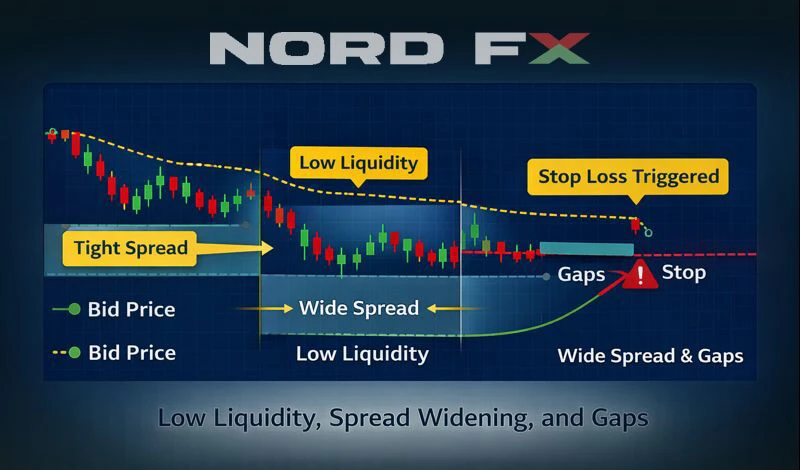
このイラストは、低流動性がスプレッドの拡大と価格ギャップを引き起こし、ストップロスを早期に発動させる仕組みを示しています。
なぜこれが通常の市場動向なのか
これは以下ではありません:
❌ プラットフォームの誤作動
❌ ブローカーの介入
❌ 不正な取引
これは以下です:
✅ 実際の市場がリスクを管理する方法
✅ 流動性が価格設定に影響する仕組み
✅ 標準的なグローバル取引メカニクス
すべての金融市場はこのように動作します。
トレーダーにとってこれが重要な理由
低流動性を理解することで、トレーダーは以下が可能になります:
- リスクの高い時間帯の取引を避ける
- 必要に応じて広めのストップロスを設定する
- スプレッドの変化に備える
- リスクをより現実的に管理する
多くのストップロスの「サプライズ」は、単に流動性の影響に過ぎません。
次のステップ
執行、スプレッド、流動性が明確になったところで、次の重要なトピックは:
取引が正しかった場合でも、なぜ利益が予想より小さかったのですか?
これはスプレッドコスト、手数料、スワップ、部分決済について説明しています。
戻る 戻る