Kısa cevap
Fiyat grafikleri genellikle yalnızca Bid fiyatını gösterir; ancak satış işlemlerinde stop loss emirleri Ask fiyatı tarafından tetiklenir. Ask fiyatı spreadi de kapsadığından, grafik o seviyeye hiç ulaşmasa bile stop loss devreye girebilir.
Bu video, Bid ve Ask fiyatlarının ile spreadin stop loss tetiklemesini nasıl etkilediğini göstererek, görünen grafik fiyatı stop loss seviyenize hiç değmemiş olsa bile bir işlemin neden kapanabileceğini açıklamaktadır.
Her piyasadaki iki fiyat: Bid ve Ask
Her enstrümanın iki fiyatı vardır:
- Bid fiyatı — sattığınız fiyat
- Ask fiyatı — satın aldığınız fiyat
Aralarındaki fark spread olarak adlandırılır.
Çoğu işlem platformunun grafikleri varsayılan olarak yalnızca Bid fiyatını gösterir.
Kafa karışıklığının temel nedeni budur.
Alış ve satış işlemlerinde stop loss nasıl çalışır
Alış (Buy) işlemleri için:
- Stop loss, Bid fiyatı tarafından tetiklenir
Satış (Sell) işlemleri için:
- Stop loss, Ask fiyatı tarafından tetiklenir
Bu şu anlama gelir:
Bir satış işlemi içindeyseniz stop loss'unuz, genellikle grafikte göremediğiniz bir fiyata tepki verir.
Fiyatın stop loss seviyenize hiç değmediği izlenimi neden oluşur
Örnek durum:
- Grafik, Bid fiyatın stop loss'a yaklaştığını gösterir
- Spread hafifçe genişler
- Ask fiyatı stop loss seviyesine ulaşır
- İşlem kapanır — Bid hiç dokunmamış olsa bile
Görünüş itibarıyla bir hata gibi hissettirirsiniz.
Teknik olarak bu bir doğru emir ejectidir.
Spreadin erken stop loss tetiklemesindeki rolü
Spread arttığında:
- Ask fiyatı yükseliş gösterir
- Bid fiyatı olduğu yerde kalır
- Satış işlemlerindeki stop loss daha erken devreye girer
Spread sıklıkla şu durumlarda genişler:
- Düşük likidite
- Piyasa açılışı
- Haber yayınları
- Rollover
Bu durum, stop loss'ların “çok erken” tetiklenmiş gibi görünmesine yol açar.
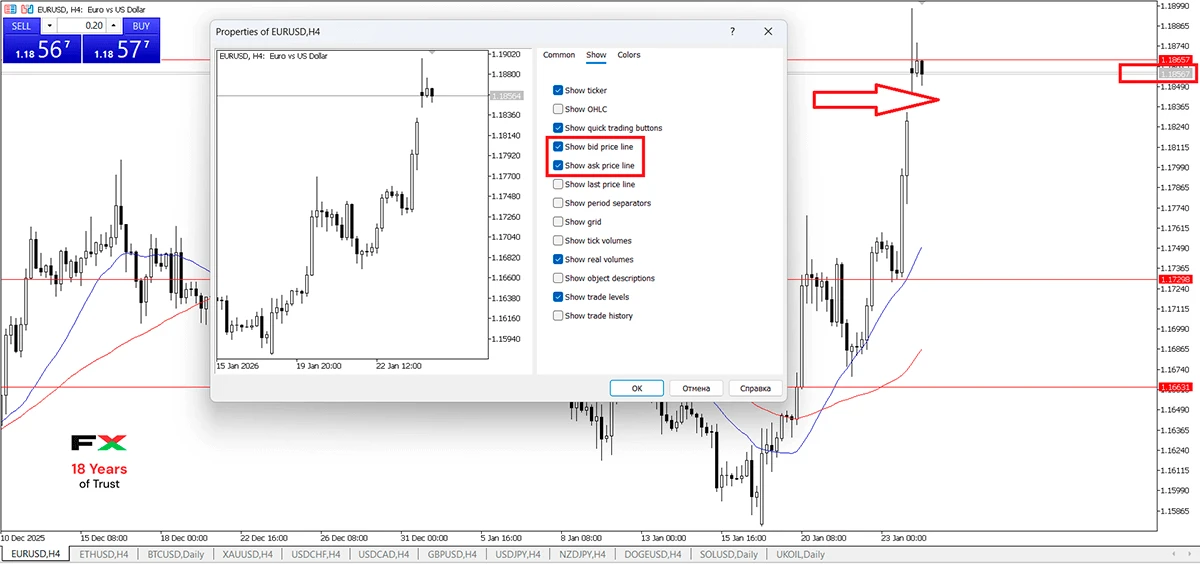
Görselde, Ask fiyatını da görmek istiyorsanız MetaTrader grafiklerinde bu seçeneği nasıl açacağınız gösterilmektedir.
Bu durumun normal bir piyasa davranışı olmasının nedeni
Bu:
❌ Aracı kurum maniplásyonu değildir
❌ Yanlış emir icrası değildir
❌ Platform hatası değildir
Bu, basitçe:
✅ Gerçek piyasalarda fiyatlandırmanın işleviş biçimidir
✅ Spreadin uygulanış yöntemidir
✅ Stop loss mantığının çalışma şeklidir
Tüm profesyonel piyasalar bu şekilde işler.
Bu durum traderlar açısından neden önemlidir
Bid ve Ask fiyatlarını anlamak size şunları sağlar:
- Stop loss'ları daha isabetli biçimde yerleştirme
- Beklenmedik işlem kapanmalarından kaçınma
- Risk yönetiminde spreadi hesaba katma
- Volatilite dönemlerinde güvenle işlem yapma
Stop loss “gizemlerinin” büyük çoğunluğu spread mekanizmasıyla açıklanabilir.
Sıra ne geliyor
Bid, Ask ve spread davranışı artık net olduğuna göre, bir sonraki konu şudur:
Düşük likidite veya piyasa açılışı sırasında stop loss'um neden tetikleniyor?
Bu yazı gapleri, spread spikelarını ve rollover etkilerini açıklamaktadır.
Geri dön Geri dön