Kısa cevap
Düşük likidite ve piyasa açılışı sırasında spreadler sıklıkla genişler ve fiyatlar seviyeler arasında atlama yapabilir. Bu durum, grafik üzerinde düzgün bir fiyat hareketi olmasa bile, stop loss'ların beklenenden daha erken tetiklenmesine yol açabilir.
Bu video, piyasa açılışında veya düşük likidite dönemlerinde stop loss'ların neden tetiklenebileceğini açıklıyor. Grafik düzgün hareket etmese bile, daha geniş spreadlerin ve fiyat aralıklarının emir gerçekleştirmesini nasıl etkilediğini gösteriyor.
Alım satımda düşük likidite nedir?
Likidite, piyasada kaç alıcı ve satıcının aktif olduğunu ifade eder.
Likidite yüksek olduğunda:
- emirler sorunsuz karşılanır
- spreadler sıkı kalır
- fiyatlar kademeli hareket eder
Likidite düşük olduğunda:
- daha az emir mevcut olur
- spreadler genişler
- fiyatlar hızla atlama yapabilir
Düşük likidite sıklıkla şu durumlarda görülr:
- piyasa açılışında
- rollover sırasında
- tatil günlerinde
- alım satım seansları arasında
Düşük likidite döneminde spreadler neden genişler
Piyasa katılımcılarının daha az aktif olduğu durumlarda:
- likidite sağlayıcılar riski yönetmek için spreadleri artırır
- fiyat müsaitliği azalır
- emir gerçekleştirme daha az hassas hale gelir
Bu normal piyasa davranışıdır.
Daha geniş spreadler şu anlama gelir:
- Alış fiyatı Satiş fiyatından uzaklaşır
- stop loss'lar daha hızlı tetiklenebilir
- grafik üzerinde gerçekleştirme “erken” görünür
Piyasa açılışında ne olur
Piyasa açılışında (özellikle hafta sonlarının ardından):
- piyasaya aniden yeni emirler girer
- fiyat bir seviyeden diğerine atlama yapabilir
- ara fiyat seviyelerinde işlem yapılmayabilir
Bu durum fiyat aralıkları oluşturur.
Stop loss bir aralık bölgesi içinde konumlanıyorsa, bir sonraki uygun fiyattan tetiklenir.
Rollover nedir ve stop loss'ları nasıl etkiler
Rollover, alım satım günleri arasındaki günlük geçiş dönemidir.
Rollover sırasında:
- likidite geçici olarak düşer
- spreadler genellikle artar
- emir gerçekleştirme daha istikrarsız hale gelebilir
Bu kısa dönem, sıklıkla beklenmedik stop loss aktivasyonlarına neden olur.
Fiyat neden stop loss seviyenizi “atlıyor” gibi görünür
Bu durum şu nedenlerle yaşanır:
- piyasa her tick'te hareket etmez
- fiyatlar mevcut likit durumuna göre güncellenir
- belirli seviyelerde emir bulunmadığında, fiyat o seviyeleri atlar
Stop loss'unuz, belirlediğiniz tam seviyeden değil, piyasadaki ilk uygun fiyattan karşılanır.
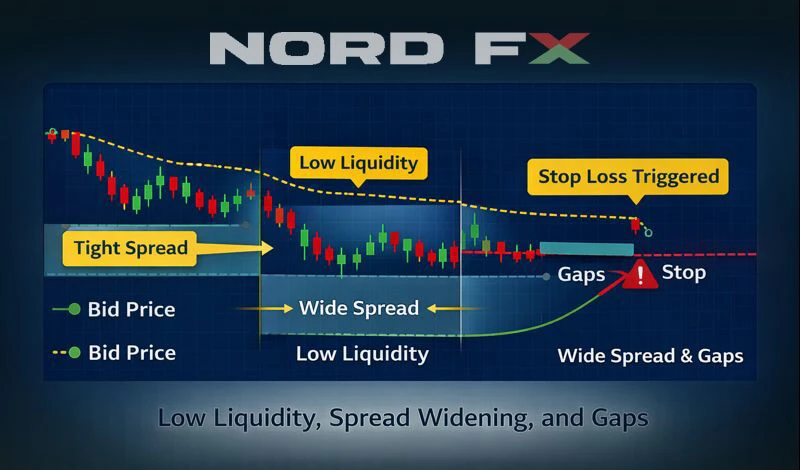
Bu görsel, düşük likiditinin spread genişlemesine ve stop loss'ları erkenden tetikleyen fiyat aralıklarına nasıl yol açtığını göstermektedir.
Bu neden normal piyasa davranışıdır
Bu durum:
❌ platform arızası değildir
❌ aracı kurum müdahalesi değildir
❌ yanlış alım satım değildir
Bu durum:
✅ gerçek piyasaların riski nasıl yönettiğidir
✅ likiditinin fiyatlamayı nasıl etkilediğidir
✅ standart küresel alım satım mekaniklerinin bir parçasıdır
Tüm finansal piyasalar bu şekilde davranır.
Bu durum alım satımcılar için neden önemlidir
Düşük likiditinin anlaşılması alım satımcılara şunları sağlar:
- riskli dönemlerde işlem yapmaktan kaçınmak
- gerektiğinde daha geniş stop loss koymak
- spread değişimlerini öngörmek
- riski daha gerçekçi biçimde yönetmek
Stop loss ile yaşanan “sürprizlerin” büyük çoğunluğu sadece likidite etkilerinden kaynaklanır.
Sonraki adım
Emir gerçekleştirme, spread ve likidite konuları netlik kazandıktan sonra, sıradaki önemli konu şudur:
Alım satım doğru olduğunda bile karım neden beklediğimden daha az oldu?
Bu konu; spread maliyetleri, komisyonlar, swap'lar ve kısmi kapanışları açıklar.
Geri dön Geri dön