Коротка відповідь
Ціни та спреди можуть відрізнятися між брокерами, оскільки вони використовують різні джерела ліквідності, моделі ціноутворення та умови виконання. Такі відмінності є нормальними та відображають те, як насправді працює ринкове ціноутворення.
Це відео пояснює, чому ціни та спреди можуть відрізнятися між брокерами. Воно показує, як різні джерела ліквідності, моделі ціноутворення та ринкові умови впливають на котирування, які ви бачите.
Єдина ринкова ціна відсутня
Фінансові ринки не мають однієї фіксованої універсальної ціни.
Натомість:
- ціни надходять від кількох постачальників ліквідності,
- кожен постачальник надсилає власні ціни Bid і Ask,
- брокери агрегують і передають ці ціни клієнтам.
Саме тому існують невеликі відмінності в цінах на різних платформах.
Різні постачальники ліквідності
Звідки беруться ціни
Брокери отримують ціни від:
- банків,
- прайм-брокерів,
- пулів ліквідності,
- маркет-мейкерів.
Кожне джерело може:
- котирувати дещо різні ціни,
- мати різні спреди,
- оновлювати ціни з різною швидкістю.
Кінцева ціна брокера залежить від того, які постачальники підключені.
Різні моделі спредів
Сирі спреди та спреди з націнкою
Деякі брокери:
- пропонують сирі спреди та стягують комісію,
- додають націнку до спреду замість комісії,
- використовують комбінацію залежно від типу рахунку.
Це впливає на видимий спред навіть тоді, коли ринкові умови однакові.
Виконання та управління ризиками
Правила виконання
Брокери можуть відрізнятися у:
- швидкості виконання,
- обробці прослизання,
- логіці маршрутизації ордерів,
- внутрішніх механізмах контролю ризиків.
Ці фактори впливають на кінцеву ціну виконання та поведінку спреду.
Ринкові умови та час
Спреди можуть розширюватися або звужуватися залежно від:
- волатильності,
- ліквідності,
- часу доби,
- новинних подій,
- свят або перетинів торгових сесій.
Різні брокери можуть реагувати на ці умови з різною швидкістю.
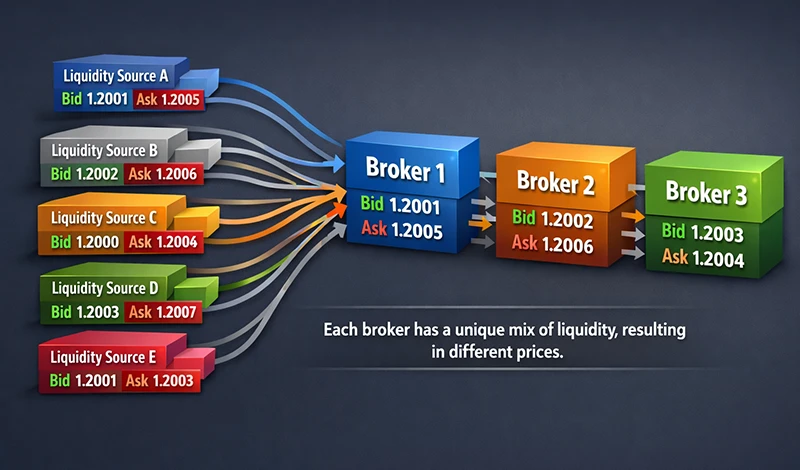
Ілюстрація показує, як брокери формують ціни з різних потоків ліквідності.
Чому це не означає, що один брокер “неправильний”
Невеликі відмінності в цінах і спредах є нормальними.
Вони не означають автоматично:
- маніпуляцію цінами,
- некоректне ціноутворення,
- нечесні торгові умови.
Вони відображають те, як працюють децентралізовані ринки.
Чому це важливо для трейдерів
Розуміння відмінностей у ціноутворенні допомагає трейдерам:
- уникати хибних припущень,
- обирати відповідні типи рахунків,
- розуміти поведінку виконання,
- реалістично порівнювати торгові умови.
Порівняння цін має сенс лише тоді, коли разом враховуються якість виконання та витрати.
Що це завершує
Ця стаття завершує розділ Як працює трейдинг, пояснюючи:
- механіку виконання
- поведінку ціноутворення
- торгові витрати
- контроль ризиків
Разом ці статті формують практичний довідник для розуміння реальних торгових умов.
Повернутися Повернутися