කෙටි පිළිතුර
ඔබ Buy හෝ Sell ක්ලික් කළ විට, ඔබගේ ඇණවුම trading platform එකෙන් broker වෙත යවනු ලැබේ, පසුව liquidity providers වෙත මාර්ගගත කර ලබා ගත හැකි හොඳම වෙළඳපොල මිලකට ක්රියාත්මක කරනු ලැබේ. මෙම ක්රියාවලිය සාමාන්යයෙන් මිලි තත්පර ගණනක් ගත වන නමුත්, අවසාන ක්රියාත්මක කිරීමේ මිල තථ්ය කාලීන වෙළඳපොල තත්ත්වයන් මත රඳා පවතී.
මෙම වීඩියෝව මගින් දැක්වෙන්නේ ට්රේඩ් එකක් trading platform එකෙන් broker හි සර්වරය වෙතටත්, පසුව liquidity providers වෙතටත් ගමන් කර සැබෑ වෙළඳපොල මිලට ක්රියාත්මක වන ආකාරයයි.
ට්රේඩ් ක්රියාත්මක වීම පියවරෙන් පියවර පැහැදිලි කිරීම
1. ඔබ trading platform එකේ ඇණවුමක් තබයි
ඔබ Buy හෝ Sell ක්ලික් කළ විට, trading platform එක ක්ෂණික ට්රේඩ් එකක් නොව order request එකක් යවයි.
මෙම request එකට ඇතුළත් වන්නේ:
- උපකරණය (උදාහරණයක් ලෙස, EUR/USD),
- order වර්ගය (Buy හෝ Sell),
- ට්රේඩ් වෙළුම,
- execution වර්ගය,
- Stop Loss හෝ Take Profit වැනි විකල්ප පරාමිතීන්.
මෙම අවස්ථාවේදී, තවම කිසිදු position එකක් නොපවතී. ඔබ යවන්නේ ට්රේඩ් කිරීමේ request එකක් පමණි.
2. broker විසින් ඇණවුම ලැබී වලංගුභාවය පරීක්ෂා කරයි
broker හි පද්ධතිය ප්රධාන කොන්දේසි කිහිපයක් පරීක්ෂා කරයි:
- ඔබට ප්රමාණවත් free margin තිබේද,
- වෙළඳපොල විවෘතද,
- order පරාමිතීන් වලංගුද.
සියලුම කොන්දේසි සපුරාලන්නේ නම්, order එක අනුමත වී ඊළඟ අදියරට යවනු ලැබේ.
එසේ නොවේ නම්, ක්රියාත්මක කිරීමට පෙර order එක ප්රතික්ෂේප කරනු ලැබේ.
3. ඇණවුම liquidity වෙත මාර්ගගත කෙරේ
වලංගු කිරීමෙන් පසු, order එක bid සහ ask මිල සපයන banks, prime brokers, හෝ liquidity pools වැනි liquidity providers වෙත යවනු ලැබේ.
තේරුම් ගැනීම වැදගත්:
- මිල සෑම මිලි තත්පරයකදීම වෙනස් විය හැක,
- order එක ක්රියාත්මක වන්නේ කලින් පෙන්වූ ස්ථාවර quote එකක් මත නොව, available liquidity මත පදනම්වය.
4. ට්රේඩ් එක වෙළඳපොල මිලට ක්රියාත්මක වේ
order එක ක්රියාත්මක වන මොහොතේ ලබා ගත හැකි හොඳම මිලට ගැලපේ.
මෙහි අර්ථය:
- ක්රියාත්මක කිරීමේ මිල ඔබ ක්ලික් කළ මිලට වඩා ටිකක් වෙනස් විය හැක,
- මෙම වෙනස වෙළඳපොල ක්රියාත්මක කිරීම සඳහා සාමාන්ය දෙයකි,
- මිල චලනය, spread, සහ liquidity depth අවසාන ප්රතිඵලයට බලපායි.
5. ක්රියාත්මක කිරීමේ ප්රතිඵලය නැවත platform වෙත යවනු ලැබේ
ක්රියාත්මක කිරීමෙන් පසු:
- position එක ඔබගේ terminal එකේ දිස්වේ,
- balance, equity, සහ margin අගයන් යාවත්කාලීන කෙරේ,
- ට්රේඩ් එක නිල වශයෙන් පවතී.
මෙම අවස්ථාවේදී පමණක් order එක සම්පූර්ණයෙන් අවසන් වේ.
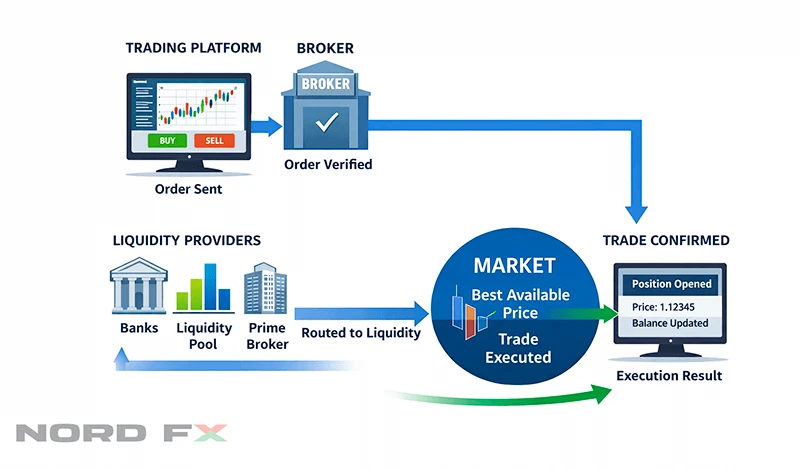
මෙම රූප සටහන මගින් දෘශ්යමය වශයෙන් පෙන්වන්නේ order එකක් trading platform එකෙන් broker හරහා වෙළඳපොලට ගොස් නැවත ක්රියාත්මක වූ ට්රේඩ් එකක් ලෙස පැමිණෙන ආකාරයයි.
ඔබ ක්ලික් කළ මිලට වඩා ක්රියාත්මක කිරීමේ මිල වෙනස් විය හැක්කේ ඇයි
මෙය සාමාන්යයෙන් සිදුවන්නේ:
- ක්ලික් කිරීම සහ ක්රියාත්මක කිරීම අතර වෙළඳපොල චලනය වන නිසා,
- අස්ථාවර හෝ අඩු liquidity තත්ත්වයන් තුළ spread වෙනස් වන නිසා,
- available liquidity ඉල්ලූ මිලට සීමිත වන නිසා.
මෙය දෝෂයක් නොවේ — එය සැබෑ වෙළඳපොල ක්රියාත්මක කිරීම ක්රියා කරන ආකාරයයි.
මෙය ට්රේඩර්වරුන්ට වැදගත් වන්නේ ඇයි
ක්රියාත්මක කිරීමේ ක්රියාවලිය තේරුම් ගැනීම ට්රේඩර්වරුන්ට උපකාරී වන්නේ:
- slippage නිවැරදිව අර්ථකථනය කිරීමට,
- Stop Loss සහ Take Profit හැසිරීම තේරුම් ගැනීමට,
- “වැරදි මිල” පිළිබඳ වැරදි උපකල්පනවලින් වැළකීමට,
- යථාර්ථවාදී අපේක්ෂාවන් සමඟ ට්රේඩ් කිරීමට.
බොහෝ ක්රියාත්මක කිරීම හා සම්බන්ධ ප්රශ්න ආරම්භ වන්නේ මෙම ක්රියාවලිය ක්රියා කරන ආකාරය නොදැනීමෙනි.
ඊළඟට කුමක්ද
දැන් ක්රියාත්මක කිරීමේ ක්රියාවලිය පැහැදිලි වී ඇති බැවින්, තේරුම් ගත යුතු ඊළඟ ප්රධාන සංකල්ප වන්නේ:
ආපසු යන්න ආපසු යන්න