สัปดาห์ที่ 27 เมษายน – 1 พฤษภาคม เป็นไปตามคาดในเชิงมหภาค FOMC คงอัตราดอกเบี้ยที่ 3.50–3.75% ในการประชุมวันที่ 29–30 เมษายน แต่โทนของการประชุมออกแนวเหยี่ยว: เจ้าหน้าที่สี่คนคัดค้าน โดยสามคนในนั้นคัดค้านสัญญาณใด ๆ ที่บ่งชี้การลดอัตราดอกเบี้ยในที่สุด – ถือเป็นความแตกแยกภายในที่ลึกที่สุดนับตั้งแต่เดือนตุลาคม 1992 GDP ไตรมาส 1 ของยูโรโซนเติบโตเพียง 0.1% และ CPI ของยูโรโซนพุ่งขึ้นสู่ 3.0% ในเดือนเมษายน ซึ่งเป็นระดับสูงสุดนับตั้งแต่เดือนกันยายน 2023 ECB คงอัตราดอกเบี้ยเมื่อวันที่ 30 เมษายน แต่กลับส่งสัญญาณเหยี่ยวอย่างน่าประหลาดใจ: ประธานาธิบดี Lagarde ยืนยันว่ามีการถกเถียงเรื่องการขึ้นดอกเบี้ย โดยประกาศว่าธนาคาร "กำลังเคลื่อนออกจาก" สถานการณ์พื้นฐาน และ Nagel กับ Müller ฝ่ายเหยี่ยวต่างส่งสัญญาณว่าอาจมีการขึ้นในเดือนมิถุนายน ตลาดขณะนี้คาดการณ์การขึ้นดอกเบี้ยของ ECB ราว 75 จุดเบสิสภายในสิ้นปี
ช่องแคบฮอร์มุซยังคงปิดตลอดทั้งสัปดาห์ น้ำมันดิบเบรนต์แตะ 114 ดอลลาร์ระหว่างวันในวันพฤหัสบดี – สูงสุดนับตั้งแต่เดือนมิถุนายน 2022 – ก่อนจะปรับลดลงหลังจากปากีสถานยืนยันว่าอิหร่านได้ส่งข้อเสนอสันติภาพใหม่ให้กับผู้ไกล่เกลี่ยของสหรัฐฯ ทรัมป์ปฏิเสธข้อเสนอดังกล่าวอย่างเปิดเผย โดยกล่าวว่าเขา "ไม่พอใจ" แต่สัญญาณทางการทูตก็เพียงพอที่จะทำให้สินทรัพย์เสี่ยงทรงตัวก่อนเข้าสู่สุดสัปดาห์: หุ้นสหรัฐฯ ทำสถิติสูงสุดตลอดกาลในวันศุกร์ และ EUR/USD รวมถึงสินทรัพย์คริปโตปรับตัวแข็งขึ้น
ราคาปิด ณ วันศุกร์ที่ 1 พฤษภาคม 2026:
EUR/USD – 1.1721 | น้ำมันดิบเบรนต์ – $108.17 | ทองคำ (XAU/USD ฟิวเจอร์ส) – $4,661.40 | เงิน (XAG/USD ฟิวเจอร์ส) – $76.71 | บิตคอยน์ – $77,400 | อีเธอเรียม – $2,284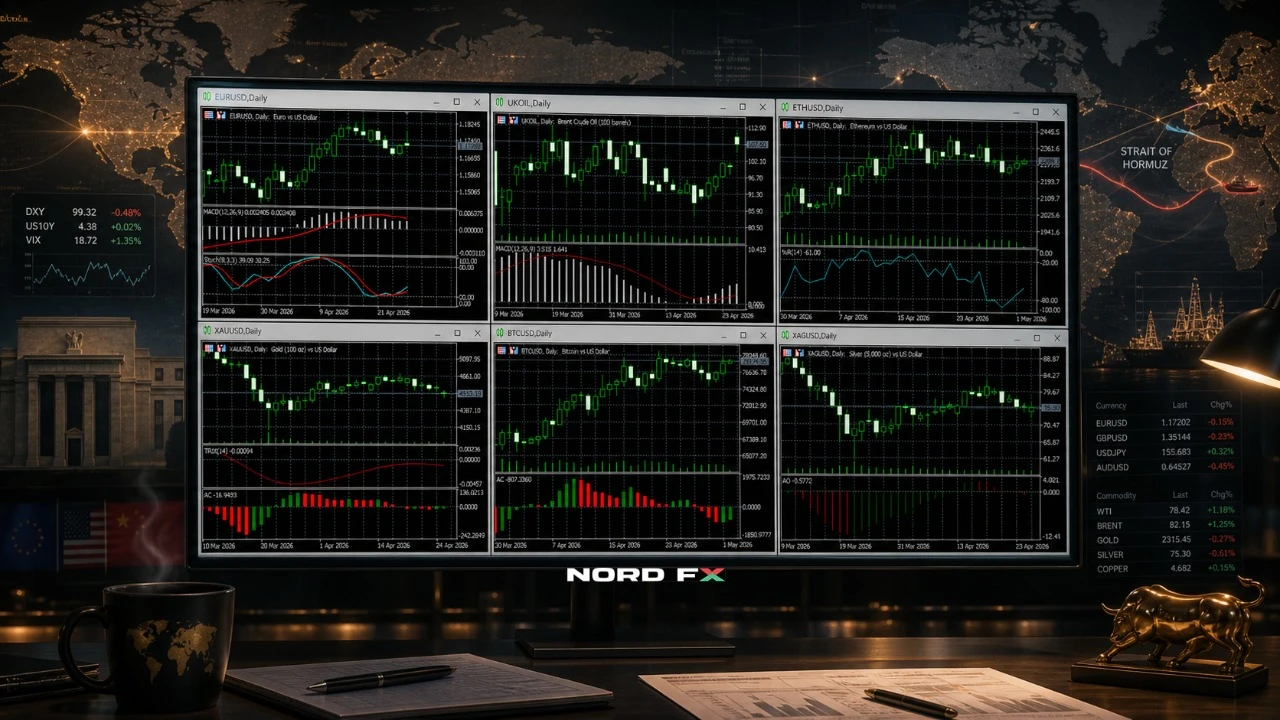
EUR/USD
EUR/USD ปิดสัปดาห์ที่ 1.1721 แทบไม่เปลี่ยนแปลงจากระดับปิดของวันศุกร์ก่อนหน้าที่ 1.1722 คู่เงินดังกล่าวร่วงลงสู่ระดับต่ำสุดในรอบสามสัปดาห์ที่ 1.1659 เมื่อวันที่ 30 เมษายน ภายใต้แรงกดดันสองทางจาก FOMC แนวเหยี่ยวและราคาน้ำมันที่พุ่งขึ้น ก่อนจะฟื้นตัวอย่างรวดเร็วในวันศุกร์จากความอ่อนค่าของดอลลาร์ที่เกิดจากการแทรกแซงค่าเงินเยน และโทนเหยี่ยวของ ECB ฉากหลังเชิงโครงสร้างได้เปลี่ยนแปลงอย่างมีนัยสำคัญ: เฟดถูกแช่แข็งให้คงอัตราดอกเบี้ยไว้ ขณะที่ ECB ได้หันไปสู่จุดยืนที่อาจขึ้นดอกเบี้ย ซึ่งทำให้ส่วนต่างอัตราดอกเบี้ยแคบลงในทางที่เอื้อต่อยูโร สิ่งนี้ถูกหักล้างด้วยภาวะช็อกด้านพลังงานที่ทำร้ายเศรษฐกิจยูโรโซน – GDP ไตรมาส 1 ที่ 0.1% และ CPI 3.0% – ทำให้เป็นการขึ้นดอกเบี้ยท่ามกลางการชะลอตัว
สัปดาห์ข้างหน้ามีศูนย์กลางอยู่ที่ตัวเลขการจ้างงานนอกภาคเกษตรของสหรัฐฯ (Nonfarm Payrolls วันศุกร์ที่ 8 พฤษภาคม) ตัวเลขที่แข็งแกร่ง (150K+) จะเสริมจุดยืนการคงดอกเบี้ยของเฟดและผลัก EUR/USD กลับลงสู่ 1.1630–1.1600 ผลที่อ่อนแอ (ต่ำกว่า 80K) จะปลุกความคาดหวังการลดดอกเบี้ยอีกครั้งและอาจดันคู่เงินขึ้นเหนือ 1.1800 ISM Services PMI (วันอังคาร) และ ADP Employment (วันพุธ) จะกำหนดโทนก่อน NFP ความคืบหน้าทางการทูตในช่องแคบฮอร์มุซยังคงเป็นปัจจัยตัวแปรเพิ่มเติมที่อาจดันคู่เงินขึ้นสู่ 1.1900 โดยลดราคาน้ำมันและความต้องการดอลลาร์ในฐานะสินทรัพย์ปลอดภัย
แนวต้าน: 1.1764, 1.1800, 1.1849 แนวรับ: 1.1659, 1.1630, 1.1600
มุมมองพื้นฐาน: เป็นกลางถึงเชิงบวก ตราบใดที่ยังคงอยู่เหนือ 1.1659 การเปลี่ยนทิศของ ECB ไปทางเหยี่ยวเทียบกับเฟดที่ถูกแช่แข็งให้แรงหนุนเชิงโครงสร้างในระยะกลาง อย่างไรก็ตาม ทิศทางระยะใกล้จะถูกตัดสินโดย NFP ในวันที่ 8 พฤษภาคม
น้ำมันดิบเบรนต์
เบรนต์ปิดที่ $108.17 ในวันศุกร์ ลดลงประมาณ 2% จากจุดสูงสุดระหว่างวันของวันพฤหัสบดีที่เหนือ $114 หลังจากข้อเสนอสันติภาพของอิหร่านส่งถึงผู้ไกล่เกลี่ยปากีสถาน แม้จะปรับลดลงในวันศุกร์ แต่เบรนต์ก็บันทึกการเพิ่มขึ้นรายสัปดาห์ติดต่อกันเป็นครั้งที่สอง – เพิ่มขึ้นประมาณ 2.7% จากระดับปิดก่อนหน้าที่ $105.33 การส่งออกน้ำมันดิบของสหรัฐฯ พุ่งขึ้นสู่ระดับสูงสุดเป็นประวัติการณ์ แต่ผู้วิเคราะห์เตือนว่าบางประเทศกำลังบริโภคสินค้าทางเลือกชุดสุดท้าย เนื่องจากการขนส่งจากอ่าวเปอร์เซียก่อนการปิดช่องแคบครั้งสุดท้ายได้ถึงปลายทางแล้ว และไม่มีอุปทานใหม่มาทดแทน
ฉากหลังทางภูมิรัฐศาสตร์ที่เข้าสู่สัปดาห์ใหม่เป็นบวกอย่างชัดเจนต่อราคาน้ำมัน ทรัมป์ปฏิเสธข้อเสนอของอิหร่านอย่างเปิดเผย ให้คำมั่นว่าจะรักษาการปิดล้อมทางทะเลของสหรัฐฯ และเส้นตาย War Powers 60 วันได้ผ่านไปโดยที่รัฐสภาไม่ได้ดำเนินการ ผู้นำสูงสุดของอิหร่านให้คำมั่นที่จะคงขีดความสามารถด้านนิวเคลียร์และขีปนาวุธ รวมถึงการควบคุมช่องแคบ ดูเหมือนว่าจะไม่มีทางออกในเร็ว ๆ นี้
แนวต้าน: $111, $114, $120 แนวรับ: $105, $103, $100
มุมมองพื้นฐาน: เชิงบวกเหนือ $103 ขับเคลื่อนโดยภาวะช็อกอุปทานทางภูมิรัฐศาสตร์ที่กำลังดำเนินอยู่ ความก้าวหน้าทางการทูตที่น่าเชื่อถือในฮอร์มุซเป็นปัจจัยขาลงระยะใกล้เพียงประการเดียวที่อาจทำให้เกิดการแก้ไขอย่างรวดเร็วในระดับ $10–$15 – แต่การที่ทรัมป์ปฏิเสธข้อเสนอล่าสุดของอิหร่านทำให้สถานการณ์ดังกล่าวไม่น่าจะเกิดขึ้นในวันเปิดสัปดาห์ กรณีฐาน: การรวมตัวเพิ่มเติมในช่วง $105–$115
ทองคำ (XAU/USD)
ทองคำฟิวเจอร์สปิดสัปดาห์ที่ $4,661.40 ลดลงประมาณ 1.7% จากระดับปิดวันศุกร์ก่อนหน้าที่ $4,740.90 ระดับต่ำสุดของสัปดาห์ที่ราว $4,560 ถูกทดสอบในวันพฤหัสบดี ก่อนที่โลหะจะฟื้นตัวจากการอ่อนค่าของดอลลาร์หลังการแทรกแซงค่าเงินเยนของญี่ปุ่น ทองคำยังคงเดินทางในสภาพแวดล้อมที่ขัดแย้งกัน: วิกฤตทางภูมิรัฐศาสตร์ซึ่งโดยปกติจะหนุนแท่งทองคำ ในเวลาเดียวกันก็ดันราคาน้ำมันให้สูงขึ้น จุดประกายความกลัวเงินเฟ้อ ชะลอการลดอัตราดอกเบี้ย และเสริมความแข็งแกร่งของดอลลาร์ – ล้วนเป็นแรงต้านสำหรับทองคำที่ไม่ให้ผลตอบแทน World Gold Council ยืนยันว่าธนาคารกลางได้เพิ่มทุนสำรองทองคำในไตรมาส 1 ปี 2026 โดยอุปสงค์ทั่วโลกแตะระดับสูงสุดเป็นประวัติการณ์ที่ 193 พันล้านดอลลาร์ ซึ่งให้พื้นรองรับเชิงโครงสร้าง XAU/USD ในขณะนี้อยู่ต่ำกว่า MA 20 วัน (~$4,698) และ MA 100 วัน (~$4,746) ซึ่งทั้งสองทำหน้าที่เป็นแนวต้าน การฟื้นตัวในวันศุกร์หยุดชะงักใกล้ Fibonacci retracement 38.2% ของการลดลงล่าสุดที่ ~$4,650
NFP ของสหรัฐฯ ในวันที่ 8 พฤษภาคมเป็นปัจจัยกระตุ้นหลักสำหรับสัปดาห์ที่จะมาถึง ตัวเลขการจ้างงานที่อ่อนแอจะปลุกความคาดหวังการลดอัตราดอกเบี้ยและสนับสนุนทองคำสู่ $4,780–$4,840 ตัวเลขที่แข็งแกร่งจะเสริมจุดยืนการคงดอกเบี้ยของเฟดและกดโลหะกลับลงสู่ $4,580–$4,560 ISM Services (วันอังคาร) และ ADP (วันพุธ) ให้สัญญาณทิศทางก่อน NFP มติของผู้วิเคราะห์ Reuters วางค่ากลางการคาดการณ์ทองคำปี 2026 ไว้ที่ $4,916/ออนซ์ และเป้าหมายระยะยาวจากสถาบัน (Goldman Sachs $5,400, JPMorgan $5,900) ชี้ว่าความอ่อนแอในปัจจุบันเป็นการปรับฐานในตลาดกระทิงเชิงโครงสร้าง
แนวต้าน: $4,700, $4,750, $4,840 แนวรับ: $4,600, $4,560, $4,480
มุมมองพื้นฐาน: เป็นกลาง โดยมีแนวโน้มขาลงเล็กน้อยต่ำกว่า $4,700 ทองคำติดอยู่ในการชักเย่อระหว่างความไม่แน่นอนทางภูมิรัฐศาสตร์ (ขาขึ้น) และเงินเฟ้อจากน้ำมันที่ผลักความคาดหวังอัตราดอกเบี้ยให้สูงขึ้น (ขาลง) การปิดเหนือ $4,700 อย่างชัดเจนเป็นสัญญาณการฟื้นตัว การหลุด $4,560 จะเปิดทางสู่ $4,480
เงิน (XAG/USD)
เงินฟิวเจอร์สปิดที่ $76.71 ฟื้นตัวอย่างรวดเร็วจากระดับต่ำสุดระหว่างวันของวันพฤหัสบดีที่ใกล้ $71.00 จากการอ่อนค่าของดอลลาร์และการคลายตัวบางส่วนของน้ำมัน – เพิ่มขึ้นกว่า 3% ในวันนั้น แม้จะดีดตัวในวันศุกร์ แต่เงินก็บันทึกการลดลงรายสัปดาห์ติดต่อกันเป็นครั้งที่สอง ปิดต่ำกว่าระดับวันศุกร์ก่อนหน้าที่ $76.414 ราว 0.5% โลหะดังกล่าวเผชิญแรงต้านที่ขยายมากกว่าทองคำ: ความคาดหวังอัตราดอกเบี้ยที่สูง (สินทรัพย์ที่ไม่ให้ผลตอบแทน) บวกกับความกลัวเศรษฐกิจถดถอยจากภาวะช็อกด้านพลังงานที่คุกคามอุปสงค์การผลิต อิเล็กทรอนิกส์ และแผงโซลาร์ UBS ในสัปดาห์นี้ปรับลดประมาณการราคาเงินในหลายช่วงเวลา โดยอ้างอุปสงค์การลงทุนที่อ่อนแอลง ในเชิงโครงสร้าง คำมั่นด้าน capex AI รวมของบิ๊กเทคที่ 715 พันล้านดอลลาร์ (เพิ่มขึ้น 91% เมื่อเทียบเป็นรายปี) ให้พื้นอุปสงค์อุตสาหกรรมระยะกลาง เนื่องจากเงินเป็นส่วนสำคัญของโครงสร้างพื้นฐานเซมิคอนดักเตอร์และศูนย์ข้อมูล ระดับ $70 ยืนหยัดผ่านการทดสอบสามครั้งแยกกันในปี 2026 สร้างพื้นที่แท้จริง
ในเชิงเทคนิค XAG/USD ยังคงอยู่ต่ำกว่า SMA 50 วัน (~$82) SMA 200 วัน (~$75.23) กำลังเพิ่มขึ้นและให้แนวรับที่ใกล้เคียง จุดหมุนที่ระบุโดย Investing.com ที่ ~$76.75 เป็นสนามรบที่ใกล้ที่สุด
แนวต้าน: $78.00, $80.00, $82.00 แนวรับ: $74.20, $71.00, $70.00
มุมมองพื้นฐาน: เป็นกลาง โดยมีแนวโน้มขาลงต่ำกว่า $78.00 พื้นที่ $70 ที่ผ่านการทดสอบสามครั้งจำกัดความเชื่อมั่นด้านขาลง แต่การปรับลดของ UBS และแรงต้านมหภาคทำให้การฟื้นตัวมีเพดาน NFP ในวันที่ 8 พฤษภาคมและการเปลี่ยนแปลงใด ๆ ในการทูตฮอร์มุซเป็นปัจจัยกระตุ้นที่ชี้ขาด
บิตคอยน์ (BTC/USD)
บิตคอยน์ปิดสัปดาห์ที่ประมาณ $77,400 – เพิ่มขึ้นราว 0.5% จากระดับวันศุกร์ก่อนหน้าที่ $77,546 รักษาเสถียรภาพอย่างน่าทึ่งตลอดสัปดาห์ที่มีความผันผวนทางมหภาคสูง เดือนเมษายนปิดเป็นเดือนที่มีกระแสเงินเข้า ETF แข็งแกร่งที่สุดของปี 2026 ที่ประมาณ 1.97 พันล้านดอลลาร์ Strategy (MicroStrategy) เปิดเผยการซื้อมูลค่า 7.2 พันล้านดอลลาร์ในช่วงแปดสัปดาห์ที่ผ่านมา ถือครอง 818,334 BTC ที่ต้นทุนเฉลี่ย ~$75,537 – เพียงเล็กน้อยเหนือราคาปัจจุบัน ทุนสำรองในตลาดแลกเปลี่ยนลดลงสู่ระดับต่ำสุดในรอบ 7 ปี การครอบงำของ BTC ขยับสู่ 60% สะท้อนการวางตำแหน่งเชิงรับในเหรียญหลัก ดัชนี Fear & Greed ปรับตัวจาก 29 เป็น 43 ("กลัว") ตลอดสัปดาห์
ความท้าทายเชิงเทคนิคหลักยังคงเป็นโซนแนวต้าน $78,500–$80,000 ซึ่งได้ผลักบิตคอยน์ออกถึงสี่ครั้งในสองเดือน บิตคอยน์ไม่ได้ปิดเหนือ EMA 200 วันที่ $82,228 มาเจ็ดเดือนแล้ว ปัจจัยกระตุ้นสำคัญในสัปดาห์ข้างหน้า: รายงานผลประกอบการไตรมาส 1 ของ Strategy ในวันที่ 5 พฤษภาคม (การหยุดซื้อบิตคอยน์จะลบเสาหลักของอุปสงค์), การพิจารณาของวุฒิสภาเรื่องการเสนอชื่อ Warsh เป็นประธานเฟด, ISM Services (วันอังคาร), ADP (วันพุธ) และ NFP (วันศุกร์)
แนวต้าน: $78,500, $80,000, $82,228 แนวรับ: $75,800, $74,500, $73,000
มุมมองพื้นฐาน: เชิงบวกเล็กน้อยเหนือ $75,800 ได้รับการสนับสนุนจากอุปทานในตลาดแลกเปลี่ยนที่ต่ำเป็นประวัติการณ์และการสะสมของสถาบันที่แข็งแกร่ง การปิดรายสัปดาห์ที่เด็ดขาดเหนือ $80,000–$82,228 จำเป็นต้องยืนยันการฟื้นตัวเชิงโครงสร้าง จนกว่าจะถึงตอนนั้น ช่วง $74,500–$78,500 จะคงอยู่
อีเธอเรียม (ETH/USD)
อีเธอเรียมปิดสัปดาห์ที่ประมาณ $2,284 ลดลงประมาณ 1.4% จากระดับวันศุกร์ก่อนหน้าที่ $2,317.46 ยังคงทำผลงานต่ำกว่าบิตคอยน์ ราคาที่เกิดขึ้นจริงที่ $2,308 (ต้นทุนการได้มาบนเชนรวม) ทำหน้าที่เป็นแนวต้านด้านบน ดึงดูดการกระจายจากผู้ถือใกล้จุดคุ้มทุน ETH อยู่ต่ำกว่าทั้ง EMA 50 วัน (~$2,322) และ MA 200 วัน (~$2,345) ซึ่งบรรจบกันเป็นกลุ่มแนวต้านที่แข็งแกร่ง ในด้านบวก: BitMine Immersion Technologies ข้ามผ่าน 5,078,386 ETH ในการถือครอง; อัตราส่วน taker buy/sell ของ Binance แตะระดับสูงสุดนับตั้งแต่เดือนมกราคม 2023; และ MA 180 วันของการปรับใช้สมาร์ทคอนแทรกต์ใหม่แตะระดับสูงสุดเป็นประวัติการณ์ – การแยกตัวระหว่างปัจจัยพื้นฐานกับราคาในเชิงบวก เดือนเมษายนเป็นเดือนที่มีกระแสเงินเข้า ETF แข็งแกร่งที่สุดของปี 2026 สำหรับคริปโตโดยรวม
ทิศทางของ ETH จะถูกขับเคลื่อนโดยบิตคอยน์และปัจจัยกระตุ้นมหภาค – ผลประกอบการของ Strategy, ISM, ADP และ NFP ETH แสดงค่าเบต้าที่สูงกว่าในทั้งสองทิศทาง โซนแนวรับ $2,200–$2,250 มีความสำคัญ: ผู้วิเคราะห์หลายรายเตือนว่าการหลุด $2,200 จะ "เร่งการเทขาย" สู่ $2,150 และ $2,100
แนวต้าน: $2,320, $2,345, $2,400 แนวรับ: $2,250, $2,200, $2,150
มุมมองพื้นฐาน: เป็นกลาง โดยมีแนวโน้มขาลงเล็กน้อยต่ำกว่า $2,320 ค่าเฉลี่ยเคลื่อนที่ที่บรรจบกันก่อตัวเป็นกลุ่มแนวต้านที่น่าเกรงขาม กระแสเงินเข้า ETF ที่แข็งแกร่งและตัวชี้วัดบนเชนคัดค้านการชอร์ตเชิงรุก การปิดรายสัปดาห์เหนือ $2,345 จะเป็นสัญญาณที่น่าเชื่อถือแรกของการฟื้นตัว
สรุป
สัปดาห์ที่ 4–8 พฤษภาคมนำมาซึ่งปฏิทินมหภาคที่กระชับแต่มีผลกระทบสูง: ISM Services PMI (วันอังคาร), ADP Employment (วันพุธ), Initial Jobless Claims (วันพฤหัสบดี) และ Nonfarm Payrolls ของสหรัฐฯ สำหรับเดือนเมษายน (วันศุกร์ที่ 8 พฤษภาคม) – รายงานแรกหลังจากการประชุม FOMC ครั้งสุดท้ายของพาวเวลล์ ขณะที่ Kevin Warsh รอการยืนยันจากวุฒิสภา ข้อมูลเหล่านี้มาภายใต้กรอบที่นิยามโดยเฟดที่ถูกแช่แข็ง, ECB ที่กำลังหันไปสู่การขึ้นดอกเบี้ย และช่องแคบฮอร์มุซที่ยังคงปิดโดยไม่มีทางออกระยะใกล้หลังจากที่ทรัมป์ปฏิเสธข้อเสนอล่าสุดของอิหร่าน
EUR/USD ได้รับการสนับสนุนจากการเปลี่ยนแปลงส่วนต่างอัตราดอกเบี้ย แต่รอ NFP เพื่อกำหนดทิศทางต่อไป เบรนต์รวมตัวที่ระดับสูง – ภาวะช็อกอุปทานกำลังลึกขึ้น ไม่ได้จางหายไป ทองคำติดอยู่ในการชักเย่อระหว่างอุปสงค์ในฐานะสินทรัพย์ปลอดภัยและแรงกดดันเงินเฟ้อจากน้ำมัน เงินเผชิญแรงต้านในรูปแบบที่ขยายมากขึ้น บิตคอยน์แสดงความยืดหยุ่นที่น่าทึ่งผ่านการสะสมของสถาบันและอุปทานในตลาดแลกเปลี่ยนที่ต่ำเป็นประวัติการณ์ โดย $80,000 เป็นระดับเบรกเอาต์ที่ชี้ขาด อีเธอเรียมเลียนแบบบิตคอยน์อย่างใกล้ชิดด้วยค่าเบต้าที่สูงกว่า โดยกลุ่ม $2,320–$2,345 เป็นอุปสรรคทางเทคนิคหลัก
คำถามหลักของสัปดาห์: ตลาดแรงงานของสหรัฐฯ จะแสดงความอ่อนแอเพียงพอที่จะปลุกความคาดหวังการลดอัตราดอกเบี้ยหรือไม่ – และหากเป็นเช่นนั้น จะสามารถเอาชนะแรงเงินเฟ้อที่ค้างคาจากเบรนต์ที่ $108 ได้หรือไม่ คำตอบจะกำหนดโทนทิศทางของเครื่องมือทั้งหกตลอดกลางเดือนพฤษภาคม
NordFX Analytical Group
คำเตือน: เนื้อหาเหล่านี้ไม่ใช่คำแนะนำในการลงทุนหรือคู่มือสำหรับการทำงานในตลาดการเงินและมีไว้เพื่อวัตถุประสงค์ในการให้ข้อมูลเท่านั้น การซื้อขายในตลาดการเงินมีความเสี่ยงและอาจนำไปสู่การสูญเสียเงินที่ฝากไว้ทั้งหมด
กลับ กลับ