تفاوت بیتکوین و اتریوم برای معاملهگران CFD چیست؟
پاسخ کوتاه: CFDهای بیتکوین و اتریوم به معاملهگران امکان میدهند بدون مالکیت هیچیک از این ارزهای دیجیتال، روی حرکات قیمت BTC و ETH گمانهزنی کنند. بیتکوین معمولاً جهت کلی بازار ارزهای دیجیتال را نمایندگی میکند، در حالی که اتریوم محرکهای اضافی مرتبط با فناوری و اکوسیستم خود را نیز دارد. ابزار مناسب به نوسان، هزینهها، استراتژی و تحمل ریسک بستگی دارد.
تفاوت اصلی بیتکوین و اتریوم برای معاملهگران CFD چیست؟
برای معاملهگران CFD، تفاوت اصلی در مالکیت نیست. نه CFD بیتکوین و نه CFD اتریوم، بهطور معمول ارز دیجیتال پایه را به معاملهگر منتقل نمیکنند.
تمایز مهمتر این است که این دو بازار چگونه رفتار میکنند.
بیتکوین بزرگترین و جاافتادهترین ارز دیجیتال است. قیمت آن اغلب بهشدت تحت تأثیر فضای ریسک جهانی، شرایط پولی، مشارکت نهادی و تقاضا برای محصولات سرمایهگذاری مرتبط با بیتکوین قرار میگیرد.
اتریوم هم یک ارز دیجیتال است و هم دارایی بومی یک شبکه بلاکچین برنامهپذیر. قیمت آن میتواند به همان نیروهای کلان اقتصادی مؤثر بر بیتکوین واکنش نشان دهد، اما همچنین به ارتقاهای شبکه، فعالیت استیکینگ، تقاضای تراکنش و تحولات در اپلیکیشنهای ساختهشده بر بستر اتریوم پاسخ میدهد.
در نتیجه، BTC و ETH اغلب در جهت کلی مشابهی حرکت میکنند، اما ممکن است در زمانبندی، شدت و نوسان با هم تفاوت داشته باشند.
CFDهای بیتکوین و اتریوم چه هستند؟
CFD بیتکوین قراردادی است که ارزش آن از حرکت قیمت بیتکوین پیروی میکند. CFD اتریوم به همین شکل عمل میکند اما از اتریوم پیروی میکند.
معاملهگر از طریق CFD کوینی خریداری نمیکند. در عوض، نتیجه معامله به تفاوت میان قیمت باز شدن و بسته شدن بستگی دارد.
یک موقعیت خرید (لانگ) با افزایش قیمت CFD سود میکند و با کاهش آن ارزش از دست میدهد. یک موقعیت فروش (شورت) با کاهش قیمت سود میکند و با افزایش آن ضرر میدهد.
از آنجا که CFDها ممکن است از اهرم استفاده کنند، معاملهگر میتواند مواجههای بزرگتر از مارجین سپردهشده در بازار داشته باشد. سود و زیان بر اساس کل حجم موقعیت محاسبه میشود و همین موضوع مدیریت ریسک را ضروری میکند.
بیتکوین و اتریوم چه تفاوتی با یکدیگر دارند؟
بیتکوین و اتریوم با اهداف متفاوتی توسعه یافتهاند.
بیتکوین در اصل بهعنوان یک نظام پولی دیجیتال غیرمتمرکز طراحی شد. قواعد عرضه، مدل امنیتی و جایگاه آن بهعنوان نخستین ارز دیجیتال بزرگ، به کاربرد آن بهعنوان یک دارایی دیجیتال قابل انتقال و یک ذخیره ارزش احتمالی کمک کرده است.
اتریوم بهعنوان یک بلاکچین برنامهپذیر طراحی شد. این شبکه از قراردادهای هوشمند، اپلیکیشنهای غیرمتمرکز، توکنها و سایر خدمات مبتنی بر بلاکچین پشتیبانی میکند. اِتر، که در بافت معاملاتی معمولاً اتریوم خوانده میشود، دارایی بومی این شبکه است.
این تفاوتهای فناورانه حتی زمانی که یک معاملهگر CFD مالک دارایی پایه نیست هم اهمیت دارند. آنها بر اخبار، رویدادها و انتظارات بازاری که میتوانند هر قیمت را جابهجا کنند تأثیر میگذارند.
عامل | CFD بیتکوین | CFD اتریوم |
بازار پایه | بیتکوین | اِتر، دارایی بومی اتریوم |
نقش اصلی در بازار | دارایی پولی دیجیتال و معیار بازار ارزهای دیجیتال | دارایی بومی یک اکوسیستم بلاکچین برنامهپذیر |
مالکیت از طریق CFD | خیر | خیر |
محرکهای رایج قیمت | شرایط کلان اقتصادی، جریانهای نهادی، فضای احساسی بازار کریپتو و تحولات مرتبط با خود بیتکوین | فضای احساسی بازار کریپتو، ارتقاهای شبکه، استیکینگ، فعالیت اپلیکیشنها و شرایط کلان اقتصادی |
نقدشوندگی نسبی | معمولاً عمیقتر در سراسر بازار گستردهتر کریپتو | عموماً قابل توجه، اما بهطور معمول کمتر از بیتکوین |
نوسان نسبی | بالا و متغیر | بالا و متغیر؛ ممکن است در برخی دورهها حرکات درصدی بزرگتری نشان دهد |
امکان معامله در قیمتهای صعودی یا نزولی | بله، بر اساس قرارداد و شرایط کارگزار | بله، بر اساس قرارداد و شرایط کارگزار |
ریسکهای اصلی CFD | اهرم، حرکات سریع قیمت، شکافهای قیمتی، تغییرات اسپرد و هزینههای تأمین مالی | اهرم، حرکات سریع قیمت، شکافهای قیمتی، تغییرات اسپرد و هزینههای تأمین مالی |
این جدول ویژگیهای کلی بازار را توصیف میکند، نه قواعد همیشگی. شرایط بازار میتواند تغییر کند و معاملهگران باید پیش از باز کردن موقعیت، مشخصات فعلی قرارداد را بررسی کنند.
چه عواملی قیمت بیتکوین و اتریوم را جابهجا میکنند؟
بیتکوین و اتریوم چند محرک مهم قیمتی مشترک دارند، زیرا هر دو به بازار گستردهتر ارزهای دیجیتال تعلق دارند.
تغییر در انتظارات نرخ بهره، شرایط نقدینگی و تقاضای عمومی برای داراییهای ریسکی میتواند بر هر دو بازار اثر بگذارد. افزایش گسترده اشتهای ریسک ممکن است از ارزهای دیجیتال حمایت کند، در حالی که چرخش ناگهانی به سمت داراییهای تدافعی میتواند بر آنها فشار بیاورد.
مقررات نیز میتواند بر هر دو تأثیر بگذارد. قوانین جدید در مورد صرافیها، نگهداری دارایی، محصولات نهادی یا دسترسی به ارزهای دیجیتال میتواند انتظارات بازار را بهسرعت تغییر دهد.
با این حال، بیتکوین و اتریوم محرکهای متمایزی هم دارند.
چه چیزی معمولاً بیتکوین را جابهجا میکند؟
بیتکوین ممکن است به موارد زیر واکنش شدیدی نشان دهد:
- خرید و فروشهای نهادی
- ورود یا خروج سرمایه از محصولات سرمایهگذاری مرتبط با بیتکوین
- تغییرات در اقتصاد استخراج
- تحولات مؤثر بر پذیرش بیتکوین
- برداشتهای عمومی از بیتکوین بهعنوان یک دارایی پولی
- تغییرات عمده در نقدینگی جهانی و فضای ریسک
از آنجا که بیتکوین بهطور گسترده معیار اصلی بازار ارزهای دیجیتال تلقی میشود، یک حرکت مهم در BTC میتواند بر بسیاری از داراییهای دیجیتال دیگر اثر بگذارد.
چه چیزی معمولاً اتریوم را جابهجا میکند؟
اتریوم ممکن است به موارد زیر واکنش نشان دهد:
- ارتقاهای عمده شبکه
- تغییر در میزان مشارکت یا پاداشهای استیکینگ
- فعالیت در اپلیکیشنهای غیرمتمرکز
- تقاضای تراکنش و کارمزدهای شبکه
- تحولات مربوط به توکنها و اپلیکیشنهای ساختهشده بر بستر اتریوم
- رقابت از سوی سایر شبکههای بلاکچین برنامهپذیر
اتریوم همچنین از بیتکوین و بازار گستردهتر کریپتو تأثیر میپذیرد. بنابراین معاملهگر باید هم تحولات خاص اتریوم و هم جهت کلی بازار به رهبری BTC را رصد کند.
آیا بیتکوین و اتریوم همیشه با هم حرکت میکنند؟
خیر. قیمت آنها اغلب همبستگی مثبت دارد، اما همبستگی به معنای حرکت یکسان نیست.
بیتکوین ممکن است زمانی که تقاضا در محصولات نهادی مرتبط با بیتکوین متمرکز است، رشد قویتری داشته باشد. اتریوم ممکن است زمانی عملکرد بهتری داشته باشد که توجه به سمت قراردادهای هوشمند، استیکینگ یا اپلیکیشنهای بلاکچینی بچرخد.
آنها همچنین میتوانند به یک رویداد واحد واکنش متفاوتی نشان دهند. تحولی که برای پذیرش عمومی ارزهای دیجیتال مثبت دیده میشود ممکن است به هر دو سود برساند، در حالی که یک مشکل در شبکه اتریوم میتواند ETH را مستقیمتر از BTC تحت تأثیر قرار دهد.
همبستگی نیز میتواند در طول زمان تغییر کند. معاملهگران نباید فرض کنند رابطهای که در یک مرحله از بازار مشاهده شده، بدون تغییر ادامه خواهد یافت.
این نکته بهویژه هنگام نگهداشتن موقعیت در هر دو ابزار اهمیت دارد. یک موقعیت خرید BTC و یک موقعیت خرید ETH ممکن است دو معامله جداگانه به نظر برسند، اما میتوانند مواجههای متمرکز با همان ریسک کلی بازار کریپتو ایجاد کنند.
بیتکوین نوسان بیشتری دارد یا اتریوم؟
هم بیتکوین و هم اتریوم در مقایسه با بسیاری از بازارهای سنتی نوسان بسیار بالایی دارند.
اتریوم ممکن است در برخی دورهها حرکات درصدی بزرگتری از بیتکوین ایجاد کند، زیرا بازار کوچکتری دارد و محرکهای اضافی مرتبط با اکوسیستم خود را داراست. با این حال، این یک قاعده همیشگی نیست.
بیتکوین نیز میتواند حرکات بسیار سریعی را تجربه کند، بهویژه در زمان تغییر فضای ریسک جهانی، لیکوئید شدنهای بزرگ یا تحولات غیرمنتظره مقرراتی و نهادی.
بنابراین نوسان را باید اندازهگیری کرد، نه فرض. معاملهگران میتوانند این موارد را بررسی کنند:
- میانگین دامنههای قیمتی روزانه اخیر
- حرکت درصدی بهجای تنها حرکت دلاری
- اندازه و فراوانی شکافهای قیمتی
- رفتار اسپرد در دورههای پرنوسان
- فاصله لازم برای یک حد ضرر معنادار از نظر تکنیکال
- رویدادهای پیشروی بازار یا شبکه
ابزاری با نوسان بیشتر بهطور خودکار بهتر نیست. ممکن است حرکت قیمتی بیشتری ایجاد کند، اما سرعت شکلگیری زیان را هم افزایش میدهد.
نقدشوندگی و هزینههای معاملاتی چه تفاوتی دارند؟
بیتکوین معمولاً عمیقترین نقدشوندگی را در بازار ارزهای دیجیتال دارد. اتریوم نیز فعالانه معامله میشود، اما نقدشوندگی آن بسته به بازار و شرایط ممکن است کمتر از بیتکوین باشد.
نقدشوندگی بیشتر بازار پایه میتواند به قیمتگذاری کارآمدتر کمک کند. این موضوع اسپرد ثابت یا باریک CFD را تضمین نمیکند، زیرا هزینه واقعی معاملهگر به کارگزار، نوع حساب، قرارداد و شرایط بازار بستگی دارد.
هزینههای احتمالی معاملات CFD شامل موارد زیر است:
- اسپرد خرید و فروش
- کمیسیون، در صورت وجود
- تأمین مالی شبانه برای موقعیتهایی که باز نگه داشته میشوند
- هزینههای تبدیل ارز زمانی که حساب معاملاتی از ارز دیگری استفاده میکند
- لغزش قیمت (اسلیپیج) در شرایط سریع یا کمنقدشوندگی
بیتکوین و اتریوم لزوماً اسپرد، نرخ تأمین مالی یا اندازه قرارداد یکسانی ندارند.
اسپرد اسمی کمتر همیشه به معنای معامله ارزانتر نیست. معاملهگران باید هزینه را نسبت به حجم موقعیت و حرکت قیمتی مورد انتظار ارزیابی کنند.
پیش از معامله هر یک از این ابزارها، معاملهگر باید مشخصات کامل قرارداد را بررسی کند و تنها به قیمت فعلی بازار تکیه نکند.
معاملهگران CFD چگونه باید میان BTC و ETH انتخاب کنند؟
هیچ ابزاری بهطور مطلق بهتر نیست. انتخاب باید از استراتژی و محدودیتهای ریسک معاملهگر پیروی کند.
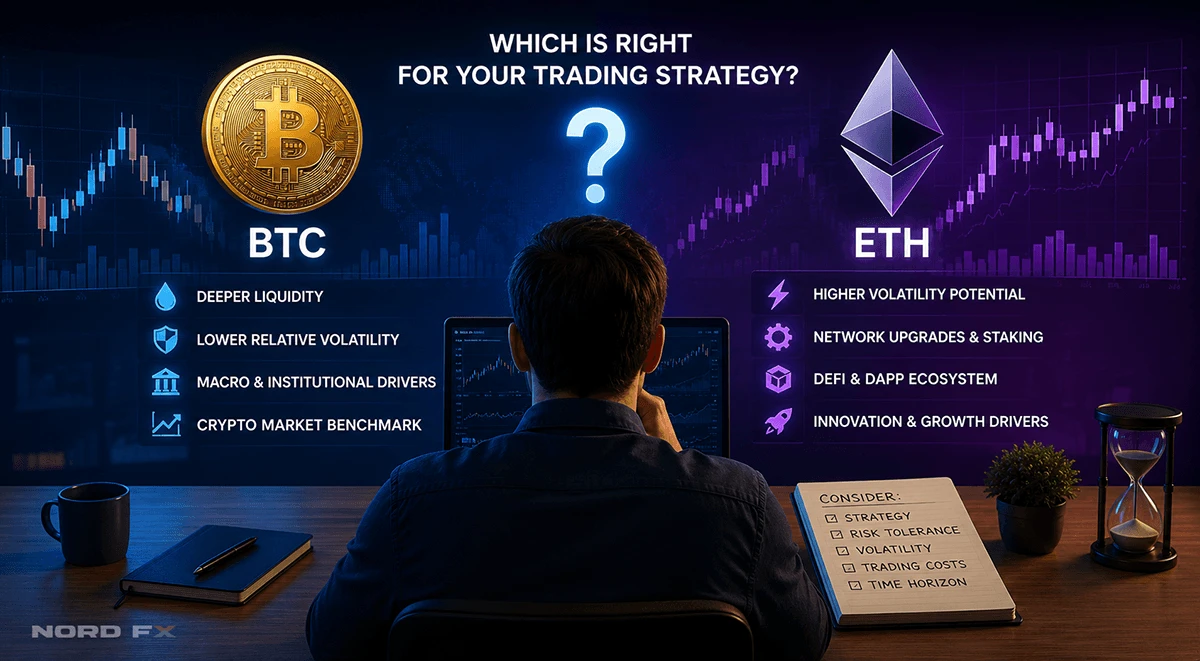
بیتکوین ممکن است برای معاملهگری مناسبتر باشد که خواهان مواجهه با جهت کلی بازار ارزهای دیجیتال است یا بر تحولات کلان اقتصادی و نهادی تمرکز دارد.
اتریوم ممکن است برای معاملهگری مرتبطتر باشد که فناوری بلاکچین، ارتقاهای شبکه، استیکینگ و فعالیت اپلیکیشنها را دنبال میکند.
پرسشهای زیر میتوانند به ساختاردهی این تصمیم کمک کنند:
معاملهگر کدام بازار را بهتر میشناسد؟
معاملهگری که انتظارات بانکهای مرکزی و جریانهای نهادی کریپتو را دنبال میکند ممکن است تحلیل بیتکوین را آسانتر بیابد. کسی که اپلیکیشنهای بلاکچینی و توسعه اتریوم را از نزدیک پیگیری میکند ممکن است مبنای قویتری برای تحلیل ETH داشته باشد.
کدام ابزار با دوره نگهداری مورد نظر همخوانی دارد؟
معاملهگران کوتاهمدت ممکن است نوسان جاری، اسپردها و شرایط اجرای معامله را در اولویت قرار دهند. معاملهگرانی که موقعیتها را طولانیتر نگه میدارند باید تأمین مالی شبانه و مواجهه با رویدادهایی که ممکن است بیرون از ساعات فعال معاملاتی آنها رخ دهد را نیز در نظر بگیرند.
موقعیت تا چه حد میتواند حرکت قیمت را تحمل کند؟
حجم موقعیت باید بر اساس فاصله حد ضرر و ریسک قابل قبول حساب تعیین شود. حجم یکسانی از لات نباید بهطور خودکار برای هر دو BTC و ETH استفاده شود.
آیا موقعیتها واقعاً متنوعسازی شدهاند؟
معامله هر دو ابزار لزوماً تنوعبخشی معناداری ایجاد نمیکند. بیتکوین و اتریوم اغلب محرکهای کلی بازار مشترکی دارند و ممکن است در یک ریزش بازار کریپتو با هم افت کنند.
آیا میتوان از یک استراتژی برای بیتکوین و اتریوم استفاده کرد؟
میتوان همان استراتژی کلی را به کار برد، اما پارامترهای آن ممکن است نیاز به تنظیم داشته باشد.
برای مثال، یک استراتژی شکست قیمت را میتوان روی هر دو BTC و ETH استفاده کرد. با این حال، اگر دامنه درصدی اخیر اتریوم بزرگتر باشد، ممکن است به فاصله حد ضرر متفاوتی نیاز داشته باشد.
بنابراین حجم موقعیتی که برای بیتکوین معقول است، ممکن است با همان محدودیت ریسک حساب، برای اتریوم بیش از حد بزرگ باشد.
استراتژیهای روندی نیز ممکن است رفتار متفاوتی داشته باشند. بیتکوین میتواند رهبر یک حرکت گسترده در بازار کریپتو باشد، در حالی که اتریوم ممکن است با تأخیر حرکت کند یا شدیدتر جابهجا شود. برعکس، اخبار خاص اتریوم میتواند حرکتی ایجاد کند که بیتکوین آن را تأیید نکند.
معاملهگران باید هر استراتژی را جداگانه آزمایش کنند و از این فرض که تنظیمات یکسان رفتار یکسانی تولید میکند بپرهیزند.
معاملهگران چه اشتباهات رایجی مرتکب میشوند؟
در نظر گرفتن بیتکوین و اتریوم بهعنوان یک معامله واحد
BTC و ETH بارها همبسته هستند، اما قابل جایگزینی با یکدیگر نیستند. آنها ساختار بازار و ریسکهای رویدادی متفاوتی دارند.
انتخاب دارایی با بیشترین سود اخیر
عملکرد گذشته نشان نمیدهد کدام بازار در ادامه بهتر عمل خواهد کرد. ورود پس از یک حرکت غیرمعمول بزرگ میتواند معاملهگر را در معرض بازگشت قیمت قرار دهد.
استفاده از حجم موقعیت یکسان برای هر دو ابزار
تفاوت در نوسان، مشخصات قرارداد و فواصل حد ضرر میتواند سطوح بسیار متفاوتی از ریسک حساب ایجاد کند.
نادیده گرفتن مواجهه ترکیبی
نگهداشتن موقعیتهای خرید در هر دو بیتکوین و اتریوم ممکن است مواجهه با یک افت گسترده کریپتو را دو برابر کند، نه اینکه تنوع ایجاد کند.
تمرکز تنها بر نوسان
حرکت قیمتی بزرگ میتواند فرصتهای معاملاتی ایجاد کند، اما لغزش قیمت، ریسک حد ضرر و زیانهای احتمالی را نیز افزایش میدهد.
نادیده گرفتن هزینهها در موقعیتهای بلندمدتتر
اسپرد، کمیسیون و تأمین مالی شبانه میتوانند بر نتیجه اثر بگذارند، بهویژه زمانی که موقعیتها چند روز باز میمانند.
اشتباه گرفتن معاملات CFD با مالکیت ارز دیجیتال
یک موقعیت CFD بهطور معمول کوین، دسترسی به کیف پول، حق استیکینگ یا امکان انتقال ارز دیجیتال پایه را به معاملهگر نمیدهد.
پرسشهای متداول
برای معاملات CFD، بیتکوین بهتر است یا اتریوم؟
هیچکدام بهطور مطلق بهتر نیست. بیتکوین ممکن است نقدشوندگی عمیقتری در بازار پایه ارائه دهد، در حالی که اتریوم ممکن است در برخی دورهها حرکات درصدی بزرگتری نشان دهد. انتخاب مناسب به استراتژی، هزینهها، نوسان جاری و تحمل ریسک بستگی دارد.
آیا اتریوم پرنوسانتر از بیتکوین است؟
اتریوم ممکن است در برخی مراحل بازار از نظر درصدی پرنوسانتر باشد، اما این رابطه تغییر میکند. معاملهگران باید دادههای نوسان جاری را مقایسه کنند و اتریوم را همیشه پرنوسانتر در نظر نگیرند.
آیا معاملهگران میتوانند بیتکوین و اتریوم را از طریق CFD بفروشند (شورت کنند)؟
بله، CFDهای ارز دیجیتال عموماً امکان موقعیتهای خرید و فروش را فراهم میکنند، مشروط به ابزارهای موجود و شرایط معاملاتی کارگزار. یک موقعیت فروش با افت قیمت CFD سود میکند و با افزایش آن زیان میدهد.
آیا CFDهای بیتکوین و اتریوم مالکیت ایجاد میکنند؟
خیر. معاملهگران CFD روی تغییرات قیمت گمانهزنی میکنند و بهطور معمول مالک BTC یا ETH پایه نیستند. بنابراین ارز دیجیتالی در کیف پول دریافت نمیکنند.
چرا بیتکوین و اتریوم گاهی متفاوت حرکت میکنند؟
بیتکوین و اتریوم محرکهای کلی کریپتو و کلان اقتصادی مشترکی دارند، اما اتریوم از ارتقاهای شبکه، استیکینگ و فعالیت اپلیکیشنها نیز تأثیر میپذیرد. بیتکوین ممکن است مستقیمتر به جریانهای نهادی خاص بیتکوین و تقاضا برای دارایی پولی واکنش دهد.
آیا میتوان CFDهای بیتکوین و اتریوم را در آخر هفته معامله کرد؟
بازارهای ارز دیجیتال بهطور پیوسته فعال هستند، اما دسترسی و شرایط یک CFD خاص به کارگزار بستگی دارد. معاملهگران باید برنامه معاملاتی ابزار، اسپردها و شرایط آخر هفته را بررسی کنند.
نتیجهگیری
بیتکوین و اتریوم به معاملهگران CFD امکان مواجهه با دو بازار مهم ارز دیجیتال را میدهند، بدون آنکه مالکیت کوینهای پایه لازم باشد.
بیتکوین عموماً نقش معیار بازار گستردهتر کریپتو را ایفا میکند و از نظر تحولات نهادی، کلان اقتصادی و فضای احساسی بازار از نزدیک رصد میشود. اتریوم بسیاری از این تأثیرات را با آن شریک است، اما به تحولات درون اکوسیستم بلاکچین برنامهپذیر خود نیز واکنش نشان میدهد.
انتخاب نباید بر این مبنا باشد که کدام ارز دیجیتال بهطور کلی بهتر تلقی میشود. معاملهگران CFD باید نوسان جاری، نقدشوندگی، مشخصات قرارداد، هزینهها، محرکهای بازار و میزان ریسک ایجادشده توسط موقعیت برنامهریزیشده را مقایسه کنند.
هر دو بازار میتوانند بهسرعت حرکت کنند و اهرم میتواند هم سود و هم زیان را بزرگنمایی کند. بنابراین حجم موقعیت و محدودیتهای ریسک از انتخاب دارایی با قویترین عملکرد اخیر مهمتر است.
بازگشت بازگشت