สกุลเงินหลบภัยคืออะไร?
สกุลเงินหลบภัยคือสกุลเงินที่มักจะทรงตัวหรือมีมูลค่าเพิ่มขึ้นเมื่อ ตลาดการเงินโลกอยู่ภายใต้แรงกดดัน ในช่วงเศรษฐกิจถดถอย ความขัดแย้งทางภูมิรัฐศาสตร์ วิกฤตธนาคาร หรือการร่วงลงของตลาดอย่างฉับพลัน นักลงทุนจะย้ายเงินทุนออกจากสินทรัพย์ที่มีความเสี่ยงสูงไปยังสกุลเงินที่มองว่ามั่นคงและเชื่อถือได้ สกุลเงิน 3 สกุลที่ทำหน้าที่นี้อย่างสม่ำเสมอคือ ดอลลาร์สหรัฐ (USD), เยนญี่ปุ่น (JPY) และฟรังก์สวิส (CHF)
การเข้าใจว่าทำไมสกุลเงินทั้งสามนี้จึงมีพฤติกรรมต่างกันในยามวิกฤต - และจะจัดวางการเทรดของคุณอย่างไรให้เหมาะสม - เป็นหนึ่งในทักษะที่ใช้งานได้จริงที่สุดที่เทรดเดอร์ฟอเร็กซ์สามารถพัฒนาได้
ทำไมสกุลเงินบางสกุลจึงกลายเป็นสกุลเงินหลบภัย?
ไม่ใช่ทุกสกุลเงินที่จะได้รับสถานะนี้ สถานะสกุลเงินหลบภัยต้องสั่งสมมาหลายทศวรรษ และขึ้นอยู่กับปัจจัยหลายอย่างร่วมกัน ได้แก่ ขนาดและเสถียรภาพของเศรษฐกิจฐานราก ความลึกของตลาดการเงิน ความน่าเชื่อถือของธนาคารกลาง และปริมาณการค้าระหว่างประเทศที่ใช้สกุลเงินนั้นเป็นหน่วยอ้างอิง
USD มีความได้เปรียบเชิงโครงสร้างที่สกุลเงินอื่นเทียบไม่ได้: มันคือสกุลเงินสำรองหลักของโลก ธุรกรรมฟอเร็กซ์ทั่วโลกประมาณ 88% มีดอลลาร์อยู่ฝั่งใดฝั่งหนึ่ง เมื่อเกิดความตื่นตระหนก สถาบันการเงินและธนาคารกลางทั่วโลกจะรีบแปลงสินทรัพย์เป็นดอลลาร์สหรัฐ - ไม่ใช่เพราะอารมณ์ แต่เพราะพันธบัตรรัฐบาลสหรัฐที่อ้างอิงเป็นดอลลาร์เป็นเครื่องมือการเงินที่มีสภาพคล่องลึกและสูงที่สุดในโลก
JPY ได้สถานะหลบภัยด้วยเหตุผลอีกแบบหนึ่ง ญี่ปุ่นเป็นประเทศเจ้าหนี้สุทธิรายใหญ่ที่สุดของโลกมานานกว่า 30 ปีติดต่อกัน นักลงทุนสถาบันของญี่ปุ่น - กองทุนบำเหน็จบำนาญ บริษัทประกัน ธนาคาร - ถือครองสินทรัพย์ต่างประเทศในปริมาณมหาศาล เมื่อความต้องการรับความเสี่ยงของโลกตกลงอย่างรวดเร็ว สถาบันเหล่านี้จะนำเงินกลับประเทศ แปลงสกุลเงินต่างประเทศเป็นเยน สิ่งนี้สร้างแรงซื้อที่ทรงพลังและคาดการณ์ได้ต่อ JPY ในช่วงวิกฤต
CHF ได้ประโยชน์จากความเป็นกลางทางการเมืองของสวิตเซอร์แลนด์ที่ยาวนานหลายศตวรรษ ธรรมเนียมการธนาคารที่เข้มงวด และดุลบัญชีเดินสะพัดที่เกินดุลอย่างแทบไม่ขาดตอนมาหลายสิบปี สวิตเซอร์แลนด์ไม่ได้เป็นสมาชิกสหภาพยุโรป จึงช่วยปกป้องฟรังก์จากแรงกระแทกที่เกิดขึ้นทั่วทั้ง EU ธนาคารกลางสวิสยังคงถือครองทองคำสำรองในสัดส่วนต่อ GDP ที่สูงที่สุดแห่งหนึ่งของประเทศใด ๆ ในโลก
สกุลเงินหลบภัยตอบสนองอย่างไรในยามวิกฤต: ตัวอย่างสำคัญทางประวัติศาสตร์
วิกฤตการเงินโลกปี 2008 เป็นกรณีศึกษาที่ชัดเจนที่สุด เมื่อ Lehman Brothers ล่มสลาย ดัชนีดอลลาร์สหรัฐ (DXY) พุ่งขึ้นประมาณ 22% ระหว่างเดือนกรกฎาคม 2008 ถึงมีนาคม 2009 คู่ USD/JPY ร่วงจากราว 110 ลงมาต่ำกว่า 88 - เท่ากับเยนแข็งค่าราว 20% ภายในไม่ถึงหกเดือน คู่ USD/CHF เคลื่อนจากประมาณ 1.10 ลงมาใกล้ระดับเท่าเทียม (parity) ขณะที่ฟรังก์พุ่งขึ้น
ในช่วงตลาดร่วงจากโควิด-19 เดือนมีนาคม 2020 ความตกใจแรกเริ่มทำให้ดอลลาร์พุ่งขึ้นชั่วคราว (DXY เพิ่มจาก 95 ไปเกือบ 103 ภายในสองสัปดาห์) เนื่องจากสภาพคล่องดอลลาร์ถูกต้องการอย่างมาก JPY ก็แข็งค่าขึ้นอย่างรวดเร็วในช่วงต้นของวิกฤตเช่นกัน
สงครามรัสเซีย-ยูเครนปี 2022 สร้างรูปแบบที่ต่างออกไป USD และ CHF แข็งค่าขึ้นอย่างมีนัยสำคัญเมื่อเทียบกับยูโร อย่างไรก็ตาม เยนกลับอ่อนค่า - เพราะนโยบายการเงินที่ผ่อนคลายมากเป็นพิเศษของญี่ปุ่น ในขณะที่ธนาคารกลางอื่น ๆ ขึ้นดอกเบี้ยอย่างรุนแรง ได้สร้างส่วนต่างอัตราดอกเบี้ยที่ท้ายที่สุดก็เหนือกว่ากระแสหลบภัย ทำให้ USD/JPY พุ่งสู่ระดับสูงสุดในรอบ 30 ปีเหนือ 150 นี่คือข้อยกเว้นที่สำคัญ: พลวัตของสกุลเงินหลบภัยสามารถถูกกลบได้เมื่อความแตกต่างของนโยบายธนาคารกลางรุนแรงมาก
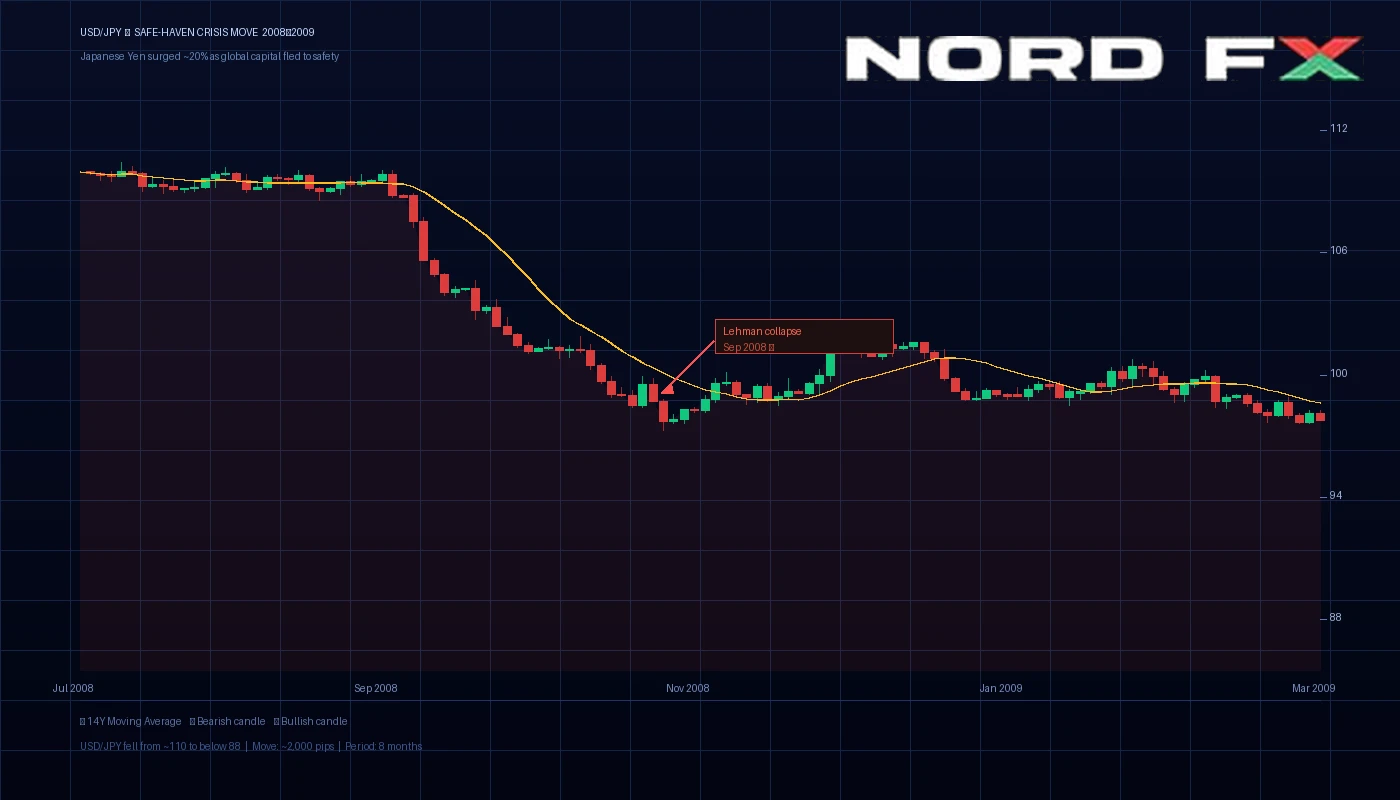
แรงกระแทกจากภาษีของสหรัฐในปี 2025 สร้างความซับซ้อนอีกแบบหนึ่ง เนื่องจากวิกฤตมีต้นกำเนิดจากนโยบายของสหรัฐเอง ความเชื่อมั่นต่อสินทรัพย์ดอลลาร์จึงถูกบั่นทอนโดยตรง JPY และ CHF แข็งค่าขึ้นอย่างรวดเร็ว ขณะที่ USD อ่อนค่า - แสดงให้เห็นว่าสถานะหลบภัยนั้นขึ้นอยู่กับ บริบท เมื่อวิกฤตมาจากวอชิงตัน เงินทุนสามารถไหลออกจากดอลลาร์ไปยังสกุลเงินหลบภัยอีกสองสกุลได้
กรอบคิด Risk-On / Risk-Off
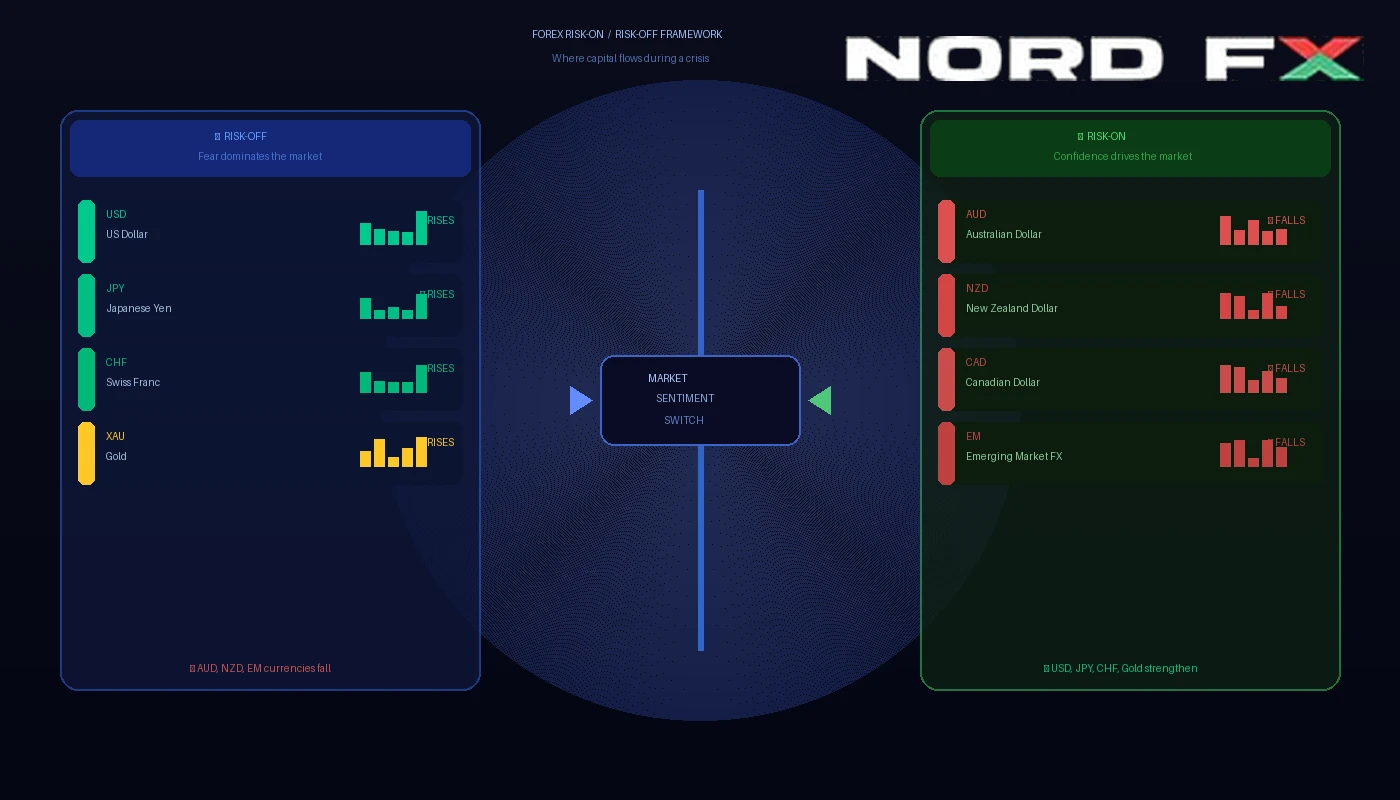
เทรดเดอร์ฟอเร็กซ์มืออาชีพใช้กรอบคิดที่เรียกว่า "risk-on / risk-off" (RoRo) เพื่อประเมินอารมณ์ของตลาดและจัดตำแหน่งการเทรดให้เหมาะสม
ในสภาพแวดล้อมแบบ risk-on นักลงทุนมีความมั่นใจ พวกเขานำเงินไปยังสินทรัพย์ที่ให้ผลตอบแทนสูงกว่าแต่เสี่ยงกว่า เช่น สกุลเงินตลาดเกิดใหม่ หุ้น และสินค้าโภคภัณฑ์ โดยทั่วไปสกุลเงินหลบภัยจะอ่อนค่าลง
ในสภาพแวดล้อมแบบ risk-off ความกลัวครอบงำ เงินทุนไหลเข้าสู่ USD, JPY และ CHF ขณะเดียวกันสกุลเงินที่เชื่อมโยงกับการส่งออกสินค้าโภคภัณฑ์ - เช่น ดอลลาร์ออสเตรเลีย (AUD), ดอลลาร์นิวซีแลนด์ (NZD) และดอลลาร์แคนาดา (CAD) - มักจะร่วงลงอย่างแรง สกุลเงินตลาดเกิดใหม่มักได้รับผลกระทบหนักที่สุด
คู่เงินที่น่าเฝ้าดูที่สุดเมื่อเกิดการเคลื่อนไหวแบบ risk-off คือ USD/JPY (มักลงเพราะเยนแข็งค่า), EUR/CHF (มักลงเพราะ CHF แข็งค่า), และ AUD/USD (มักลงเมื่อความต้องการรับความเสี่ยงหายไป) คุณสามารถอ่านเพิ่มเติมเกี่ยวกับคู่เงินที่มีให้เทรดทั้งหมดที่ NordFX ได้ในบทความ Trading Tools in Financial Markets
กลยุทธ์การเทรดที่ใช้ได้จริงสำหรับสกุลเงินหลบภัย
เทรดการคลายตัวของ carry trade หนึ่งในปรากฏการณ์ที่ใช้ทำกำไรได้มากที่สุดในวิกฤตฟอเร็กซ์คือการปิด unwind ของ carry trade ซึ่งเกี่ยวข้องกับการกู้ยืมในสกุลเงินที่มีดอกเบี้ยต่ำ - ในอดีตคือ JPY และ CHF - แล้วนำไปลงทุนในสกุลเงินที่ให้ผลตอบแทนสูงกว่า เมื่อเกิดวิกฤต เทรดเดอร์ carry trade จะรีบปิดสถานะพร้อมกัน ทำให้ต้องซื้อคืนสกุลเงินดอกเบี้ยต่ำที่เคยกู้มา ส่งผลให้ JPY และ CHF เด้งขึ้นอย่างแรงและยั่งยืน เทรดเดอร์ที่คาดการณ์การ unwind ได้สามารถเปิดสถานะ long ในสกุลเงินเหล่านี้ก่อนที่ตลาดโดยรวมจะตอบสนอง
ติดตามความสัมพันธ์ข้ามสินทรัพย์ การเคลื่อนไหวของสกุลเงินหลบภัยแทบไม่เกิดขึ้นอย่างโดดเดี่ยว USD, JPY และ CHF มักแข็งค่าพร้อมกับราคาทองคำที่ปรับขึ้นและอัตราผลตอบแทนพันธบัตรรัฐบาลสหรัฐที่ลดลง หากทองคำพุ่งขึ้นและผลตอบแทนพันธบัตรอายุ 10 ปีลดลงอย่างรวดเร็ว นี่เป็นสัญญาณเตือนล่วงหน้าที่ดีว่าอารมณ์ risk-off กำลังก่อตัว การดูสัญญาณข้ามสินทรัพย์เหล่านี้ทำให้เทรดเดอร์เห็นภาพรวมครบกว่าใช้กราฟสกุลเงินอย่างเดียว วิธีใช้อำนาจเลเวอเรจอย่างรอบคอบในช่วงความผันผวนสูงมีอธิบายไว้ในบทความ Leverage 1:1000 - Freedom of Trading
การเล่นสวนสกุลเงินหลบภัยหลังจากถึงจุดสูงสุด เมื่อวิกฤตเริ่มนิ่งลง และธนาคารกลางหรือรัฐบาลประกาศมาตรการสนับสนุน สกุลเงินหลบภัยมักจะคืนกำไรกลับอย่างรวดเร็ว การจับจังหวะกลับตัวนี้ต้องอาศัยสัญญาณที่ชัดเจน: แถลงการณ์ธนาคารกลาง ข้อตกลงหยุดยิง หรือการฟื้นตัวต่อเนื่องของตลาดหุ้น การบริหารความเสี่ยงเป็นสิ่งจำเป็น เพราะการยืนสวนทางกับการเคลื่อนไหวของสกุลเงินหลบภัยก่อนถึงจุดสูงสุดอาจมีต้นทุนสูงมาก
ข้อผิดพลาดที่พบบ่อยเมื่อเทรดสกุลเงินหลบภัย
คิดว่าสกุลเงินหลบภัยทั้งสามจะเคลื่อนไหวไปในทิศทางเดียวกันเสมอ USD, JPY และ CHF สามารถแยกทางกันได้อย่างมาก ขึ้นอยู่กับลักษณะของวิกฤตและนโยบายการเงินในขณะนั้น ตัวอย่างปี 2022 และ 2025 ข้างต้นแสดงให้เห็นชัดเจนว่าต้องประเมิน ต้นกำเนิด ของวิกฤต ไม่ใช่แค่ความรุนแรงของมัน
มองข้ามส่วนต่างอัตราดอกเบี้ย กระแสหลบภัยอาจถูกกลบได้ด้วยส่วนต่างดอกเบี้ยเมื่อความแตกต่างรุนแรง เยนมีความอ่อนไหวเป็นพิเศษ - แม้ในสภาวะ risk-off ที่แท้จริง ช่องว่างกว้างระหว่างอัตราดอกเบี้ยญี่ปุ่นกับสหรัฐสามารถทำให้ USD/JPY อยู่ในระดับสูงต่อไปได้ เพราะเทรดเดอร์ขายเยนเพื่อเก็บผลตอบแทน
ถือสถานะนานเกินไปหลังจุดสูงสุด การพุ่งของสกุลเงินหลบภัยมักเกิดเร็วและสั้น เทรดเดอร์ที่เข้าเทรดช้าและถือข้ามช่วงกลับตัวมักเปลี่ยนกำไรที่ควรได้ให้กลายเป็นขาดทุน กลยุทธ์ออกจากตลาดที่กำหนดไว้ล่วงหน้า หรือ trailing stop-loss เป็นสิ่งสำคัญ
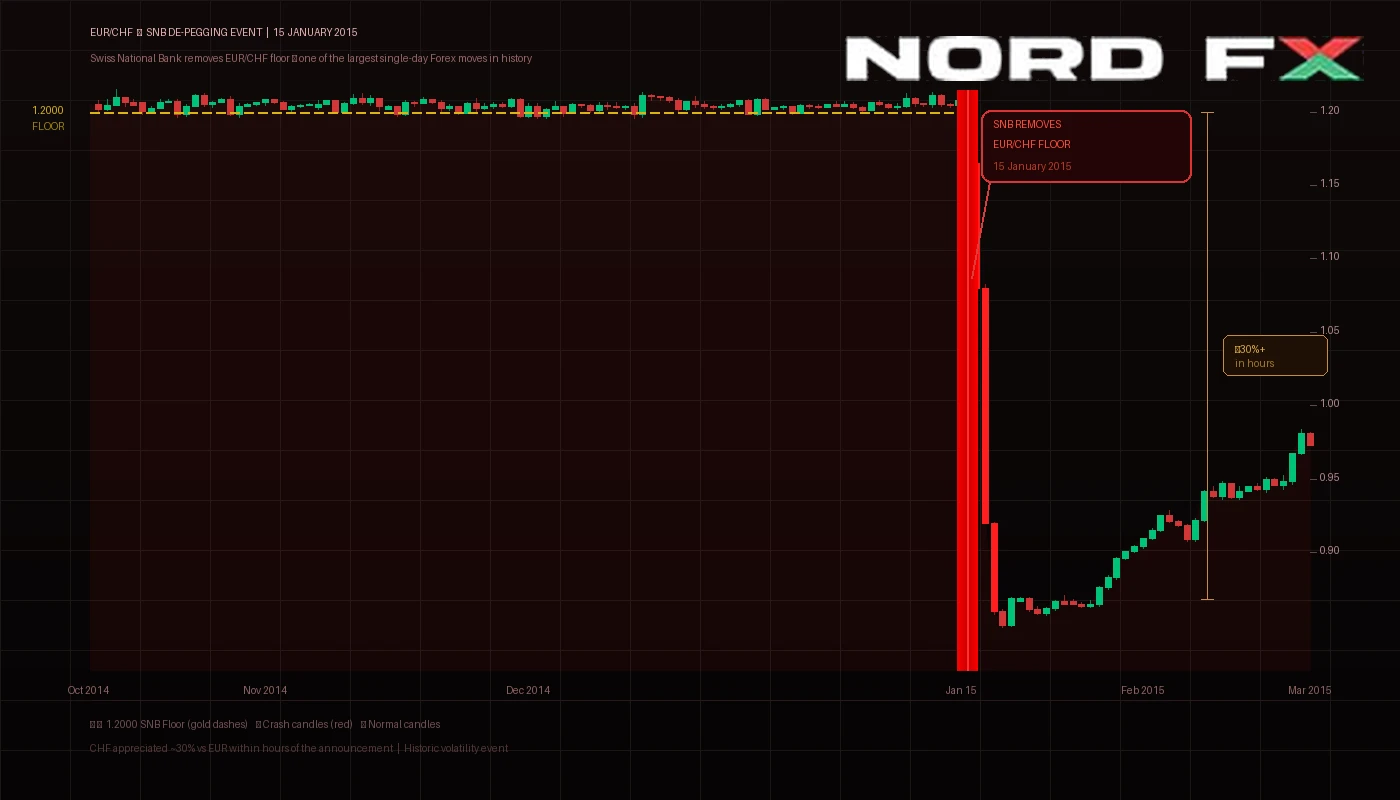
ลืมความเสี่ยงจากการแทรกแซงของธนาคารกลาง ทั้งญี่ปุ่นและสวิตเซอร์แลนด์มีประวัติการแทรกแซงเมื่อสกุลเงินแข็งค่ารวดเร็วเกินไป ธนาคารกลางสวิสเคยยกเลิกเพดาน EUR/CHF อย่างฉับพลันในเดือนมกราคม 2015 ซึ่งก่อให้เกิดการเคลื่อนไหววันเดียวที่ใหญ่ที่สุดครั้งหนึ่งในประวัติศาสตร์ฟอเร็กซ์ ธนาคารกลางญี่ปุ่นก็แทรกแซงหลายครั้งเพื่อจำกัดการแข็งค่าของเยน การถือสถานะสกุลเงินหลบภัยจึงมีความเสี่ยงหาง (tail risk) เสมอ
การเข้าใจมิติด้านจิตวิทยาของการเทรดในยามวิกฤต - ว่าความกลัวและพฤติกรรมตามฝูงชนทำให้เทรดเดอร์เข้าออกตลาดในจังหวะที่แย่ที่สุดได้อย่างไร - มีความสำคัญพอ ๆ กับกลยุทธ์ทางเทคนิคใด ๆ บทความ Managing Fears and Psychological Preparation for Trading อธิบายเรื่องนี้อย่างละเอียด
ตัวอย่างเชิงปฏิบัติ: USD/JPY ในเดือนมีนาคม 2020
เมื่อวันที่ 9 มีนาคม 2020 - ซึ่งตลาดหุ้นโลกปรับลงหนักที่สุดในวันเดียวตั้งแต่ปี 2008 - USD/JPY เปิดที่ราว 105.00 และร่วงต่ำกว่า 102.00 ภายในไม่กี่ชั่วโมง เพราะเยนพุ่งขึ้นจากแรงซื้อแบบ risk-off ในช่วงหลายสัปดาห์ถัดมา มันร่วงต่อไปถึง 101.18 ก่อนจะฟื้นตัว
เทรดเดอร์ที่ระบุรูปแบบ risk-off ได้ตั้งแต่ต้น เปิดชอร์ตใน USD/JPY โดยตั้ง stop เหนือ 107.00 และเป้าหมายใกล้ 101.00 จะสามารถเก็บกำไรได้ประมาณ 400 pip ภายในสองสัปดาห์ คู่เงินนี้เคลื่อนไหวรวมมากกว่า 700 pip ในเดือนนั้น พร้อมการกลับตัวอย่างรุนแรงระหว่างทาง - สะท้อนทั้งโอกาสและอันตราย การคุมความเสี่ยงต่อการเทรดให้อยู่ใน 1–2% ของเงินทุนในบัญชีจะเป็นสิ่งจำเป็นเพื่อให้อยู่รอดผ่านความผันผวน
ควรทำอย่างไรต่อ: ฝึกก่อนวิกฤตครั้งต่อไปจะมา
การเทรดสกุลเงินหลบภัยระหว่างวิกฤตจริงเป็นหนึ่งในรูปแบบการเทรดฟอเร็กซ์ที่ท้าทายที่สุด ความเร็วของการเคลื่อนไหวของราคา ความเสี่ยงจากการแทรกแซงของธนาคารกลางที่เกิดขึ้นตลอดเวลา และแรงกดดันทางจิตใจจากการเทรดท่ามกลางความตื่นตระหนกของตลาด ล้วนให้รางวัลกับการเตรียมพร้อมมากกว่าการคิดเอาหน้างาน
วิธีเตรียมตัวที่มีประสิทธิภาพที่สุดคือการทดสอบแนวทางของคุณบนบัญชีเดโม - สภาพแวดล้อมฝึกซ้อมที่สะท้อนสภาวะตลาดจริงโดยไม่ต้องเสี่ยงเงินทุนจริง NordFX มีบัญชีเดโมฟรีพร้อมเข้าถึงคู่เงินหลักทั้งหมด รวมถึง USD/JPY และ USD/CHF บนทั้ง MT4 และ MT5 คุณสามารถดูประเภทบัญชีทั้งหมดและเปิดเดโมได้ที่ https://nordfx.com/accounts
คำถามที่พบบ่อย
สกุลเงินหลบภัยคืออะไร? สกุลเงินหลบภัยคือสกุลเงินที่นักลงทุนย้ายเงินเข้าไปในช่วงวิกฤตเศรษฐกิจโลกหรือวิกฤตภูมิรัฐศาสตร์ สกุลเงินหลบภัยที่ได้รับการยอมรับมากที่สุดในฟอเร็กซ์คือ USD, JPY และ CHF ซึ่งมักปรับตัวขึ้นเมื่อความต้องการรับความเสี่ยงลดลง
ทำไมเยนญี่ปุ่นจึงแข็งค่าในช่วงวิกฤต? ญี่ปุ่นเป็นประเทศเจ้าหนี้สุทธิรายใหญ่ที่สุดของโลก ในช่วงวิกฤต สถาบันของญี่ปุ่นจะนำเงินทุนต่างประเทศกลับประเทศ แปลงสกุลเงินต่างประเทศเป็นเยน และสร้างแรงซื้อที่แข็งแกร่งต่อ JPY
ดอลลาร์สหรัฐจะขึ้นเสมอในช่วงวิกฤตหรือไม่? ไม่เสมอไป เมื่อวิกฤตเกิดจากนโยบายของสหรัฐเอง - เช่น ภาษีการค้า หรือความไม่มั่นคงทางการเงินภายในประเทศ - ความเชื่อมั่นต่อสินทรัพย์ดอลลาร์จะถูกบั่นทอนโดยตรง และดอลลาร์อาจอ่อนค่าลงได้แม้ในภาวะ risk-off
คู่เงินใดเหมาะที่สุดสำหรับการเทรดสกุลเงินหลบภัย? คู่ที่มีสภาพคล่องสูงที่สุดคือ USD/JPY, EUR/CHF และ AUD/USD (ในฐานะตัววัด risk-on/risk-off) USD/JPY มักลงเมื่อ JPY ได้รับความต้องการ; EUR/CHF มักลงเมื่อ CHF แข็งค่า; AUD/USD มักลงเมื่อความต้องการรับความเสี่ยงลดฮวบ
จะฝึกเทรดสกุลเงินหลบภัยได้อย่างไร? เปิดบัญชีเดโมกับโบรกเกอร์ที่ให้เข้าถึงคู่เงินหลักได้ครบ ทดสอบกลยุทธ์ของคุณด้วยข้อมูลกราฟย้อนหลัง และติดตามสัญญาณข้ามสินทรัพย์แบบเรียลไทม์ - ทองคำ ผลตอบแทนพันธบัตร ดัชนีหุ้น - ก่อนนำเงินจริงเข้าเทรด