US Dollar Index, DXY ලෙස හඳුන්වනු ලබන මෙය, යුරෝවට වැඩිම බරක් ඇතිව, ප්රධාන මුදල් වර්ග හයක් ඇතුළත් ස්ථාවර කූඩයකට සාපේක්ෂව එක්සත් ජනපද ඩොලරයේ වටිනාකම මනිනු ලබයි. එය එක් එක් මුදල් යුගලයක් වෙන වෙනම පරීක්ෂා කිරීමට අවශ්ය නොවී, ඩොලරය සාරාංශ ලෙස ශක්තිමත්ද දුර්වලද කියා තීරණය කිරීමට වෙළෙන්දන්ට උපකාරී වේ. DXY ඉහළ යන විට, එම කූඩයට එරෙහිව ඩොලරය ශක්තිමත් වෙමින් පවතී; එය පහළ යන විට, ඩොලරය පසුබැසෙමින් පවතී.
US Dollar Index (DXY) යනු කුමක්ද?
1973දී Bretton Woods ස්ථාවර විනිමය අනුපාත පද්ධතිය බිඳ වැටීමෙන් ඉක්බිතිව සහ ලෝකය පාවෙන මුදල් වර්ග වෙත මාරු වීමත් සමඟ DXY හඳුන්වා දෙන ලදී. එය 100 ක මූලික අගයකින් ආරම්භ වන එකම යොමු අංකයක් ලෙස නිර්මාණය කරන ලද අතර, එමඟින් වෙළෙන්දන්ට, බැංකුಗಳಿಗೆ සහ ප්රතිපත්ති නිර්මාණකරුවන්ට ඩොලරයේ සමස්ත දිශානතිය එක බැල්මකින් නිරීක්ෂණය කළ හැකි විය.
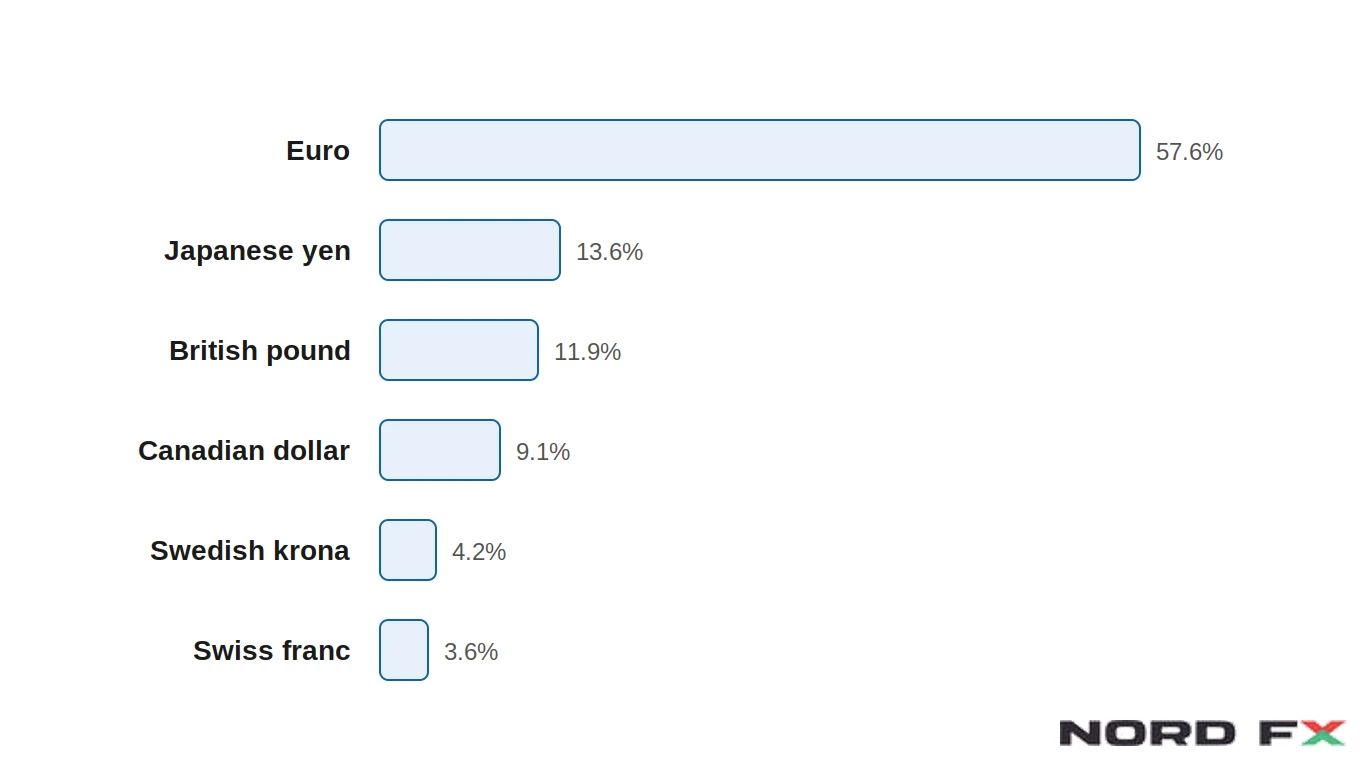
මෙම දර්ශකය ඩොලරය සහ මුදල් වර්ග හයක් අතර බරිත ජ්යාමිතීය සාමාන්යයකි: යුරෝ, ජපන් යෙන්, බ්රිතාන්ය පවුම්, කැනඩියානු ඩොලර්, ස්වීඩිෂ් ක්රෝනා සහ ස්විස් ෆ්රෑන්ක්. මුළු බරෙහි අඩකටත් වඩා යුරෝව පමණක් නියෝජනය කරන අතර, ඒ නිසාම DXY බොහෝ විට EUR/USD හි ප්රතිබිම්බයක් වැනි ලෙස හැසිරෙයි. 1973 සිට කූඩය එක් වරක් පමණක් වෙනස් වූ අතර, 1999දී යුරෝව පෙර පැවති යුරෝපීය මුදල් කිහිපයක් ප්රතිස්ථාපනය කළේය. මේ නිසා, චීනය සහ මෙක්සිකෝව වැනි ප්රධාන හවුල්කරුවන් කූඩයෙන් සම්පූර්ණයෙන්ම නොමැති බැවින්, ඇතැම් වෙළෙන්දන් සහ විශ්ලේෂකයන් පෙන්වා දෙන්නේ දර්ශකය දැන් පරණ කාලයට වඩා නූතන එක්සත් ජනපද වෙළඳ රටා නිසි ලෙස නොපිළිබිඹු කරන බවයි.
DXY ගණනය කරන්නේ කෙසේද?
මෙම සූත්රය ඩොලරයේ විනිමය අනුපාතය එක් එක් මුදල් වර්ග හයට එම මුදලේ බර නියෝජනය කරන ස්ථිර ඝාතයකින් ගුණ කර, ප්රතිඵල එකම ජ්යාමිතීය මධ්යයක් ලෙස එක් කරයි. ප්රායෝගිකව, යුරෝව ගණනයට ආසන්න වශයෙන් 57.6% ක දායකත්වයක් දක්වන අතර, යෙන් 13.6% ක් පමණ, පවුම 11.9% ක් පමණ, කැනඩියානු ඩොලරය 9.1% කට ආසන්නව සහ ක්රෝනා හා ෆ්රෑන්ක් ඉතිරි කුඩා කොටස බෙදා ගනී.
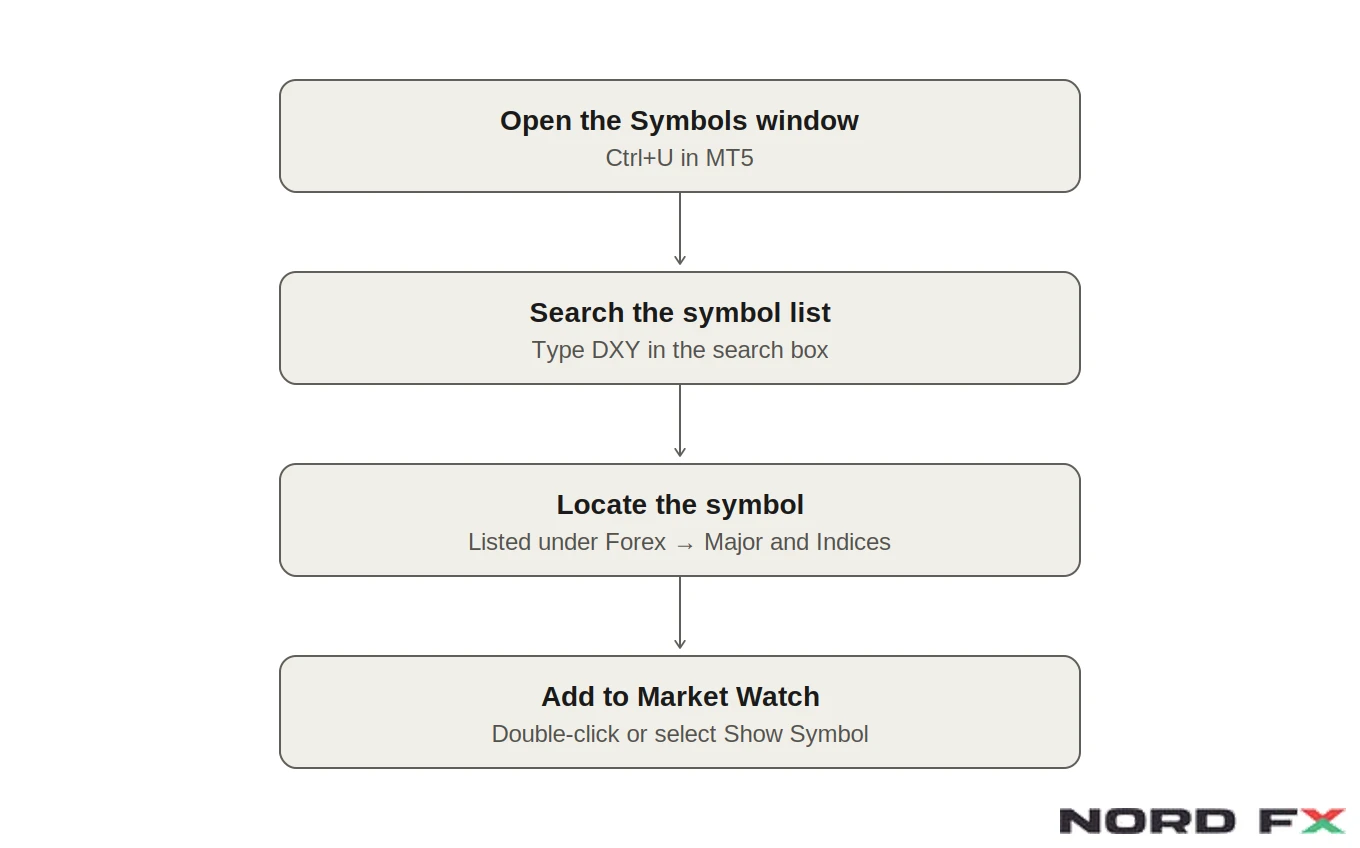
වෙළෙන්දෙකුට මෙම ගණනය අතින් කළ යුතු නැත. සජීවී DXY මිල MetaTrader 5 මත ලබා ගත හැකි අතර, NordFX ගනුදෙනුකරුවන්ට platform එක තුළම වෙනත් උපකරණ සමඟ මෙම දර්ශකය නිරීක්ෂණය කළ හැක. NordFX MT5 terminal එකේ මෙය DXY යන නිශ්චිත සංකේතයෙන් ලැයිස්තුගත වී ඇති අතර, Symbols කවුළුව තුළ ස්ථාන දෙකකින් පෙනේ: Forex → Major යටතේත්, Indices යටතේත්. ඒ නිසා වෙළෙන්දන්ට සෙවීමට සිතෙන ආකාරය අනුව දෙකෙන්ම එය සොයාගත හැකිය.
US Dollar Index එකට බලපාන්නේ කුමක්ද?
DXY හි කෙටි සහ මධ්යකාලීන දිශානතියට ප්රධාන බලවේග තුනක් ආධිපත්යය දරයි: පොලී අනුපාත අපේක්ෂා, මහා ආර්ථික දත්ත, සහ අවදානම් හැඟීම්.
එක්සත් ජනපද Federal Reserve එක නියම කරන පොලී අනුපාත සාමාන්යයෙන් එකම විශාලතම ධාවකයයි. Fed එක පොලී අනුපාත ඉහළ නංවනු ඇතැයි හෝ වැඩි කාලයක් ඉහළ මට්ටමක තබනු ඇතැයි අපේක්ෂා කරන විට, එක්සත් ජනපද වත්කම් වඩා හොඳ ප්රතිලාභ ලබා දෙන බැවින් ඩොලරය වැඩි ධනය ආකර්ෂණය කරයි, සහ DXY ඉහළ යයි. පොලී අනුපාත අඩු කිරීම් සාකච්ඡාවට එන විට, සාමාන්යයෙන් ප්රතිවිරුද්ධය සිදු වේ. CPI වැනි උද්ධමන දත්ත, රැකියා වාර්තා (Non-Farm Payrolls), සහ GDP සංඛ්යා වැදගත් වන්නේ වෙළෙන්දන් Fed එක ඊළඟට කුමක් කරනු ඇතැයි අපේක්ෂා කරන ආකාරය ඒවා හැඩගස්වන නිසාය; බොහෝ විට දත්තයේම අගයට වඩා එය වැදගත් වේ.
අවදානම් හැඟීම් වෙනම භූමිකාවක් ඉටු කරයි. ගෝලීය අස්ථාවරතා කාලවලදී, එක්සත් ජනපදයට විශේෂිත පුවත් සාමාන්ය මට්ටමේ තිබුණද, ඩොලරය බොහෝ විට safe-haven මුදලක් ලෙස ශක්තිමත් වේ; එයට හේතුව අවදානම් වත්කම් වලින් ධනය පිටවී ඩොලර් නාමිත වත්කම් වෙත ගලායාමයි. භූ-දේශපාලන කම්පන, වෙළඳ ප්රතිපත්තියේ හදිසි වෙනස්කම්, සහ අනෙකුත් ප්රධාන ආර්ථිකයන්හි ඇති අසීරුතා—all මේවා domestic US දත්ත සමඟ අඩු සම්බන්ධතාවක් ඇති ආකාරයට DXY ඉහළට හෝ පහළට ගෙන යා හැකිය.
DXY Forex, Gold, සහ Oil සමඟ සම්බන්ධ වන්නේ කෙසේද?
ලෝක මූල්ය ගනුදෙනු බොහොමයක එක් පැත්තක ඩොලරය සිටින බැවින්, DXY වෙනත් වෙළඳපොළවල් සමඟ පැහැදිලි සහ සාපේක්ෂව ස්ථිර සම්බන්ධතා දක්වයි, যদিও අසාමාන්ය තත්ත්වවලදී මෙම සම්බන්ධතා දුර්වල වීමට හෝ තාවකාලිකව බිඳ වැටීමට හැකිය.
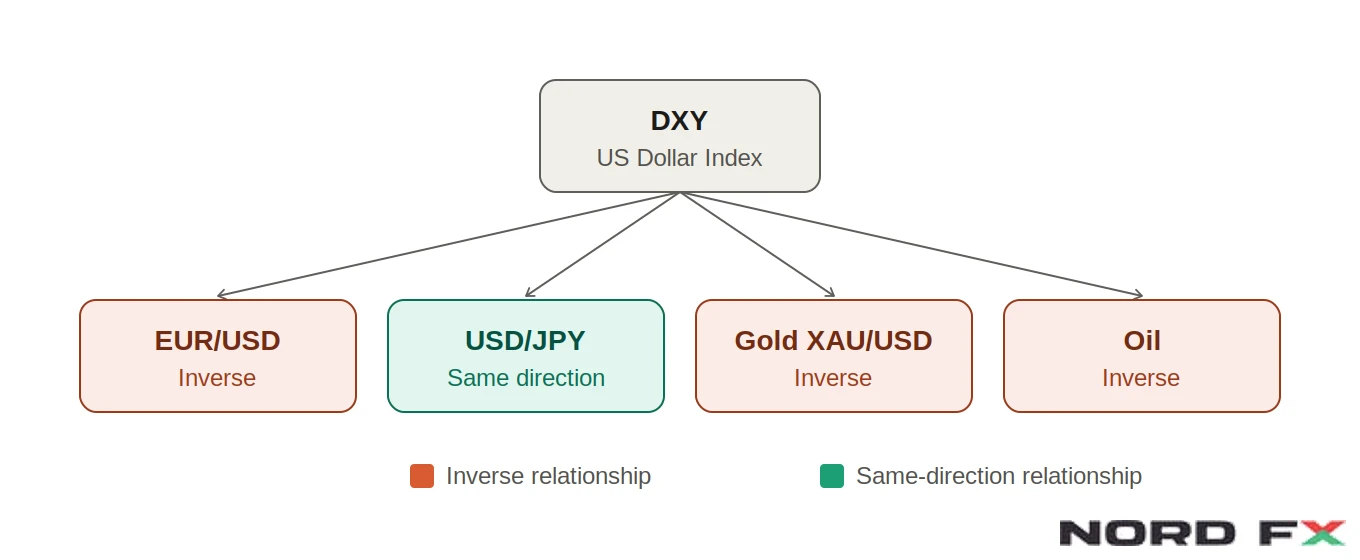
ප්රධාන මුදල් යුගල සමඟ සම්බන්ධතාවය යුගලයේ ඩොලරය සිටින පැත්ත මත රඳා පවතී. EUR/USD සහ GBP/USD වැනි ඩොලරය quote currency වන යුගල සාමාන්යයෙන් DXYට ප්රතිවිරුද්ධව ගමන් කරයි: දර්ශකය ඉහළ ගිය විට, මෙම යුගල සාමාන්යයෙන් පහළ යයි. USD/JPY වැනි ඩොලරය base currency වන යුගල සාමාන්යයෙන් DXY සමඟ එකම දිශාවට ගමන් කරයි.
ගෝල්ඩ්, ඩොලර් දර්ශකයට ඍණාත්මක සම්බන්ධතාවයක් පෙන්වා ඇති අතර, ඒකට හේතුව ගෝල්ඩ් එක්සත් ජනපද ඩොලර් වලින් මිල නියම වන අතර ඩොලරය ශක්තිමත් වන විට අනෙකුත් මුදල් වර්ග හිමියන්ට එය වඩා මිල අධික වීමයි. මෙම සම්බන්ධතාවය NordFX Gold Trading guide හි හොඳින් සටහන් කර ඇත; එහිදී ඩොලර් ශක්තිය සහ precious metals මිල සාමාන්යයෙන් කෙසේ අන්තර්ක්රියා කරන්නේද යන්න පැහැදිලි කරයි, නමුත් මධ්යම බැංකු මිලදී ගැනීම් වැනි වෙනත් බලවේග ආධිපත්යය දරන කාලවලදී මෙම සම්බන්ධතාවය බිඳී යා හැකි බව වෙළෙන්දන් සැලකිල්ලට ගත යුතුය.
තෙල්ද සාමාන්යයෙන් ගෝල්ඩ්ට සමාන රටාවක් පෙන්වයි, මන්ද crude තෙල්ද ජාත්යන්තරව ඩොලර්වලින් මිල නියම වේ. DXY ඉහළ යාම අනෙක් මුදල් භාවිතා කරන ගැනුම්කරුවන්ට තෙල් සාපේක්ෂව වඩා මිල අධික කළ හැකි අතර, සමහරවිට ඉල්ලුම හා මිලට පීඩනයක් ඇති කරයි. ගෝල්ඩ් මෙන්ම, මෙයද නියමයක් නොව ප්රවණතාවක් පමණක් වන අතර, සැපයුම් බාධා හෝ OPEC තීරණ මඟින් එය අභිබවා යා හැකිය.
US Dollar Index එක වෙළඳාම් කරන්නේ කෙසේද? (පියවරෙන් පියවර)
DXY ඔබ EUR/USD වැනි මුදල් යුගලයක් ලෙස මිලදී ගන්නා හෝ විකුණන දෙයක් නොවේ; එය දර්ශකයකි, එබැවින් retail වෙළෙන්දන්ට එයට සෘජු හිමිකාරිත්වයෙන් නොව CFDs හෝ futures හරහා ප්රවේශ විය හැක. මෙන්න ප්රායෝගික ප්රවේශයක්.
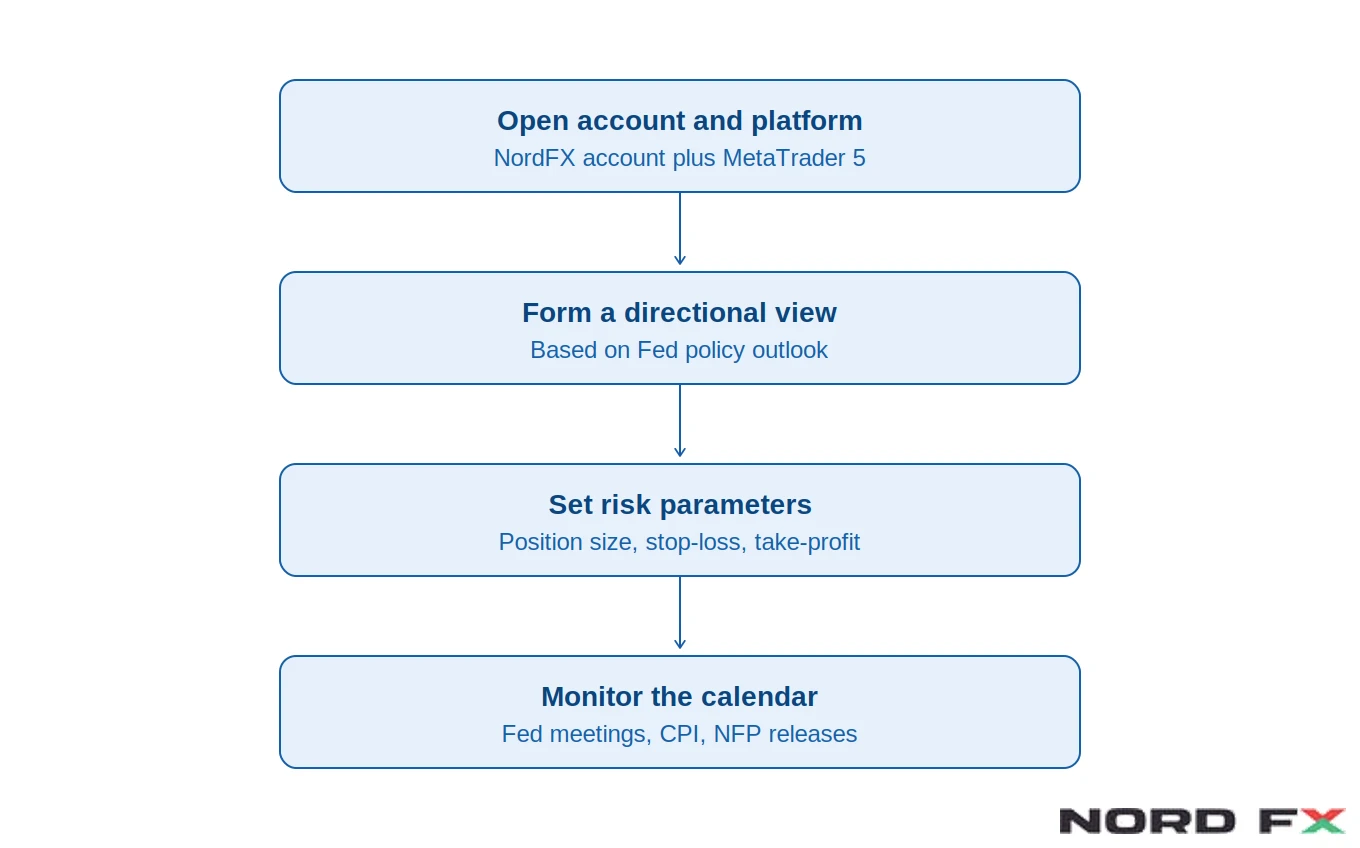
පළමුව, එම උපකරණය පිරිනමන trading account එකක්, උදාහරණයක් ලෙස NordFX හරහා ලබා ගත හැකි account types වලින් එකක්, විවෘත කර MetaTrader 5 බාගත කරන්න; එහි DXY සාමාන්යයෙන් forex pairs සහ commodities සමඟ Market Watch කවුළුවේ පෙනේ.
දෙවැනිව, මහා ආර්ථික පසුබිම අනුව දිශානතිමය අදහසක් තීරණය කරන්න. Federal Reserve එක වඩා දැඩි ආකල්පයක් (hawkish) පෙන්වනු ඇතැයි ඔබ බලාපොරොත්තු වන්නේ නම්, long DXY position එකක් එම අදහසට ගැළපේ. දුර්වල US දත්ත හෝ වඩා නිදහස් (dovish) ප්රතිපත්ති වෙනසක් බලාපොරොත්තු වන්නේ නම්, short position එකක් ඩොලර් දුර්වලතාවයට ගැළපේ.
තෙවැනිව, position size එක තෝරාගෙන ඇතුල් වීමට පෙර stop-loss සහ take-profit සැකසන්න, වෙනත් ඕනෑම CFD උපකරණයකදී ඔබ කරන්නේ මෙන්ම. DXY Federal Reserve රැස්වීම් සහ Non-Farm Payrolls නිකුත් කිරීම් වැනි නියමිත සිදුවීම් වටා දැඩි ලෙස චලනය විය හැකි නිසා, position sizing සාමාන්යයෙන් සන්සුන් යුගලයක් ලෙස සැලකීම වෙනුවට එම අස්ථාවරතාව පිළිබිඹු කළ යුතුය.
හතරවැනිව, දර්ශකය වැඩිම වශයෙන් චලනය කිරීමට ඉඩ ඇති නිකුත් කිරීම් සඳහා economic calendar එක නිරීක්ෂණය කරන්න: Fed පොලී අනුපාත තීරණ, CPI උද්ධමන දත්ත, සහ මාසික රැකියා වාර්තාව වැඩිම බරක් දරයි, මන්ද ඒවා පොලී අනුපාත අපේක්ෂා සෘජුවම හැඩගස්වයි.
DXY වෙළඳාම් කිරීමේදී සාමාන්ය වැරදි
වඩාත් නිතර සිදුවන වැරැද්ද වන්නේ DXY එක වෙළෙන්දෙකුට වැදගත් විය හැකි සෑම මුදල් වර්ගයකටම එරෙහිව ඩොලරයේ ශක්තිය නියෝජනය කරන බව සිතීමයි. කූඩය යුරෝව වෙත බොහෝ වශයෙන් බර දමා ඇති නිසා, DXY චීන යුවාන්, මෙක්සිකානු පෙසෝ, හෝ කූඩයෙන් පිටත වෙනත් මුදල් සමඟ ඩොලරයේ සම්බන්ධතාවය ගැන ඉතා අඩුවෙන් පමණක් කියයි. උදාහරණයක් ලෙස USD/MXN මත අවධානය යොමු කරන වෙළෙන්දෙකු DXY ප්රධාන සංඥාව ලෙස භාවිතා නොකළ යුතුය.
දෙවැනි සාමාන්ය වැරැද්ද වන්නේ විශ්ලේෂණය කරන විශේෂ යුගලයෙන් වෙන්ව DXY වෙළඳාම් කිරීමයි. DXY නියෝජනය කරන්නේ සමීකරණයේ ඩොලර් පැත්ත පමණි; වෙළෙන්දෙකු USD/JPY නිරීක්ෂණය කරන්නේ නම්, DXY ස්ථිරව තිබියදී යෙන්-විශේෂ පුවත් දැඩිව පැමිණිය හැකි අතර එම යුගලය තවමත් විශාල ලෙස චලනය විය හැක, මන්ද දර්ශකය අනෙක් පැත්තේ සිදුවන්නේ කුමක්දැයි අල්ලා නොගනී.
තුන්වැනි වැරැද්ද වන්නේ ඉහළ බලපෑමක් ඇති පුවත් සිදුවීම් අවට අධික leverage භාවිතයයි. මධ්යම බැංකු නිවේදන සහ ප්රධාන දත්ත නිකුත් කිරීම් මිනිත්තු කිහිපයක් තුළ DXY ඉහළට සහ පසුව ආපසු හැරීමට හේතු විය හැකි අතර, සන්සුන් තත්ත්ව සඳහා සකස් කළ position එකක් එවැනි අවස්ථාවල විශාල පාඩු ඇති කළ හැක.
DXY වෙළඳාම් ප්රවේශයක් වඩාත් සුදුසු ලෙස සකස් කරන්නේ කෙසේද?
DXY ඵලදායී ලෙස භාවිතා කරන වෙළෙන්දන් සාමාන්යයෙන් එය ස්වාධීන පද්ධතියක් වෙනුවට තහවුරු කිරීමේ මෙවලමක් ලෙස භාවිතා කරයි. EUR/USD හෝ GBP/USD වෙළඳාමකට ඇතුල් වීමට පෙර DXY හි ප්රවණතාව පරීක්ෂා කිරීම, විශාල ඩොලර් ප්රවණතාවය වෙළඳාමට සහාය දෙනවාද නැද්ද යන්න තහවුරු කිරීමට උදව් විය හැක. NordFX Useful Articles section හි ආවරණය කරන ලද සම්බන්ධතා සමඟ මෙය එකට භාවිතා කිරීම, ගෝල්ඩ් සහ තෙල් ඩොලර් ශක්තියට ප්රතිචාර දක්වන්නේ කෙසේද යන්න ඇතුළුව, එක් උපකරණයක් පමණක් නිරීක්ෂණය කිරීමට වඩා සම්පූර්ණ චිත්රයක් ලබා දෙයි.
පාලිත Federal Reserve රැස්වීම් වටා DXY නිරීක්ෂණය කිරීමද වටී, මන්ද මෙම සිදුවීම් බොහෝ දත්ත නිකුත් කිරීම් වලට වඩා දර්ශකයේ තියුණු, දිගුකාලීන චලන සඳහා විශ්වාසනීයම එකම මූලාශ්රය වේ.
නිතර අසන ප්රශ්න
DXY මුදල් යුගලයක් වෙළඳාම් කිරීමත් සමඟ එකමද?
නැත. DXY යනු මුදල් වර්ග හයක් එකතු කර නිරූපණය කරන දර්ශකයකි, එබැවින් එය සෘජු මුදල් යුගලයක් ලෙස නොව CFD එකක් හෝ futures කොන්ත්රාත්තුවක් ලෙස වෙළඳාම් කෙරේ.
DXY මත වැඩිම බලපෑමක් ඇති කරන මුදල කුමක්ද?
යුරෝවයි. එය දර්ශකයේ බරෙහි ආසන්න වශයෙන් 57.6% ක් ගන්නා බැවින් EUR/USD චලන DXY දිශාවට විශාල බලපෑමක් ඇති කරයි.
DXY ඉහළ යාමෙන් සෑම විටම ගෝල්ඩ් පහළ යන්නේද?
සෑම විටම නොවේ. ගෝල්ඩ් ඩොලර් නාමිත බැවින් දෙක සාමාන්යයෙන් ප්රතිවිරුද්ධව ගමන් කරයි, නමුත් මධ්යම බැංකු ඉල්ලුම හෝ භූ-දේශපාලන අවදානම් වැනි වෙනත් ධාවක ආධිපත්යය දරන කාලවලදී මෙම සම්බන්ධතාවය දුර්වල විය හැක.
MetaTrader 5 මත DXY වෙළඳාම් කළ හැකිද?
ඔව්. NordFX හි MT5 terminal එකේ එය DXY යන නිශ්චිත සංකේතයෙන් ලැයිස්තුගත වී ඇති අතර Symbols කවුළුවේ (Ctrl+U) ස්ථාන දෙකකින් පෙනේ: Forex → Major යටතේත් Indices යටතේත්. සොයා ගත් පසු, එය forex pairs, metals, සහ වෙනත් CFDs සමඟ Market Watch කවුළුවට එක් කළ හැක.
DXY වැඩිම ලෙස චලනය වන්නේ දවසේ කුමන වේලාවේද?
DXY හි විශාලතම චලන සාමාන්යයෙන් US trading session එක තුළ, විශේෂයෙන්ම US ආර්ථික දත්ත සහ Federal Reserve නිවේදන නිකුත් වන අවස්ථාවලදී දක්නට ලැබේ.
ආපසු යන්න ආපසු යන්න