கேண்டில்ஸ்டிக் வடிவங்கள் என்பது வர்த்தகர்களுக்கு சாத்தியமான போக்கு மாற்றங்கள், தொடர்ச்சிகள் மற்றும் சந்தை தீர்மானமின்மையை அடையாளம் காண உதவும் காட்சி விலை வடிவங்கள் ஆகும். மிக முக்கியமான வடிவங்கள் ஹேமர், புல்லிஷ் என்குல்ஃபிங், மார்னிங் ஸ்டார், ஷூட்டிங் ஸ்டார், பேரிஷ் என்குல்ஃபிங், ஈவெனிங் ஸ்டார் மற்றும் டோஜி ஆகும்.
கேண்டில்ஸ்டிக் வடிவங்கள் என்பது தேர்ந்தெடுக்கப்பட்ட காலப்பகுதியில் வாங்குபவர்களுக்கும் விற்பவர்களுக்கும் இடையிலான போராட்டத்தைக் காட்டும் விளக்கப்பட வடிவங்கள் ஆகும். ஒவ்வொரு கேண்டிலும் திறப்பு, உயர், தாழ் மற்றும் இறுதி விலைகளைக் காட்டுகிறது, இது மொமெண்டம், நிராகரிப்பு மற்றும் சாத்தியமான திருப்புமுனைகளைப் படிக்க உதவுகிறது. வர்த்தகர்கள் இந்த வடிவங்களைப் பயன்படுத்தி ஃபாரெக்ஸ், பங்குகள், இண்டெக்ஸ்கள், கமாடிட்டிகள் மற்றும் கிரிப்டோகரன்சிகளில் ரிவர்சல்கள், தொடர்ச்சிகள் மற்றும் தீர்மானமின்மை தருணங்களை அடையாளம் காண்கின்றனர். இந்த வடிவங்கள் மந்திர சிக்னல்கள் அல்ல, ஆனால் போக்கு பகுப்பாய்வு, சப்போர்ட் மற்றும் ரெசிஸ்டன்ஸ், மற்றும் வால்யூம் அல்லது இண்டிகேட்டர்களின் உறுதிப்படுத்தலுடன் இணைந்தால் அவை பயனுள்ளதாக மாறுகின்றன.
கேண்டில்ஸ்டிக் வடிவங்கள் என்றால் என்ன?
கேண்டில்ஸ்டிக் வடிவங்கள் என்பது சந்தை உளவியலைப் பிரதிபலிக்கும் மீண்டும் மீண்டும் வரும் விலை வடிவங்கள் ஆகும். ஒரு தனி கேண்டில் தயக்கம், வலிமை அல்லது நிராகரிப்பைக் காட்டலாம், அதே நேரத்தில் கேண்டில்களின் குழு ஒரு வலுவான திசை மாற்றத்தை வெளிப்படுத்தலாம். ஒரு பெரிய நகர்வு நடப்பதற்கு முன் விலை பெரும்பாலும் குறிப்புகளை விட்டுச் செல்வதால் வர்த்தகர்கள் இவற்றைப் பயன்படுத்துகின்றனர்.
- ஒரு புல்லிஷ் வடிவம் வாங்குபவர்கள் கட்டுப்பாட்டைப் பெறலாம் என்று குறிக்கிறது.
- ஒரு பேரிஷ் வடிவம் விற்பவர்கள் கட்டுப்பாட்டைப் பெறலாம் என்று குறிக்கிறது.
- ஒரு நியூட்ரல் வடிவம் சந்தை தீர்மானமின்றி இருப்பதைக் குறிக்கிறது.
கேண்டில்ஸ்டிக் பகுப்பாய்வு பிரைஸ் ஆக்ஷன் வர்த்தகத்தை சேர்ந்தது, இது இண்டிகேட்டர்களை மட்டும் நம்பாமல் விலை என்ன செய்கிறது என்பதில் கவனம் செலுத்துகிறது.
வர்த்தகர்கள் ஏன் இவற்றைப் பயன்படுத்துகின்றனர்
கேண்டில்ஸ்டிக் வடிவங்கள் மூல விலை தரவை படிக்கக்கூடிய அமைப்பாக மாற்றுவதன் மூலம் வர்த்தகர்கள் விரைவான முடிவுகளை எடுக்க உதவுகின்றன. சந்தை ஒரு முக்கிய நிலையை நெருங்கும்போது, எடுத்துக்காட்டாக சப்போர்ட், ரெசிஸ்டன்ஸ், ஒரு ட்ரெண்ட்லைன் அல்லது ஒரு மூவிங் அவெரேஜ் ஆகியவற்றின் போது இவை மிகவும் பயனுள்ளதாக இருக்கும். கண்மூடித்தனமாக நுழையாமல் உறுதிப்படுத்தலுக்காக காத்திருக்க வர்த்தகர்களுக்கு இவை உதவுகின்றன.
வர்த்தகர்கள் இவற்றை பின்வருவனவற்றிற்குப் பயன்படுத்துகின்றனர்:
- சாத்தியமான ரிவர்சல்களை கண்டறிதல்.
- போக்கு தொடர்ச்சியை உறுதிப்படுத்துதல்.
- நுழைவு மற்றும் வெளியேறும் நேரங்களை நிர்ணயித்தல்.
- குறுகிய கால சென்டிமென்ட்டைப் புரிந்துகொள்ளுதல்.
- தவறான பிரேக்அவுட்களை வடிகட்டுதல்.
வடிவம், இடம் மற்றும் உறுதிப்படுத்தல் ஆகியவை ஒன்றிணையும் போது சிறந்த கேண்டில்ஸ்டிக் அமைப்புகள் பொதுவாகத் தோன்றும்.
புல்லிஷ் வடிவங்கள்
ஹேமர்
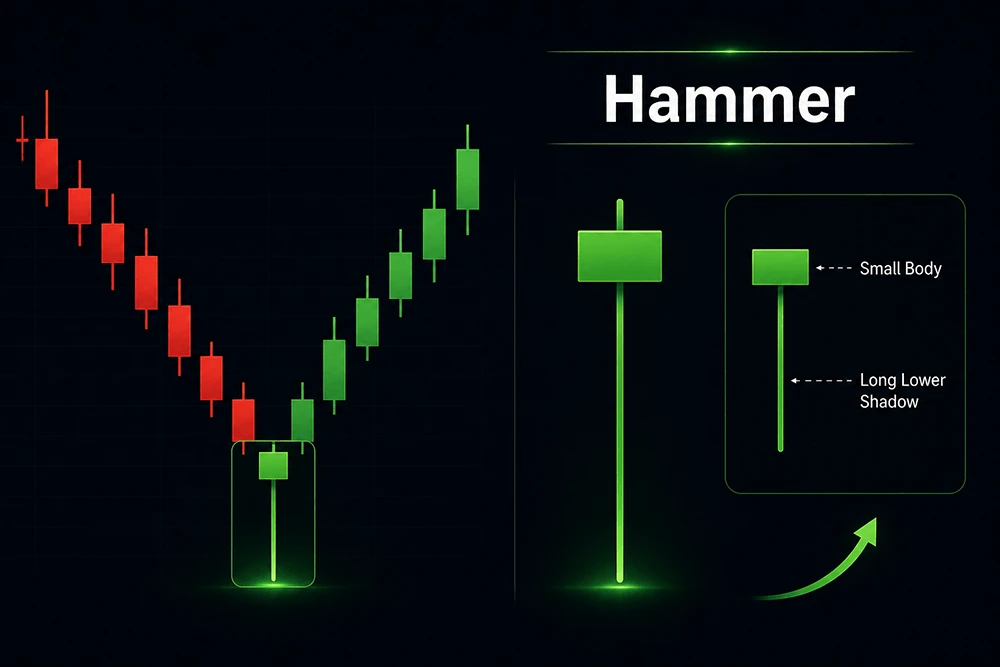
ஹேமர் ஒரு வீழ்ச்சிக்குப் பிறகு உருவாகிறது மற்றும் ஒரு நீண்ட கீழ் விக்கை உடைய சிறிய பாடியைக் கொண்டுள்ளது. விற்பவர்கள் விலையைக் கீழே தள்ளியதைக் காட்டுகிறது, ஆனால் கேண்டில் மூடும் முன் வாங்குபவர்கள் பெரும்பாலான நகர்வை மீட்டுக்கொண்டனர். இது பெரும்பாலும் சாத்தியமான புல்லிஷ் ரிவர்சலைக் குறிக்கிறது.
ஹேமர் சப்போர்ட்டுக்கு அருகில் அல்லது தெளிவான டவுன்ட்ரெண்டுக்குப் பிறகு தோன்றும்போது வலுவாக இருக்கும். அதே தனியாக, இது ஒரு எச்சரிக்கை அறிகுறி, ஒரு உத்தரவாதம் அல்ல.
புல்லிஷ் என்குல்ஃபிங்
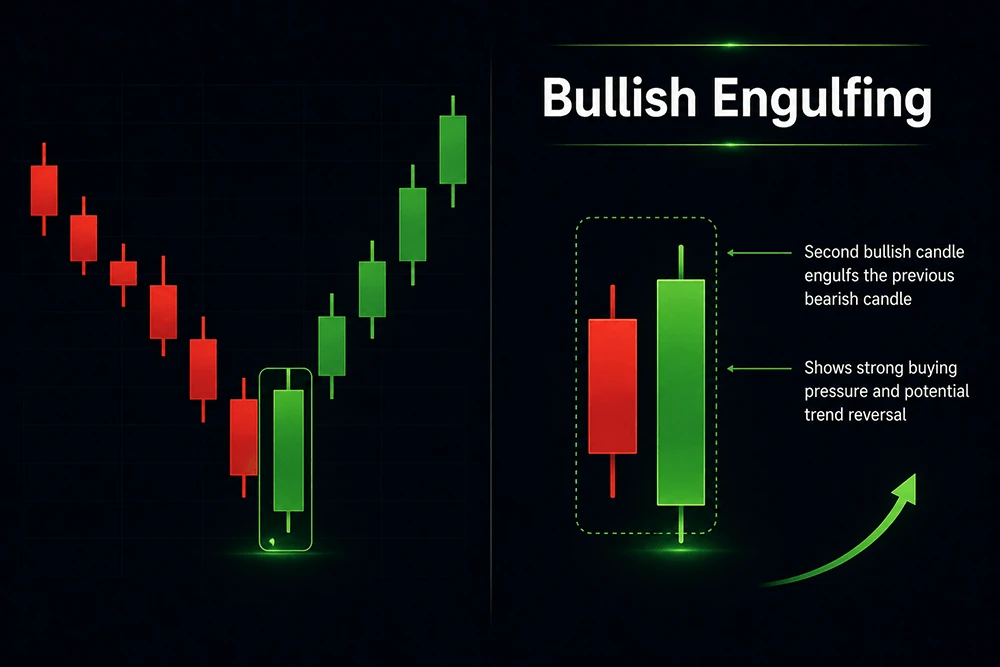
புல்லிஷ் என்குல்ஃபிங் வடிவம் ஒரு வலுவான புல்லிஷ் கேண்டில் முந்தைய பேரிஷ் கேண்டிலின் பாடியை முழுமையாக மூடும்போது தோன்றுகிறது. விற்பனை அழுத்தத்தின் காலத்திற்குப் பிறகு வாங்குபவர்கள் கட்டுப்பாட்டைப் பெற்றுள்ளனர் என்பதைக் காட்டுகிறது. இது மிகவும் பரவலாகக் கவனிக்கப்படும் ரிவர்சல் வடிவங்களில் ஒன்றாகும்.
இரண்டாவது கேண்டில் முந்தைய கேண்டிலின் திறப்பிற்கு நல்ல அளவு மேலே மூடும்போது இது மிகவும் நம்பகமானதாக இருக்கும். இது ஒரு சிறிய பவுன்ஸ் மட்டும் அல்ல, அர்த்தமுள்ள மொமெண்டத்தைக் காட்டுகிறது.
மார்னிங் ஸ்டார்
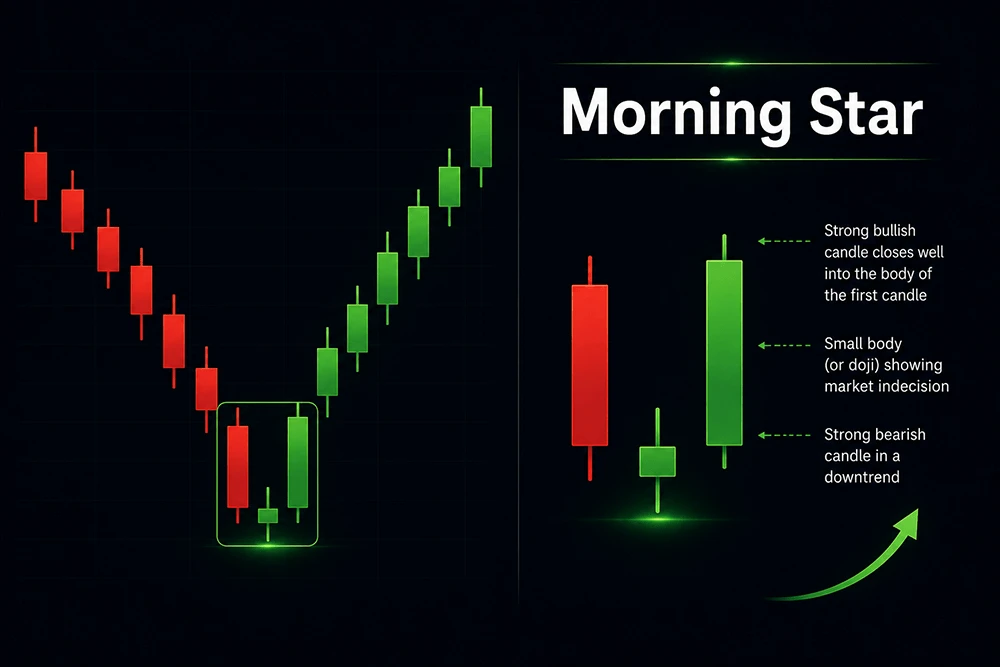
மார்னிங் ஸ்டார் என்பது மூன்று கேண்டில்களைக் கொண்ட புல்லிஷ் ரிவர்சல் வடிவம் ஆகும். முதல் கேண்டில் பேரிஷ் ஆனது, இரண்டாவது தீர்மானமின்மையைக் காட்டுகிறது, மற்றும் மூன்றாவது ஒரு வலுவான புல்லிஷ் கேண்டில். இவை சேர்ந்து விற்பனை அழுத்தம் குறைந்து வருவதையும் வாங்குபவர்கள் நுழைவதையும் காட்டுகின்றன.
இந்த வடிவம் நீடித்த கீழ்நோக்கிய நகர்விற்குப் பிறகு குறிப்பாக பயனுள்ளதாக இருக்கும். மூன்றாவது கேண்டில் முக்கிய உறுதிப்படுத்தல் கேண்டில் ஆகும்.
பேரிஷ் வடிவங்கள்
ஷூட்டிங் ஸ்டார்
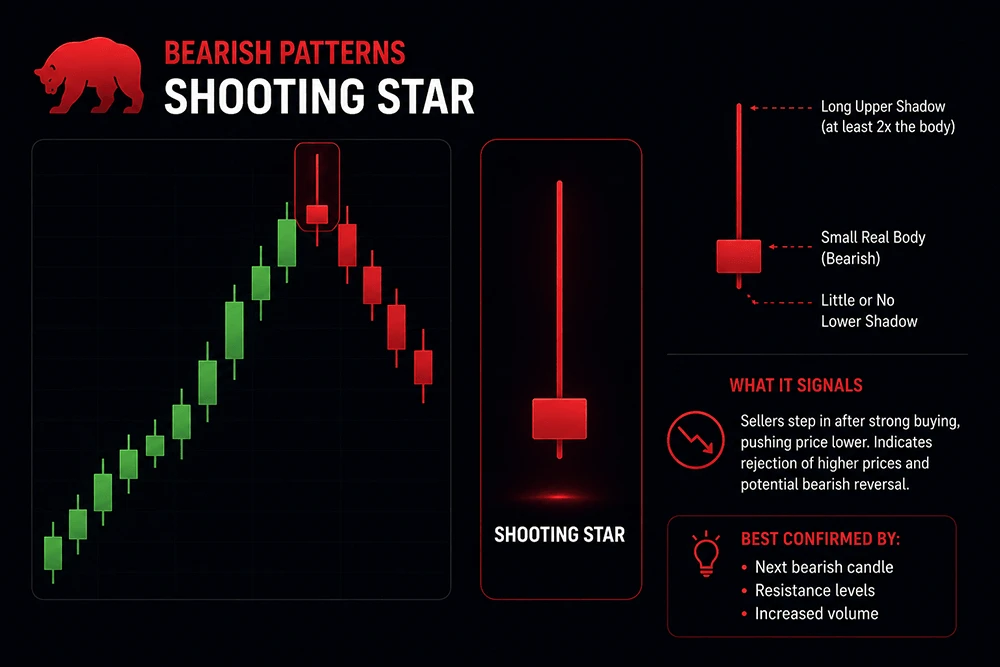
ஷூட்டிங் ஸ்டார் ஒரு உயர்வுக்குப் பிறகு உருவாகிறது மற்றும் ஒரு நீண்ட மேல் விக்கை உடைய சிறிய பாடியைக் கொண்டுள்ளது. வாங்குபவர்கள் விலையை உயர்த்தியதைக் காட்டுகிறது, ஆனால் மூடும் முன் விற்பவர்கள் அதை மீண்டும் கீழே தள்ளினர். இது பெரும்பாலும் சாத்தியமான பேரிஷ் ரிவர்சலைக் குறிக்கிறது.
இது ரெசிஸ்டன்ஸுக்கு அருகில் அல்லது ஒரு வலுவான ரேலிக்குப் பிறகு தோன்றும்போது மிகவும் அர்த்தமுள்ளதாக மாறுகிறது. கேண்டிலின் வடிவத்தை விட சூழல் மிகவும் முக்கியமானது.
பேரிஷ் என்குல்ஃபிங்
பேரிஷ் என்குல்ஃபிங் வடிவம் ஒரு வலுவான பேரிஷ் கேண்டில் முந்தைய புல்லிஷ் கேண்டிலின் பாடியை முழுமையாக மூடும்போது தோன்றுகிறது. விற்பவர்கள் வாங்குபவர்களை மிஞ்சி கட்டுப்பாட்டைப் பெறலாம் என்பதைக் காட்டுகிறது. வர்த்தகர்கள் இதை பெரும்பாலும் ஒரு குறுகிய கால உச்சத்தின் அறிகுறியாகக் கருதுகின்றனர்.
இந்த வடிவம் தெளிவான அப்ட்ரெண்டுக்குப் பிறகு தோன்றி கேண்டிலின் தாழ்வுக்கு அருகில் மூடும்போது வலுவாக இருக்கும். இது தொடர்ச்சியான விற்பனை அழுத்தத்தைக் குறிக்கிறது.
ஈவெனிங் ஸ்டார்
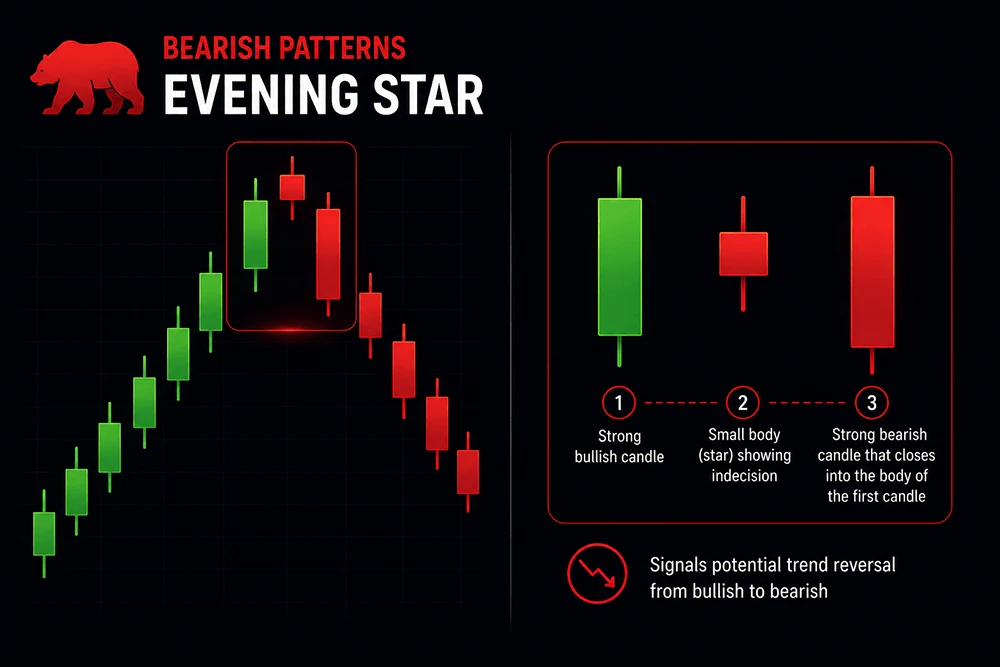
ஈவெனிங் ஸ்டார் என்பது மார்னிங் ஸ்டாரின் பேரிஷ் பதிப்பாகும். இதில் மூன்று கேண்டில்கள் உள்ளன: ஒரு புல்லிஷ் கேண்டில், ஒரு சிறிய தீர்மானமின்மை கேண்டில், பின்னர் ஒரு வலுவான பேரிஷ் கேண்டில். இது பெரும்பாலும் ஒரு உயர்வுக்குப் பிறகு தோன்றுகிறது மற்றும் மொமெண்டம் கீழ்நோக்கி நகர்வதைக் குறிக்கலாம்.
மூன்றாவது கேண்டில் முதல் கேண்டிலின் பாடிக்குள் ஆழமாக மூடும்போது இந்த வடிவம் சிறப்பாக செயல்படுகிறது. இது ரிவர்சல் சிக்னலை உறுதிப்படுத்துகிறது.
நியூட்ரல் வடிவங்கள்
டோஜி
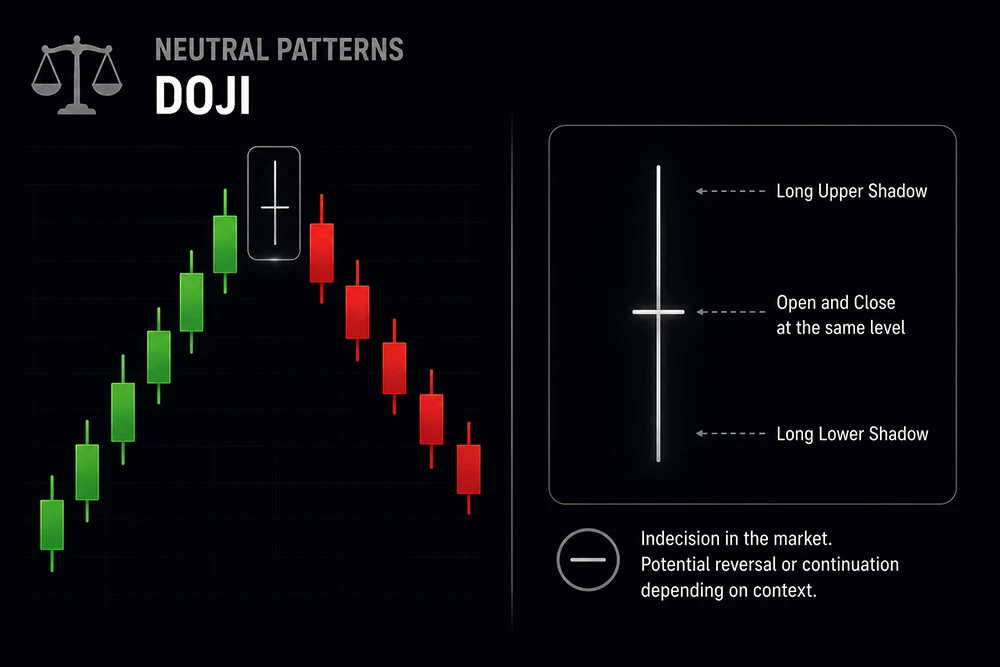
டோஜி திறப்பு மற்றும் இறுதி விலை கிட்டத்தட்ட சமமாக இருக்கும்போது உருவாகிறது. இது தீர்மானமின்மையையும் வாங்குபவர்களுக்கும் விற்பவர்களுக்கும் இடையிலான தற்காலிக சமநிலையையும் காட்டுகிறது. டோஜி ஒரு ரிவர்சலுக்கு முன் தோன்றலாம், ஆனால் ஒரு பெரிய நகர்வை ஏற்படுத்தாமல் கன்சாலிடேஷன் நேரத்திலும் தோன்றலாம்.
இந்த கேண்டில் ஒரு வலுவான போக்கிற்குப் பிறகு அல்லது ஒரு முக்கியமான விளக்கப்பட நிலையில் தோன்றும்போது மிகவும் அர்த்தமுள்ளதாக மாறுகிறது. அடுத்த கேண்டில் பொதுவாக உண்மையான குறிப்பை வழங்குகிறது.
இவற்றை எவ்வாறு பயன்படுத்துவது
கேண்டில்ஸ்டிக் வடிவங்கள் தனித்த சிக்னல்களாக அல்லாமல் உறுதிப்படுத்தல் கருவிகளாக சிறப்பாக செயல்படுகின்றன. சுற்றியுள்ள சூழல் வலுவாக இருக்கும் போது, வடிவம் சிறப்பாக செயல்படும். ஒரு சீரற்ற வரம்பின் நடுவில் இருக்கும் அதே வடிவத்தை விட, சப்போர்ட் அல்லது ரெசிஸ்டன்ஸுக்கு அருகில் இருக்கும் வடிவம் அதிக முக்கியத்துவம் பெறுகிறது.
இந்த எளிய செயல்முறையைப் பயன்படுத்தவும்:
- போக்கை அடையாளம் காணவும்.
- சப்போர்ட் மற்றும் ரெசிஸ்டன்ஸை குறிக்கவும்.
- அர்த்தமுள்ள நிலையில் ஒரு கேண்டில்ஸ்டிக் வடிவத்தைத் தேடவும்.
- அடுத்த கேண்டிலிலிருந்து உறுதிப்படுத்தலுக்காக காத்திருக்கவும்.
- வால்யூம் அல்லது மொமெண்டம் இண்டிகேட்டர்களைச் சரிபார்க்கவும்.
- இதனுடன் ரிஸ்கை நிர்வகிக்கவும் ஸ்டாப் லாஸ்.
வடிவம் | சிக்னல் | வகை | பொதுவான இடம் |
ஹேமர் | புல்லிஷ் ரிவர்சல் | புல்லிஷ் | டவுன்ட்ரெண்ட் முடிவு |
புல்லிஷ் என்குல்ஃபிங் | புல்லிஷ் ரிவர்சல் | புல்லிஷ் | டவுன்ட்ரெண்ட் முடிவு |
மார்னிங் ஸ்டார் | புல்லிஷ் ரிவர்சல் | புல்லிஷ் | டவுன்ட்ரெண்ட் முடிவு |
ஷூட்டிங் ஸ்டார் | பேரிஷ் ரிவர்சல் | பேரிஷ் | அப்ட்ரெண்ட் முடிவு |
பேரிஷ் என்குல்ஃபிங் | பேரிஷ் ரிவர்சல் | பேரிஷ் | அப்ட்ரெண்ட் முடிவு |
ஈவெனிங் ஸ்டார் | பேரிஷ் ரிவர்சல் | பேரிஷ் | அப்ட்ரெண்ட் முடிவு |
டோஜி | தீர்மானமின்மை | நியூட்ரல் | எந்த போக்கும் |
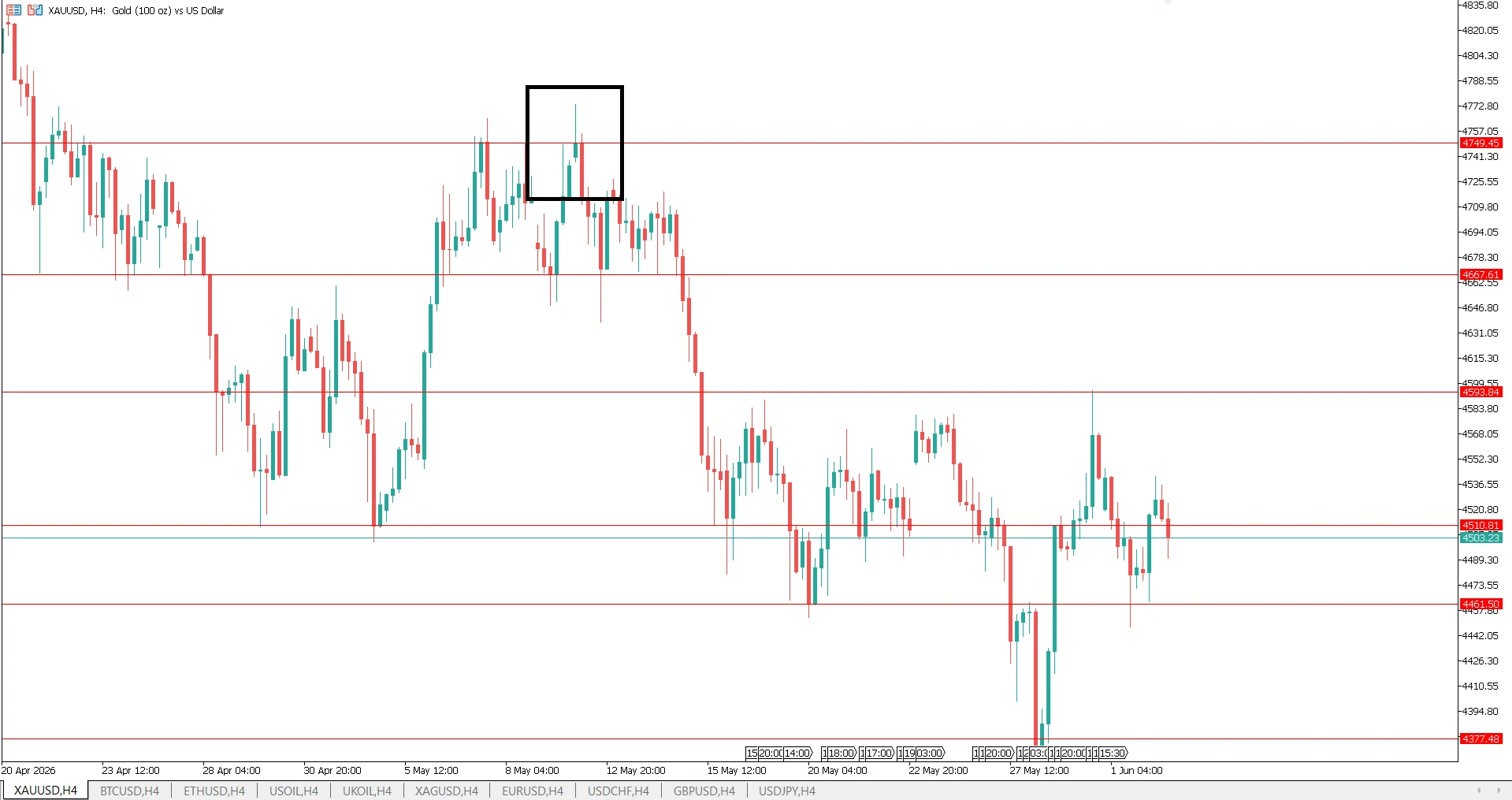
உதாரணம்: ஒரு அப்ட்ரெண்டுக்குப் பிறகு, குறிப்பாக ரெசிஸ்டன்ஸுக்கு அருகில் ஒரு நீண்ட மேல் விக், பெரும்பாலும் ஷூட்டிங் ஸ்டார் அல்லது பேரிஷ் பின் பாரைக் குறிக்கிறது. இந்த கேண்டில் வாங்குபவர்கள் விலையை உயர்த்தியதைக் காட்டுகிறது, ஆனால் மூடும் முன் விற்பவர்கள் தலையிட்டு அதை மீண்டும் கீழே தள்ளினர், இது பேரிஷ் நிராகரிப்பையும் சாத்தியமான ரிவர்சலையும் குறிக்கலாம்.
பொதுவான தவறுகள்
பல வர்த்தகர்கள் கேண்டில்ஸ்டிக் வடிவங்களை தானியங்கி சிக்னல்களாக நடத்துவதால் பணத்தை இழக்கின்றனர். இது பொதுவாக மோசமான நுழைவுகளுக்கும் தேவையற்ற இழப்புகளுக்கும் வழிவகுக்கும். வடிவம் முக்கியம், ஆனால் இடமும் சந்தை சூழலும் அதிக முக்கியத்துவம் பெறுகின்றன.
இந்த தவறுகளைத் தவிர்க்கவும்:
- நீங்கள் பார்க்கும் ஒவ்வொரு வடிவத்தையும் வர்த்தகம் செய்தல்.
- ஒட்டுமொத்த போக்கைப் புறக்கணித்தல்.
- உறுதிப்படுத்தல் இல்லாமல் வடிவங்களைப் பயன்படுத்துதல்.
- பெரிய ரெசிஸ்டன்ஸில் ஒரு புல்லிஷ் வடிவத்தை வாங்குதல்.
- பெரிய சப்போர்ட்டில் ஒரு பேரிஷ் வடிவத்தை விற்றல்.
ஒரு வடிவம் ஒரு குறிப்பு, ஒரு கட்டளை அல்ல.
எந்த வடிவங்கள் அதிக முக்கியத்துவம் பெறுகின்றன
பெரும்பாலான வர்த்தகர்களுக்கு, மிகவும் நடைமுறையான வடிவங்கள் ஹேமர், ஷூட்டிங் ஸ்டார், புல்லிஷ் என்குல்ஃபிங், பேரிஷ் என்குல்ஃபிங், மார்னிங் ஸ்டார், ஈவெனிங் ஸ்டார் மற்றும் டோஜி ஆகும். இவை அடையாளம் காண எளிமையானவை மற்றும் பெரும்பாலும் முக்கியமான திருப்புமுனைகளில் தோன்றும். அவை ஒரே வாங்குபவர்-விற்பவர் நடத்தையைப் பிரதிபலிப்பதால் பல சந்தைகளிலும் பயனுள்ளதாக இருக்கும்.
நீங்கள் ஒரு தொடக்கநிலையாளராக இருந்தால், இவற்றுடன் தொடங்கவும்:
- டோஜி.
- ஹேமர்.
- ஷூட்டிங் ஸ்டார்.
- புல்லிஷ் என்குல்ஃபிங்.
- பேரிஷ் என்குல்ஃபிங்.
இந்த வடிவங்கள் பிரைஸ் ஆக்ஷனைப் படிக்க உங்களுக்கு ஒரு உறுதியான அடித்தளத்தை வழங்குகின்றன.
இவை எவ்வளவு நம்பகமானவை
கேண்டில்ஸ்டிக் வடிவங்கள் சரியாகப் பயன்படுத்தப்படும்போது மிதமான அளவு நம்பகமானவை, ஆனால் அவை சரியானவை அல்ல. அவற்றின் துல்லியம் போக்கு சூழல், சந்தை வோலட்டிலிட்டி, காலக்கட்டம் மற்றும் உறுதிப்படுத்தலைப் பொறுத்தது. 1-நிமிட விளக்கப்படத்தில் வலுவாகத் தோன்றும் ஒரு வடிவம், தினசரி விளக்கப்படத்தில் இதே வடிவத்துடன் ஒப்பிடும்போது மிகக் குறைவான அர்த்தத்தைக் கொண்டிருக்கலாம்.
சிறந்த முடிவுகள் பொதுவாக இவற்றை இணைப்பதிலிருந்து கிடைக்கின்றன:
- போக்கு திசை.
- சப்போர்ட் மற்றும் ரெசிஸ்டன்ஸ்.
- வால்யூம்.
- RSI அல்லது MACD.
- தெளிவான ரிஸ்க் மேலாண்மை.
இதனால்தான் தொழில்முறை வர்த்தகர்கள் கேண்டில்ஸ்டிக்குகளை ஒரு பரந்த முடிவெடுக்கும் செயல்முறையின் ஒரு பகுதியாக நடத்துகின்றனர்.
அடிக்கடி கேட்கப்படும் கேள்விகள்
மிகவும் நம்பகமான கேண்டில்ஸ்டிக் வடிவம் எது?
புல்லிஷ் மற்றும் பேரிஷ் என்குல்ஃபிங் வடிவங்கள் மிகவும் பயனுள்ளவற்றில் ஒன்றாகும், ஏனெனில் அவை வாங்குபவர்களுக்கும் விற்பவர்களுக்கும் இடையே கட்டுப்பாட்டில் தெளிவான மாற்றத்தைக் காட்டுகின்றன.
கேண்டில்ஸ்டிக் வடிவங்கள் அனைத்து சந்தைகளிலும் வேலை செய்யுமா?
ஆம், அவற்றை ஃபாரெக்ஸ், பங்குகள், இண்டெக்ஸ்கள், கமாடிட்டிகள் மற்றும் கிரிப்டோவில் பயன்படுத்தலாம், ஏனெனில் அவை உலகளாவிய சந்தை உளவியலைப் பிரதிபலிக்கின்றன.
தொடக்கநிலையாளர்கள் கேண்டில்ஸ்டிக் வடிவங்களை எளிதாகக் கற்றுக்கொள்ள முடியுமா?
ஆம். அடிப்படை வடிவங்களை அடையாளம் காண்பது எளிதானது, குறிப்பாக வர்த்தகர்கள் முதலில் சில முக்கிய வடிவங்களில் கவனம் செலுத்தும்போது.
கேண்டில்ஸ்டிக் வடிவங்களை தனியாகப் பயன்படுத்த வேண்டுமா?
இல்லை. போக்கு பகுப்பாய்வு, சப்போர்ட் மற்றும் ரெசிஸ்டன்ஸ் மற்றும் உறுதிப்படுத்தல் இண்டிகேட்டர்களுடன் இணைந்தால் இவை சிறப்பாக வேலை செய்கின்றன.
இறுதி முடிவு
கேண்டில்ஸ்டிக் வடிவங்கள் மதிப்புமிக்கவை, ஏனெனில் அவை வர்த்தகர்களுக்கு விலை நடத்தையை விரைவாகவும் தெளிவாகவும் படிக்க உதவுகின்றன. மிகவும் முக்கியத்துவம் பெறும் வடிவங்கள் சரியான இடத்தில், சரியான நேரத்தில் மற்றும் உறுதிப்படுத்தலுடன் தோன்றுபவையாகும். நீங்கள் சில முக்கிய அமைப்புகளில் கவனம் செலுத்தி, நீங்கள் பார்க்கும் ஒவ்வொரு கேண்டிலையும் வர்த்தகம் செய்வதைத் தவிர்த்தால், கேண்டில்ஸ்டிக் பகுப்பாய்வு ஒரு யூகிக்கும் விளையாட்டாக இல்லாமல் ஒரு நடைமுறை நன்மையாக மாறும்.
ஆசிரியரைச் சந்திக்கவும்
வனேசா பால்சன் NordFX-இல் ஒரு மார்க்கெட்டிங் மேனேஜராக பணிபுரிகிறார், நிதிச் சேவைத் துறையில் ஆன்லைன் மார்க்கெட்டிங்கில் பன்னிரண்டு ஆண்டுகளுக்கும் மேலான அனுபவம் கொண்டவர். இன்-ஹவுஸ் சூழல்களில் தேடல், சமூக மற்றும் டிஸ்பிளே சேனல்களில் தரவு-உந்துதல் பிரச்சாரங்களை உருவாக்கி செயல்படுத்தியுள்ளார். அவரது பணி சிக்கலான நிதி தயாரிப்புகள் மற்றும் வர்த்தக கருவிகளை தெளிவான, நடைமுறை கல்வி உள்ளடக்கமாக மொழிபெயர்ப்பதில் கவனம் செலுத்துகிறது, இது உலகளாவிய வர்த்தக நிலப்பரப்பைப் பற்றிய ஒரு பரந்த மற்றும் முழுமையான பார்வையை அவருக்கு அளிக்கிறது.
வனேசாவுடன் லிங்க்டினில் தொடர்பு கொள்ளுங்கள்.
திரும்பிச் செல்லவும் திரும்பிச் செல்லவும்