The forex market is the largest and most liquid financial market in the world, with trillions of dollars traded every day across currencies, time zones and trading platforms. Its global nature, accessibility and round-the-clock operation attract millions of private traders. At the same time, these same characteristics make the market appealing to fraudsters who seek to exploit inexperience, unrealistic expectations and a lack of financial literacy.
Forex trading itself is not a scam. It is a legitimate financial activity used by banks, corporations, governments and private investors. However, a wide range of fraudulent schemes operate around the market, often disguising themselves as trading services, brokers, signal providers or investment opportunities. Understanding how these scams work and learning how to recognise their warning signs is an essential part of capital protection and risk management.
Just as traders study charts, indicators and entry and exit criteria in trading, they must also learn how to protect themselves from deceptive practices that can lead to irreversible losses.
What Is a Forex Scam?
A forex scam is any deceptive activity that misleads traders into transferring money or granting access to funds under false or misleading assumptions. These schemes often rely on promises of stable income, guaranteed profits or exclusive trading methods that supposedly eliminate risk.
In reality, no legitimate trading activity can guarantee profits. Market prices are influenced by economic data, central bank decisions, geopolitical events and shifts in market sentiment. Losses are an inherent part of trading, and any offer that denies this basic fact should immediately raise concerns.
Forex scams can take many forms. Some are obvious and poorly executed, while others are highly sophisticated, using professional websites, trading dashboards and persuasive marketing. This is why a clear understanding of what the forex market is and how it works is one of the most effective defences against fraud.
Fake or Unregulated Forex Brokers
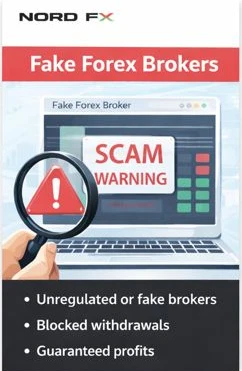
One of the most serious threats to traders is the presence of fake or unregulated brokers. These entities may appear legitimate at first glance, offering modern trading platforms, customer support and attractive trading conditions. However, they operate without proper regulatory oversight and are not accountable to any recognised financial authority.
In many cases, such brokers do not send client orders to the real market. Prices may be manipulated internally, trades can be delayed or rejected, and account balances may not reflect real market execution. Withdrawals are often blocked or delayed using artificial reasons such as additional verification, unexpected fees or minimum turnover requirements.
Traders who understand how brokerage execution works are less likely to fall victim to these schemes. A solid foundation can be built by learning how orders are executed, what spreads and commissions represent and why regulation matters. This knowledge is essential before opening any trading account or depositing funds.
Signal Selling and “Guaranteed Profit” Schemes
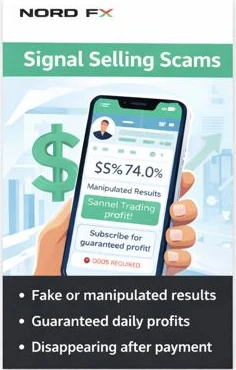
Signal selling scams are among the most widespread in the retail forex space. These schemes typically target beginners who are still learning how to analyse the market and are looking for shortcuts to profitability.
Signal providers often advertise extremely high win rates, daily profits or secret strategies that allegedly outperform the market. Performance statistics are usually manipulated, with losing trades hidden or removed. Screenshots of profits are easy to fabricate and are frequently used as marketing tools.
Once a trader pays a subscription fee, the quality of the signals often proves inconsistent or random. In some cases, the service disappears entirely after collecting payments. In others, it continues operating but provides little real value.
Understanding different trading styles helps traders recognise why no signal service can deliver consistent profits across all market conditions. Markets change, volatility fluctuates and strategies that work in one environment may fail in another.
Automated Trading Robots and Software Scams
Automated trading systems, expert advisors and algorithmic tools are often marketed as solutions that remove human emotion from trading and generate profits automatically. While algorithmic trading is a legitimate field, many retail-oriented robot offers are misleading or outright fraudulent.
These products typically showcase impressive historical results based on selective backtesting or hypothetical data. Live trading performance, if it exists, is often very different. Some robots use extremely aggressive risk settings that generate short-term gains followed by sharp drawdowns that wipe out accounts.
In other cases, the software does not trade at all. Users may see simulated profits on a dashboard while real funds remain untouched or inaccessible. Refunds are usually unavailable, and customer support becomes unresponsive once payment is made.
Before trusting any automated system, traders should understand how liquidity, execution and risk interact in real markets. Concepts such as order flow and price depth are explained in detail in the NordFX article on how to use market depth in forex, crypto and stock trading, helping traders understand why no algorithm can eliminate risk.
Social Media and Influencer-Driven Scams

Social media platforms have become one of the main distribution channels for modern forex scams. Fraudsters use images of luxury lifestyles, expensive cars and exotic travel to create the illusion of trading success. Screenshots of large account balances and dramatic profit claims are used to attract followers and build credibility.
These profiles often promote paid courses, private trading groups, copy trading services or specific brokers. Urgency and pressure are common tactics, encouraging users to act quickly to avoid missing out.
In many cases, the same images and testimonials are reused across multiple accounts. Promises are vague, and detailed explanations of risk or strategy are absent. A legitimate trading opportunity does not rely solely on social media marketing or emotional appeal.
Investment Clubs and Ponzi-Style Schemes
Some forex scams are disguised as investment clubs or private trading communities. Participants are encouraged to pool funds, which are supposedly traded by experienced professionals. Early participants may receive small payouts, creating the impression that the scheme is profitable.
In reality, these payouts are often funded by new deposits rather than actual trading profits. Once new inflows slow down, withdrawals are suspended and the scheme collapses. Most participants lose their funds, while organisers disappear.
A key warning sign is a lack of transparency. Legitimate trading does not require secrecy, restricted information or complex membership structures. Traders should always retain full control over their accounts and capital.
Common Warning Signs Across All Forex Scams
Despite their different formats, most forex scams share a number of common characteristics. These include promises of guaranteed returns, pressure to invest immediately, unclear or constantly changing withdrawal rules and a lack of verifiable regulation.
Another major red flag is an excessive focus on profits with little or no discussion of risk. Losses are a normal part of trading, and any service that denies this reality should not be trusted.
Traders who have a realistic understanding of how markets behave are far less likely to be influenced by such tactics.
How to Protect Yourself from Forex Scams
The most effective protection against fraud is education combined with disciplined behaviour. Traders should always verify broker credentials, carefully read trading conditions and understand how deposits and withdrawals work before committing funds.
Using a demo account is an essential step. Demo trading allows traders to test platforms, strategies and tools without risking real capital. It also helps identify unrealistic claims and misleading performance statistics.
Maintaining full control over one’s trading account is equally important. No legitimate service requires remote desktop access, full account credentials or unrestricted control over client funds.
NordFX provides a wide range of educational materials designed to help traders build this foundation. Articles covering market mechanics, strategy selection and risk management enable traders to make informed decisions rather than rely on promises of easy profits.
Conclusion
Forex trading is not a scam, but it demands knowledge, discipline and realistic expectations. Fraudulent schemes thrive on misinformation, emotional pressure and a lack of financial education. By understanding how common forex scams operate and learning how legitimate trading works, traders can significantly reduce their exposure to fraud.
Protecting capital begins with choosing reliable brokers, developing independent analytical skills and treating any promise of guaranteed profit with scepticism. Trading success is built on education, experience and risk management, not shortcuts or secret systems.
For traders who focus on understanding the market and continuously improving their skills through trusted educational resources, the forex market remains a legitimate environment for long-term development and responsible trading.
Go Back Go Back