By the NordFX Market Analysis Team
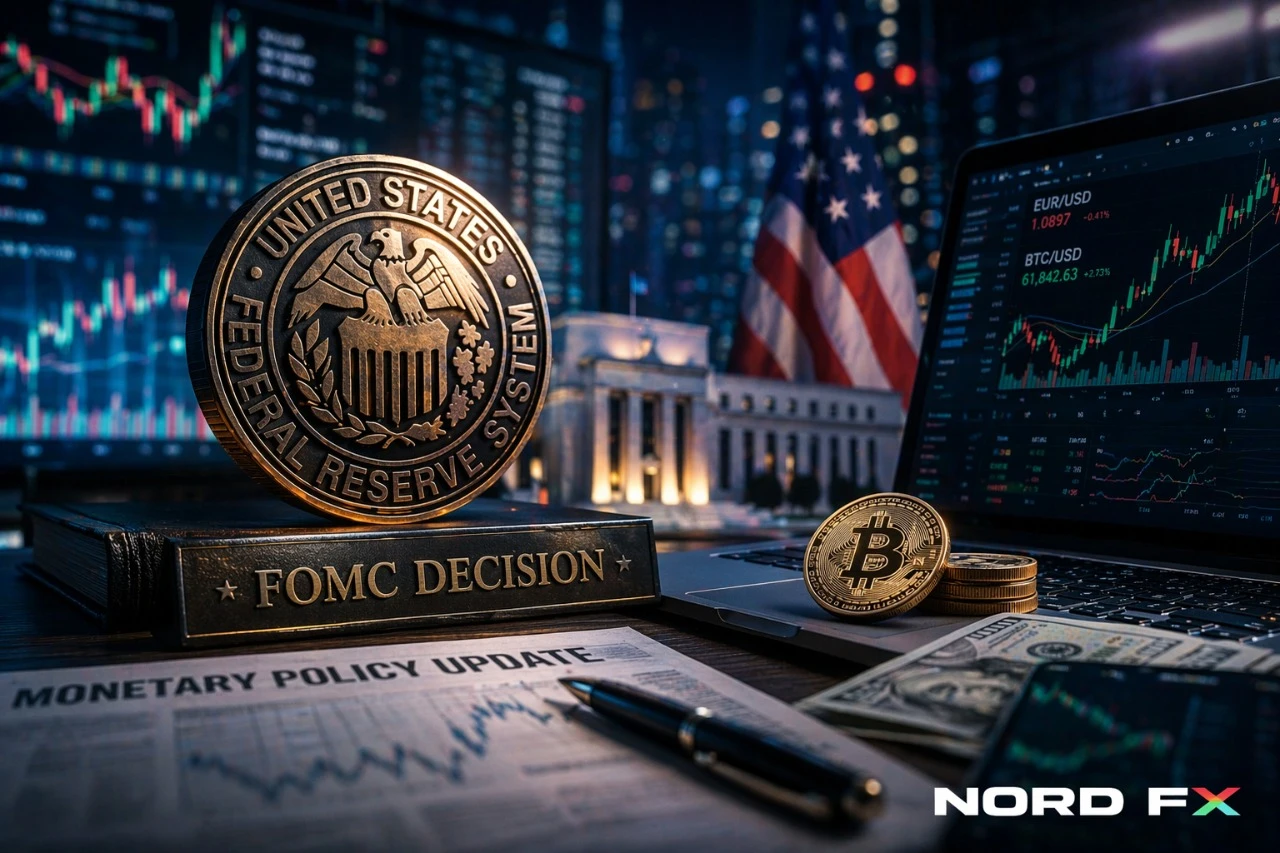 Few institutions wield as much influence over global financial markets as the United States Federal Reserve. Every time its policymakers meet, traders around the world pause, watch, and prepare - because what happens in Washington can send shockwaves through currency pairs, commodities, and even cryptocurrency markets within seconds. Yet for many traders, the mechanics behind this relationship remain vague. They know the Fed matters, but they are not always sure why it moves markets so dramatically, or how to position themselves intelligently around its decisions.
What Is the Federal Reserve and Why Should Forex Traders Care?
The Federal Reserve - commonly called "the Fed" - is the central bank of the United States, established in 1913 with a dual mandate: to promote maximum employment and to maintain stable prices. Its most powerful tool is the federal funds rate: the interest rate at which US banks lend money to each other overnight.
Because the US dollar is involved in approximately 88% of all global forex transactions, any change in the cost of holding or borrowing dollars ripples immediately through currency markets. When the Fed raises rates, the dollar typically becomes more attractive to international investors seeking higher returns. When it cuts, the dollar often weakens as capital seeks yield elsewhere. This relationship between rate policy and currency value is the single most important fundamental driver in forex - full stop.
The FOMC: Who Decides and When
The Federal Open Market Committee (FOMC) is the body responsible for setting US monetary policy. It meets eight times per year, roughly every six to eight weeks. Each meeting concludes with a policy statement and a vote on the rate target. At four of the eight annual meetings, the Fed also publishes updated economic projections - including the closely watched dot plot, which maps where each committee member expects rates to be in the coming years.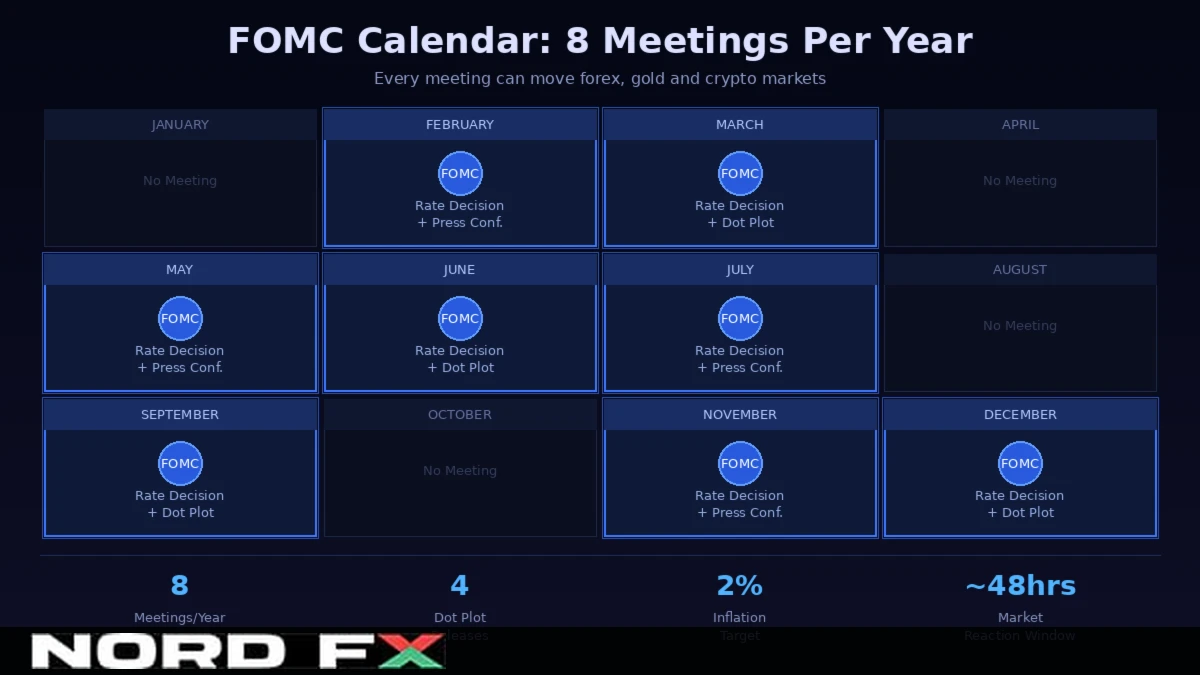
After every meeting, the Fed Chair holds a press conference. These sessions are often more market-moving than the rate decision itself, because traders are listening for signals about the future direction of policy - a practice known as forward guidance. FOMC meeting dates are published months in advance and appear in every serious economic calendar. Tracking them is not optional for an active trader; it is a basic professional discipline. NordFX's market analysis section publishes detailed post-FOMC commentary after every meeting, covering the implications for major currency pairs and crypto.
Hawkish vs. Dovish: The Language Every Trader Must Know
Two terms dominate every Fed discussion: hawkish and dovish.
A hawkish Fed is biased toward raising rates or tightening monetary policy. Hawkish signals typically strengthen the USD and weigh on risk assets. A dovish Fed is inclined toward cutting rates to stimulate growth. Dovish signals tend to weaken the dollar and support riskier assets - including equities and cryptocurrencies.
The language inside the FOMC statement itself is parsed with extraordinary care by professional traders. A single word change - replacing "patient" with "flexible," or shifting how the Fed describes inflation - can trigger multi-pip moves within milliseconds of publication. This is why reading the statement carefully, and not just the headline rate decision, is a skill worth developing.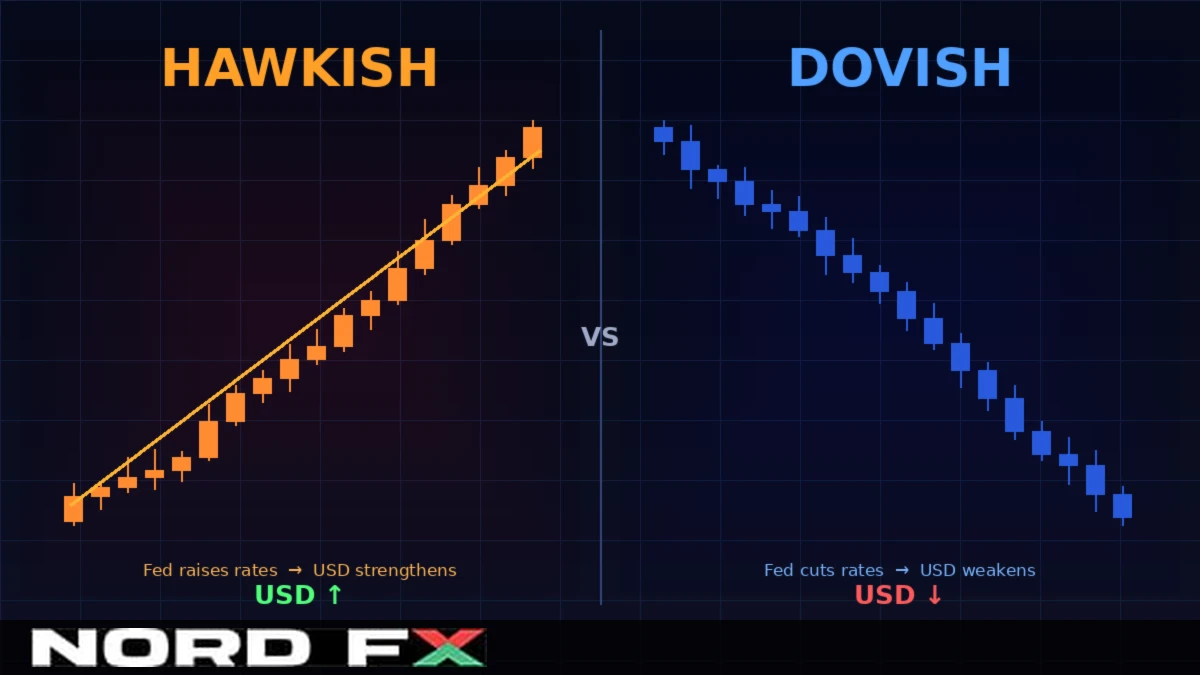
How Rate Decisions Move Currency Pairs
When the Fed raises interest rates, US dollar-denominated assets offer higher yields. Global investors rotate capital into these instruments, and to do so, they need dollars - driving up demand for the greenback. EUR/USD typically falls, GBP/USD often dips, and USD/JPY usually climbs. Commodity currencies like AUD/USD frequently sell off as well.
When the Fed cuts rates, the reverse tends to occur. The yield advantage of holding dollars diminishes, capital rotates toward higher-returning markets, and the dollar weakens across the board.
What makes this more complex is that markets are forward-looking. By the time a decision is announced, much of its effect has often already been priced in through weeks of anticipation. A rate hike that was fully expected may produce little USD rally. A smaller-than-expected cut can actually cause the dollar to strengthen, because traders had priced in something more aggressive. This dynamic - often called "buy the rumour, sell the fact" - catches many newer traders off guard and underscores why understanding market expectations matters just as much as understanding the decision itself.
The dot plot deserves special attention here. When the Fed's projections shift significantly - showing more hikes ahead than the previous release, or fewer - the reaction can be larger than to the rate decision itself. Always compare the new dot plot to the previous one before drawing conclusions about where the dollar is heading.
How the Federal Reserve Affects Crypto Markets
The connection between Fed policy and cryptocurrency prices became unmistakably real from around 2020 onward, and it operates through several clear channels.
Risk appetite is the most direct. Bitcoin, Ethereum, and most altcoins are treated by institutional investors as risk-on assets - they perform well when confidence is high and suffer when capital retreats to safety. The 2022 crypto bear market coincided almost precisely with the most aggressive Fed rate-hiking cycle since the 1980s. The ultra-loose monetary policy of 2020-2021 helped fuel one of the largest crypto bull markets on record.
The US dollar relationship amplifies this. Because most crypto is priced in dollars, a stronger greenback directly reduces the purchasing power of international buyers. A weaker dollar makes crypto cheaper for non-US investors and tends to support prices. This inverse relationship between USD strength and Bitcoin price has been consistent across multiple market cycles.
Liquidity conditions also play a major role. When the Fed engages in quantitative easing - expanding its balance sheet and injecting dollars into the system - overall liquidity rises and speculative assets, including crypto, tend to benefit. Quantitative tightening has the opposite effect. Traders who monitor these macro liquidity conditions alongside NordFX's crypto market analysis are better equipped to read the broader environment their positions are operating in.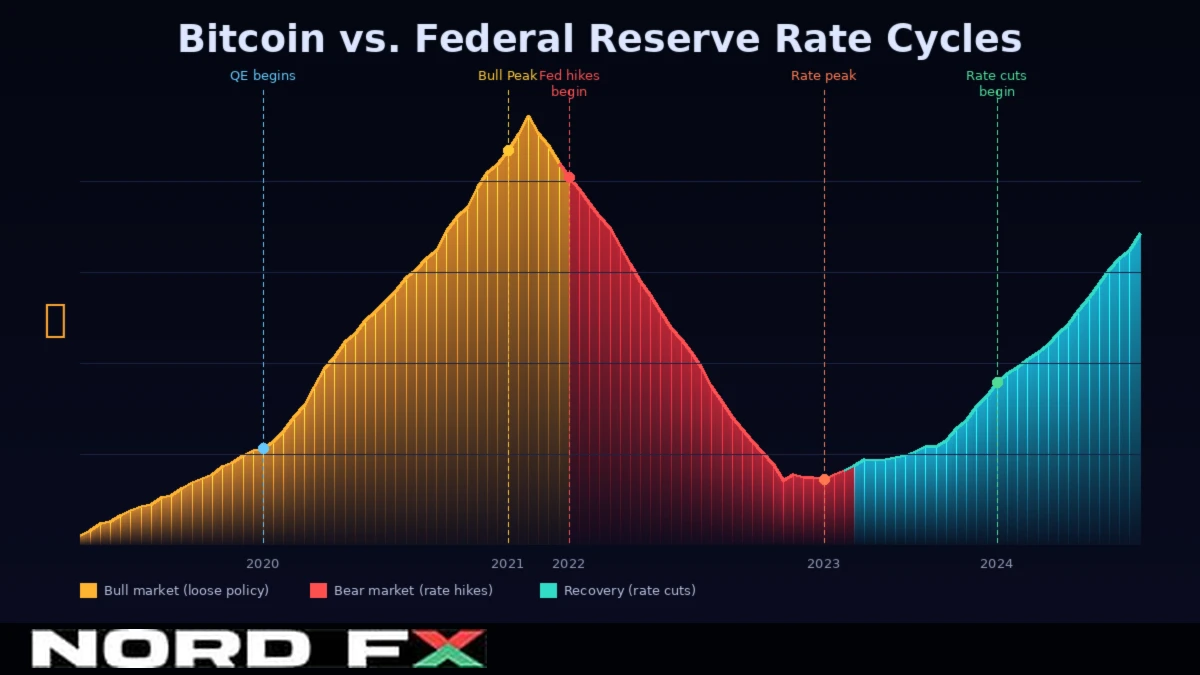
Practical Trading Approach Around FOMC Events
Before the meeting, study the consensus forecast. What probability is the market currently assigning to each possible outcome? The CME FedWatch Tool provides real-time probabilities based on futures pricing. Note how the USD has performed in the weeks leading up to the decision - significant pre-meeting moves often mean the outcome is already priced in.
During the announcement, resist the urge to trade the first sixty seconds. The initial move after an FOMC statement is frequently violent and unreliable, with prices spiking in one direction before snapping back. Spreads widen sharply as liquidity providers step back. Waiting for the initial volatility to settle before entering gives you a far cleaner picture of where the market actually wants to go.
Watch the press conference, not just the statement. The written statement is published at 2:00 PM Eastern Time. The Fed Chair's press conference begins thirty minutes later. In recent years, the press conference has consistently produced larger and more sustained moves than the statement itself. If you are trading around the Fed, staying engaged through the full press conference is essential.
Manage your exposure carefully. FOMC events are not the time for oversized positions. Traders who maintain well-structured accounts with appropriate leverage - as offered across NordFX's range of trading accounts - are far better placed to absorb short-term volatility without being stopped out before their analysis has time to play out.
After the decision, watch the 2-year US Treasury yield as a leading indicator. It is the most interest-rate-sensitive instrument in the bond market. A rising 2-year yield is generally bullish for USD in the days that follow; a falling 2-year yield signals dollar weakness ahead. Combining this with technical signals from NordFX's daily trading signals gives you both the macro backdrop and precise entry levels to work with.
The Key Data Points the Fed - and You - Should Monitor
The Fed reacts to data, and so should you. Core PCE inflation is the Fed's preferred price gauge - when it comes in above expectations, it raises the probability of hawkish action and typically supports USD. Non-Farm Payrolls (NFP), released on the first Friday of every month, is the other pillar: a strong jobs report gives the Fed room to keep rates higher for longer, while weakness increases pressure to cut.
Beyond these two, GDP growth, retail sales, and manufacturing PMI data all feed the Fed's overall picture. And between meetings, pay attention to speeches from Fed governors and regional presidents - a cluster of hawkish comments in the weeks before an FOMC meeting is often a reliable signal of where the committee is leaning.
Conclusion
The Federal Reserve is not just an American institution. For forex and crypto traders everywhere, it is the single most important variable in the global monetary system. Its decisions shape the value of the world's reserve currency, alter risk appetite across every asset class, and set the tone for central bank policy globally.
The goal is not to predict the Fed perfectly - nobody can. The goal is to approach every FOMC meeting prepared: knowing the consensus, knowing the risks, understanding what is already priced in, and having a clear plan for each possible outcome. That level of preparation is what separates traders who grow steadily from those who are repeatedly surprised by the same events.
NordFX is an international broker providing access to forex, cryptocurrency, gold, and CFD markets across MT4 and MT5 platforms. To explore account types suited to your trading style, visit the NordFX accounts page.