¿Qué es el beneficio de trading?
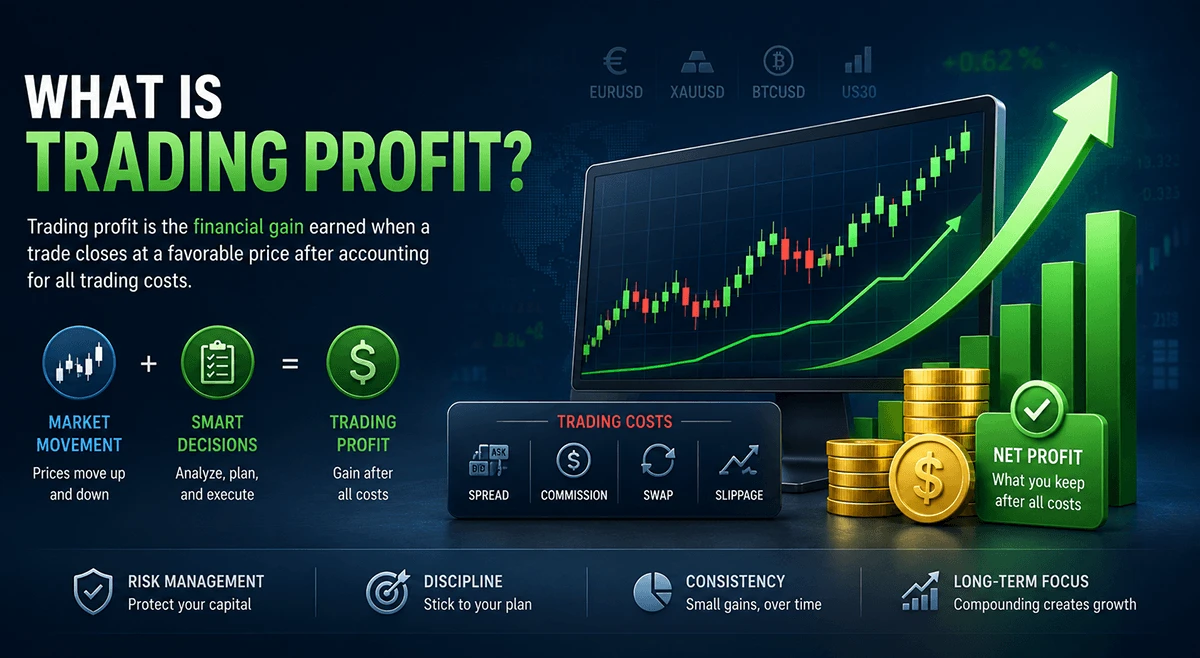
El beneficio de trading es la ganancia financiera obtenida cuando una operación se cierra a un precio favorable tras descontar los costes de negociación, como los diferenciales (spreads), las comisiones, los swaps y el deslizamiento (slippage). Puede provenir tanto de mercados alcistas como bajistas y se evalúa mejor a lo largo de una serie de operaciones con métricas como el beneficio neto, la rentabilidad porcentual y el factor de beneficio, en lugar de basarse en una sola operación ganadora.
¿Se puede ganar dinero operando simplemente porque el precio se mueve a tu favor?
Sí, pero el beneficio de trading es más que la diferencia entre los precios de compra y venta. Depende del movimiento del mercado, el tamaño de la posición, los costes de negociación, la calidad de ejecución y la gestión del riesgo. Los traders profesionales evalúan el beneficio a lo largo de muchas operaciones en lugar de centrarse en el resultado de una sola posición.
El beneficio de trading es uno de los conceptos más importantes de los mercados financieros porque mide el resultado de las decisiones de negociación. Sin embargo, muchos principiantes juzgan su rendimiento solo por el dinero que ganaron en una operación. En realidad, los traders con experiencia se centran en la consistencia, los costes y la rentabilidad a largo plazo, no en posiciones ganadoras individuales.
Ya sea que operes con oro, divisas, acciones, materias primas, criptomonedas o índices, entender cómo se genera y se mide el beneficio de trading te ayuda a evaluar tu estrategia con mayor precisión y a tomar mejores decisiones de trading.
Puntos clave
- El beneficio de trading depende tanto del movimiento del mercado como de los costes de negociación.
- El beneficio bruto y el beneficio neto miden aspectos distintos del rendimiento.
- Los beneficios realizados y no realizados cumplen funciones diferentes durante una operación.
- La rentabilidad porcentual ofrece una medida del rendimiento más significativa que las cantidades en dólares.
- Métricas como el factor de beneficio ayudan a evaluar si una estrategia de trading es rentable de forma consistente.
¿Qué es el beneficio de trading?
El beneficio de trading es el resultado financiero positivo que se genera cuando una operación rinde favorablemente tras considerar todos los costes relevantes. Representa la recompensa por anticipar correctamente el movimiento del mercado y gestionar con éxito el riesgo y la ejecución.
Aunque el concepto parece sencillo, el beneficio de trading implica mucho más que simplemente comprar barato y vender caro. Cada operación incluye costes que reducen el resultado final, y cada decisión de trading afecta cuánto del movimiento disponible del mercado se captura realmente.
El beneficio de trading puede evaluarse desde varias perspectivas:
- Rendimiento de cada operación
- Rendimiento global de la cuenta
- Rentabilidad ajustada al riesgo
- Consistencia de la estrategia a largo plazo
Por este motivo, los traders profesionales rara vez juzgan el éxito por una única operación rentable. En cambio, evalúan si su enfoque produce beneficios sostenibles a lo largo de cientos de operaciones.
Un sistema de trading rentable no es necesariamente uno que gana todas las operaciones. Muchas estrategias exitosas incluyen operaciones perdedoras y aun así generan resultados globales positivos porque las operaciones ganadoras superan a las pérdidas con el tiempo.
Cómo se genera el beneficio de trading
El beneficio de trading existe porque los mercados financieros cambian constantemente a medida que compradores y vendedores reaccionan a eventos económicos, resultados empresariales, acontecimientos geopolíticos, sentimiento del mercado y liquidez.
Cuando los traders anticipan correctamente la dirección del movimiento futuro del precio, pueden obtener un beneficio al cerrar su posición.
El origen del beneficio depende de la participación en el mercado. Cada operación implica a otro participante del mercado en el lado contrario. Los precios se mueven a medida que la oferta y la demanda cambian continuamente durante la sesión de trading.
Por ejemplo:
Factor | Contribución al beneficio de trading |
Movimiento del precio | Crea la oportunidad de obtener ganancias |
Volatilidad del mercado | Produce mayores oscilaciones de precio potenciales |
Momento de entrada | Influye en la calidad de la entrada y la salida |
Liquidez | Afecta la eficiencia de la ejecución |
Costes de negociación | Reducen el beneficio final |
¿De dónde proviene el beneficio en el trading?
Una de las preguntas más comunes de los principiantes es: ¿de dónde proviene el beneficio en el trading?
La respuesta depende del mercado.
En los mercados financieros, los precios fluctúan constantemente porque compradores y vendedores valoran los activos de forma distinta. Cuando un trader predice correctamente el futuro movimiento del precio y otro participante está dispuesto a operar a un precio diferente, surgen oportunidades de beneficio.
En mercados de gran liquidez, como el trading de divisas, los beneficios proceden de los cambios en los tipos de cambio impulsados por la actividad económica global y por la compra y venta continuas. En los mercados de acciones, el desempeño de las empresas, las expectativas de los inversores y el sentimiento del mercado influyen en las variaciones de precio. Los mercados de materias primas y de criptomonedas operan con principios similares, aunque los factores impulsores pueden diferir.
En lugar de pensar en el trading como "quitarle dinero a otro trader", es más exacto ver los mercados como sistemas de fijación de precios dinámicos en los que los participantes tienen expectativas, horizontes de inversión y objetivos distintos.
Beneficio bruto vs. beneficio neto
No todos los beneficios que se muestran en una plataforma de trading representan la cantidad realmente ganada.
El beneficio bruto se refiere a los beneficios antes de deducir los costes relacionados con la operativa.
El beneficio neto refleja lo que queda tras todos los gastos aplicables, incluidos:
- Diferencial (spread)
- Comisión
- Swap nocturno o cargos de financiación
- Deslizamiento (slippage)
- Otras tarifas de trading aplicables
El beneficio neto ofrece la representación más precisa del rendimiento real del trading porque refleja el resultado financiero verdadero.
Dos traders pueden captar movimientos de mercado idénticos pero lograr beneficios netos diferentes si afrontan costes de negociación o calidad de ejecución distintos.
El análisis profesional del rendimiento casi siempre se centra en el beneficio neto y no en el bruto.
Beneficio realizado vs. no realizado (flotante)
Otra distinción importante es si los beneficios se han asegurado realmente.
El beneficio realizado se refiere a las ganancias de posiciones que ya se han cerrado. Una vez cerrada la posición, el beneficio pasa a formar parte del saldo de la cuenta y ya no cambia.
El beneficio no realizado, a menudo llamado beneficio flotante, representa ganancias en posiciones abiertas que siguen expuestas a las fluctuaciones del mercado.
Los beneficios flotantes pueden aumentar, disminuir o desaparecer por completo antes de que se cierre la operación.
Esta distinción influye tanto en la psicología del trading como en la gestión del riesgo. Muchos traders inexpertos se apegan emocionalmente a las ganancias no realizadas, asumiendo que ya les pertenecen. Sin embargo, hasta que se cierra la posición, el mercado puede revertirse.
Los traders profesionales suelen evaluar el rendimiento de la cuenta con resultados realizados, mientras monitorizan los beneficios flotantes como parte de la gestión de riesgo continua.
Beneficio en operaciones largas vs. cortas
El beneficio de trading puede generarse tanto en mercados alcistas como bajistas.
Una operación larga busca beneficiarse de la subida de los precios. El trader abre una posición de compra esperando que el valor del activo suba antes de cerrar la operación.
Una operación corta busca beneficiarse de la caída de los precios. El trader abre una posición de venta esperando que los precios bajen antes de cerrar la posición más tarde.
El principio subyacente es el mismo en ambos casos: el beneficio depende de anticipar con precisión el movimiento futuro del precio mientras se controlan los costes de negociación y el riesgo.
Las plataformas de trading modernas hacen que comprar y vender sea igualmente accesible en muchos mercados financieros, lo que permite a los traders buscar oportunidades con independencia de la dirección general del mercado.
¿Qué afecta al beneficio de trading?
Varias variables influyen en la cantidad final de beneficio generada por cualquier operación. La dirección del mercado por sí sola nunca cuenta toda la historia.
Tamaño de la posición
El tamaño de la posición determina cuánta exposición al mercado tiene un trader.
Las posiciones más grandes aumentan tanto los beneficios potenciales como las pérdidas potenciales. Por ello, elegir un tamaño de posición adecuado es un elemento central de la gestión del riesgo y no simplemente una forma de aumentar la rentabilidad.
Los traders consistentemente rentables suelen ajustar el tamaño de sus posiciones según el tamaño de su cuenta y límites de riesgo predefinidos.
Usa esta calculadora de trading para determinar el tamaño de tu posición.
Movimiento del precio
La magnitud del movimiento del precio influye directamente en la rentabilidad potencial.
Las tendencias fuertes pueden ofrecer mayores oportunidades de beneficio, mientras que los mercados laterales suelen generar ganancias menores o más señales falsas.
Captar toda una tendencia rara vez es realista. La mayoría de los traders aspiran a asegurar una parte razonable de los movimientos significativos de precio en lugar de intentar identificar máximos y mínimos exactos.
Diferencial (spread)
El diferencial es la diferencia entre el precio de compra y el de venta de un instrumento.
Cada operación comienza, en la práctica, con este coste, lo que significa que el mercado debe moverse lo suficiente para cubrir el diferencial antes de generar rendimientos positivos.
Los diferenciales más bajos suelen reducir los costes de negociación, en particular para los traders activos.
Comisión
Algunas cuentas de trading cobran una comisión aparte además del diferencial.
Aunque las comisiones aumentan los costes de negociación, pueden ir acompañadas de diferenciales más ajustados según el tipo de cuenta.
Los traders profesionales evalúan los costes totales de negociación en lugar de centrarse en las comisiones o los diferenciales por separado.
El swap
El swap, a veces llamado financiación nocturna, se aplica cuando las posiciones permanecen abiertas más allá del día de trading.
Según las condiciones del mercado, los tipos de interés y las especificaciones del instrumento, los swaps pueden aumentar o reducir la rentabilidad global.
Para los traders que mantienen posiciones durante varios días, los costes de swap pueden convertirse en un factor significativo en el rendimiento a largo plazo.
Cómo se muestra el beneficio en MT4/MT5
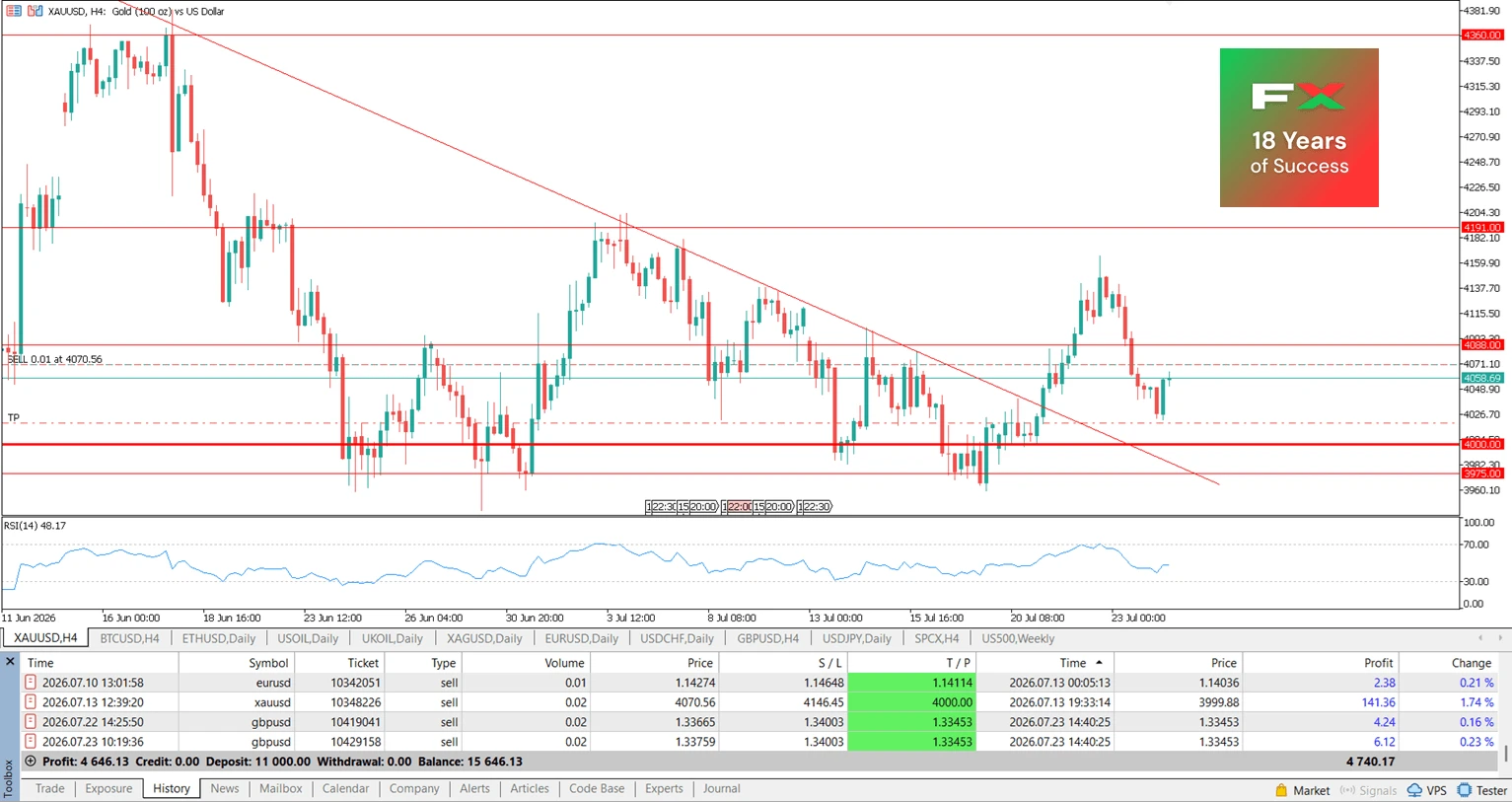
Plataformas de trading como MetaTrader 4 y MetaTrader 5 presentan simultáneamente varios valores relacionados con el beneficio.
Las posiciones abiertas muestran el beneficio o pérdida flotante, lo que permite a los traders monitorizar el rendimiento en tiempo real mientras las posiciones siguen activas.
Una vez cerradas las operaciones, el beneficio realizado se registra en el historial de la cuenta y contribuye al saldo y a las estadísticas generales de trading.
Los informes de la plataforma también resumen el rendimiento a lo largo de varias operaciones, lo que permite a los traders evaluar la rentabilidad en periodos más largos en lugar de basarse en transacciones aisladas.
Aunque las interfaces de las plataformas varían ligeramente según el bróker, la distinción entre beneficio flotante y realizado se mantiene constante.
Por qué la rentabilidad porcentual importa más que el beneficio en dólares
Muchos principiantes comparan a los traders únicamente por sus beneficios en dólares.
Sin embargo, los traders con experiencia suelen centrarse en la rentabilidad porcentual porque ofrece una medida del rendimiento más significativa.
Por ejemplo, ganar 5.000 $ puede representar un excelente rendimiento para una cuenta pequeña, pero uno relativamente modesto para una cuenta mucho mayor.
La rentabilidad porcentual permite a los traders:
- Comparar estrategias de forma justa.
- Evaluar el rendimiento entre cuentas de distinto tamaño.
- Medir la consistencia a lo largo del tiempo.
- Valorar si los rendimientos justifican los riesgos asumidos.
Los beneficios en dólares siguen siendo importantes porque determinan los resultados financieros reales. Sin embargo, los porcentajes ofrecen un mejor contexto al evaluar la habilidad de trading y la eficacia de la estrategia.
Malentendidos comunes sobre el beneficio de trading
Varias ideas erróneas pueden llevar a los traders a evaluar su rendimiento de forma inexacta.
Un malentendido común es creer que los traders rentables rara vez sufren pérdidas. En realidad, incluso las estrategias muy exitosas incluyen operaciones perdedoras. El objetivo no es eliminar las pérdidas, sino asegurar que los beneficios totales superen las pérdidas totales con el tiempo.
Otra idea errónea es suponer que beneficios mayores siempre indican mejor trading. El riesgo excesivo puede generar temporalmente ganancias impresionantes mientras expone la cuenta a drawdowns significativos.
Muchos traders también confunden el beneficio flotante con ingresos asegurados. Los beneficios abiertos siguen sujetos a los cambios del mercado hasta que se cierran las posiciones.
Algunos principiantes juzgan las estrategias solo por la tasa de acierto. Sin embargo, un alto porcentaje de operaciones ganadoras no produce necesariamente rentabilidad global si las operaciones perdedoras son significativamente mayores que las ganadoras.
Definición de factor de beneficio en trading
Entre las métricas de rendimiento más utilizadas está el factor de beneficio.
La definición de factor de beneficio en trading es sencilla: mide la relación entre el total de beneficios brutos y el total de pérdidas brutas a lo largo de una serie de operaciones completadas.
En lugar de evaluar posiciones individuales, el factor de beneficio valora la eficacia global de una estrategia de trading..
¿Qué es el factor de beneficio en trading?
¿Qué es el factor de beneficio en trading?
El factor de beneficio indica cuánto beneficio bruto genera una estrategia por cada unidad de pérdida bruta.
Por ejemplo, un factor de beneficio superior a 1,0 indica que los beneficios totales superan las pérdidas totales. En términos generales:
Factor de beneficio | Interpretación |
Inferior a 1,0 | Estrategia perdedora en conjunto |
Alrededor de 1,0 | Rendimiento de equilibrio |
Superior a 1,0 | Rentable en conjunto |
Significativamente superior a 1,5 | A menudo indica un rendimiento histórico más sólido, aunque la consistencia y el tamaño de la muestra también importan |
El factor de beneficio nunca debe evaluarse de forma aislada. Los traders profesionales también consideran el drawdown, la consistencia, la rentabilidad ajustada al riesgo, la frecuencia de operaciones y las condiciones del mercado antes de juzgar la calidad de una estrategia.
Trading con take profit
Otro concepto importante relacionado con el beneficio de trading es la orden de take profit.
Una orden de take profit cierra automáticamente una posición cuando se alcanza un objetivo de precio predefinido.
Usar take profit ayuda a los traders a:
- Asegurar ganancias sin monitorizar el mercado constantemente.
- Reducir la toma de decisiones emocionales.
- Mantener una disciplina de trading consistente.
- Seguir planes de trading predefinidos.
Sin embargo, ningún nivel de take profit garantiza el mejor resultado posible. Los mercados pueden seguir moviéndose más allá del objetivo o revertirse antes de alcanzarlo. La elección de niveles de salida adecuados depende de la estrategia general del trader, las condiciones del mercado y su enfoque de gestión del riesgo.
Preguntas frecuentes
¿Qué es el beneficio de trading?
El beneficio de trading es la ganancia financiera obtenida cuando una operación se cierra favorablemente tras descontar los costes de negociación, como diferenciales, comisiones, swaps y calidad de ejecución.
¿De dónde proviene el beneficio en el trading?
El beneficio de trading procede de anticipar correctamente los movimientos de precios del mercado. Los mercados financieros cambian continuamente a medida que compradores y vendedores reaccionan a datos económicos, noticias, oferta y demanda y expectativas de los inversores, creando oportunidades para que los traders se beneficien de las fluctuaciones de precios.
¿Cuál es la diferencia entre beneficio realizado y no realizado?
El beneficio realizado proviene de posiciones que ya se han cerrado, lo que hace que la ganancia sea permanente. El beneficio no realizado, o flotante, representa ganancias en posiciones abiertas que aún pueden cambiar a medida que se mueven los precios del mercado.
¿Qué es el factor de beneficio en trading?
El factor de beneficio mide la relación entre el total de beneficios brutos y el total de pérdidas brutas en operaciones completadas. Se usa habitualmente para evaluar si una estrategia de trading ha sido rentable con el tiempo en lugar de valorar operaciones individuales.
¿Un mayor beneficio en dólares significa siempre mejor rendimiento de trading?
No necesariamente. Mayores beneficios en dólares pueden reflejar simplemente una cuenta más grande o una mayor exposición al riesgo. La rentabilidad porcentual, la consistencia y el rendimiento ajustado al riesgo suelen dar una imagen más exacta de la eficacia del trading.
¿Qué es el trading con take profit?
El trading con take profit consiste en usar una orden de salida predefinida que cierra automáticamente una posición cuando se alcanza un precio objetivo. Esto ayuda a los traders a asegurar ganancias y seguir un plan de trading disciplinado sin depender de decisiones emocionales.
¿Por qué importan los costes de negociación?
Costes de negociación reducen directamente el beneficio neto. Aunque una operación se mueva en la dirección esperada, los diferenciales, las comisiones, los swaps y el deslizamiento pueden afectar significativamente al resultado final, especialmente a los traders activos.
¿Puede un trader ser rentable teniendo operaciones perdedoras?
Sí. La mayoría de los traders exitosos sufren pérdidas con regularidad. La rentabilidad a largo plazo depende del equilibrio global entre operaciones ganadoras y perdedoras, de una gestión eficaz del riesgo y de mantener una estrategia con expectativa positiva en lugar de evitar las pérdidas por completo.
Por John Gordon, analista de mercado en NordFX
Volver Volver