Last updated: August 2026
What is the best time frame for intraday trading?
There is no single best time frame for intraday trading. Many traders use 5-minute or 15-minute charts for entries and exits, while 1-hour and 4-hour charts provide broader trend and market-structure context. The best choice depends on the market, trading strategy, and expected trade duration.
Choosing the best time frame for intraday trading involves balancing market detail with broader price structure. Shorter charts show more intraday price movements and potential entry points, while higher time frames can make the underlying trend and important price levels easier to identify.
For this reason, many traders do not rely on one chart alone. A higher time frame such as the 1-hour or 4-hour chart can be used to assess market direction, while 5-minute or 15-minute charts can provide more precise information for entries and exits.
Key Takeaways
- There is no universal best time frame for intraday trading; the right choice depends on the market, strategy, and trading style.
- 5-minute and 15-minute charts are commonly used for intraday execution, while 1-hour and 4-hour charts can provide broader market context.
- Market liquidity and volatility vary throughout the trading day, so the most active trading hours depend on the instrument and market session.
- The first minutes after a market opens can bring increased volatility and rapid price movements, but also more short-term noise.
- Using multiple time frames can help traders separate broader market structure from short-term entry and exit decisions.
How Different Time Frames Work in Intraday Trading
In intraday trading, a time frame refers to the amount of time represented by each candlestick or bar on a price chart. Common intraday chart intervals include 1-minute, 5-minute, 15-minute, 30-minute, and 1-hour charts, while the 4-hour chart is often used to provide broader context.
Shorter time frames display more detailed price movements but can also contain more market noise. Higher time frames show fewer individual price fluctuations and can make broader trends, support and resistance levels, and market structure easier to identify.
A multi-time-frame approach combines these perspectives. For example, a trader may use the 1-hour or 4-hour chart to assess market direction and then move to a 5-minute or 15-minute chart to examine potential entries and exits.
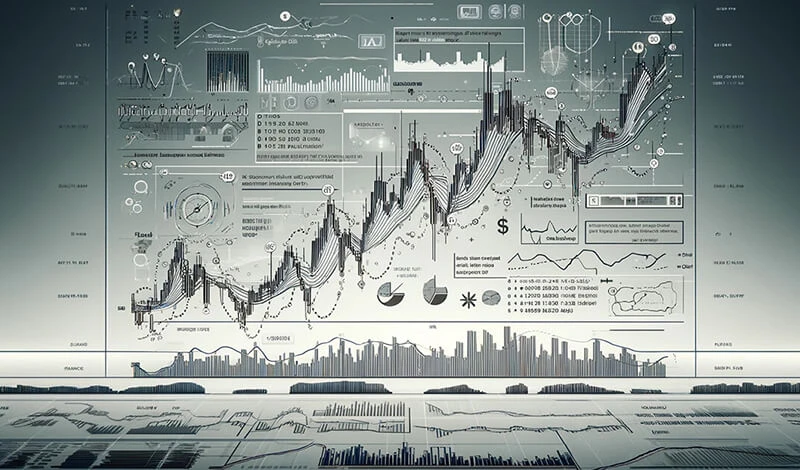
Best Trading Hours for Intraday Trading
Beyond chart selection, intraday traders must also consider when they trade during the session, as market behavior changes significantly throughout the day. Liquidity, volatility, and institutional participation are not evenly distributed, and these shifts directly influence how effective a chosen time frame will be.
Professional traders generally favor the period after the initial market volatility settles. For many markets, this corresponds to roughly 10:15 a.m. to 2:30 p.m., when price action becomes more structured and directional. During this window, the market often develops clearer trends that align well with higher time-frame analysis, including the 4-hour chart.
The first hour after market open is typically the most volatile part of the session. Price movements during this period are heavily influenced by overnight news, economic releases, and institutional order flow. While this volatility can generate opportunities, it also increases the frequency of false signals and erratic price behavior. As the session progresses, liquidity stabilizes and price action becomes more technically reliable, making it easier to apply structured analysis and risk management.
Late-session trading can also show bursts of volatility, but price movements near the close are often driven by position squaring rather than genuine trend development. For many intraday strategies, this reduces reliability and increases execution risk, particularly when trades are not aligned with a higher time-frame structure.
Should You Trade in the First 15 Minutes?
Trading during the first 15 minutes of the session is often appealing due to sharp price movements and rapid momentum. However, this period carries the highest level of intraday risk and is not suitable for all traders.
Early-session volatility is commonly caused by order imbalances, overnight market reactions, and sudden shifts in liquidity. During this time, market direction is frequently unclear, spreads may widen temporarily, and price action can reverse abruptly. As a result, signals generated in the opening minutes are more likely to be misleading.
Experienced traders using specific breakout or momentum-based strategies may find opportunities during this window. For most traders, however, it is more effective to observe rather than participate, allowing the market to establish direction, key levels, and intraday structure before entering trades that align with higher time-frame analysis, including the 4-hour chart.
Best Chart Time Frames for Intraday Trading
Different intraday chart time frames support different trading approaches, execution speeds, and risk profiles. While lower time frames are often associated with intraday trading, higher intraday-aligned charts provide clearer structure and context.
Time Frame | Typical Use in Intraday Trading | Best Suited For |
1-minute | Extremely fast price action, high noise | Scalping, advanced traders |
5-minute | Short-term momentum and breakouts | Active intraday execution |
15-minute | Balance between trend clarity and signals | General intraday trading |
30-minute | Reduced noise, clearer structure | Conservative intraday setups |
60-minute | Intraday trend context | Market bias and confirmation |
4-hour | Dominant intraday structure and direction | Strategic intraday decision-making |
While the 5-minute and 15-minute charts are widely used for execution, the 4-hour chart is increasingly recognized as the best time frame for intraday trading when the objective is consistency rather than frequency. It captures meaningful price movements within the trading day while filtering out short-term noise that often leads to emotional or impulsive decisions.

Choosing the Right Intraday Trading Time Frame
Selecting the best time frame for intraday trading is both a technical and psychological decision. Shorter charts require constant attention and rapid reactions, which can lead to fatigue, overtrading, and emotional stress. Although they offer frequent signals, many of these signals lack context without a higher time-frame reference.
Higher intraday-aligned time frames, such as the 4-hour chart, reduce noise and pressure by focusing on structurally important price movements. While they generate fewer signals, those signals tend to be clearer, more reliable, and easier to manage from a risk perspective.
Many experienced traders therefore use the 4-hour chart to define market direction, key support and resistance levels, and overall intraday bias. Lower time frames such as 15-minute or 5-minute charts are then used selectively to refine entries and manage execution, rather than to generate trade ideas independently.
Benefits of Trading the Optimal Intraday Time Frame
Trading within an optimal time frame improves both clarity and efficiency. When time-frame selection aligns with market conditions, traders benefit from cleaner setups, more accurate entries, and better stop-loss placement. It also reduces the tendency to react to minor price fluctuations that have little relevance to the broader market structure.
Using the 4-hour chart as the primary intraday framework helps limit overtrading, supports more objective decision-making, and improves emotional stability. This approach encourages traders to focus on high-probability setups rather than constant market activity.

Common Intraday Trading Chart Types
Intraday traders most commonly use candlestick charts due to their ability to display price structure, momentum, and potential reversals clearly. Bar charts and line charts are also used, though less frequently, mainly for broader trend observation.
Heikin-Ashi charts are sometimes applied to smooth price action and highlight trends, while Renko charts focus purely on price movement and can help filter out minor fluctuations. Despite these alternatives, candlestick charts remain the standard for intraday analysis, particularly when combined with higher time-frame context such as the 4-hour chart.
How Experienced Traders Select Time Frames
Experienced traders do not choose time frames arbitrarily. Their selection is based on strategy requirements, market volatility, and personal discipline. Traders who rely on speed and frequent execution gravitate toward lower time frames, while those seeking structure and consistency increasingly rely on higher intraday-aligned charts.
Many professionals apply multi-time-frame analysis, using the 4-hour chart to establish direction and bias, then confirming entries on lower time frames. This approach reduces false signals, improves timing, and supports more consistent execution during volatile market conditions.
Final Thoughts
Choosing the best time frame for intraday trading ultimately depends on the market, strategy, trading frequency, and preferred level of detail. Shorter charts can provide precise information about immediate price movements, while 1-hour and 4-hour charts can help traders understand the broader market structure.
For many traders, the practical solution is therefore not to choose one time frame exclusively, but to combine them. Higher time frames can provide context and direction, while lower time frames can be used for more detailed analysis of entries, exits, and short-term price behaviour.
Go Back Go Back